
Pests and Diseases
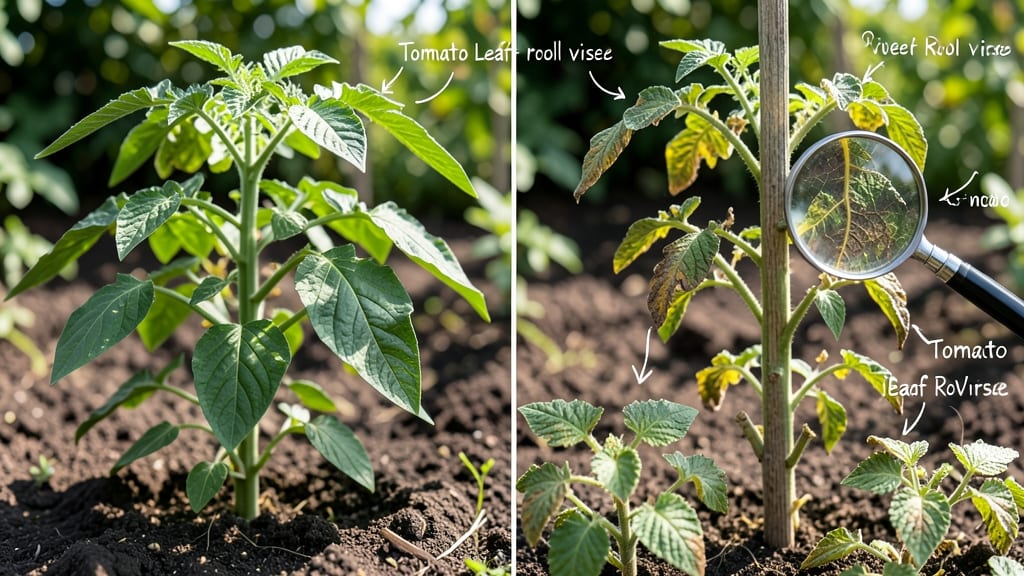
That crinkled, cupped foliage on your tomatoes isn't just ugly—it's a tomato leaf roll cure you can tackle today. I've seen this viral infection turn lush plants into sad, stunted shadows, but neem oil and a few sharp pruners can bring them back to life in just a few applications.
The key is catching it early before the virus spreads through your entire garden. Most leaf roll starts with aphids or environmental stress, not the virus itself. Those tiny green pests inject toxins while feeding, causing leaves to curl upward like little green cups.
Once you spot the first curled leaf, isolate the plant immediately—this isn't something you want spreading to your peppers or eggplants too. Neem oil disrupts the aphids' life cycle while giving your tomatoes a chance to recover.
Within 7-10 days of consistent treatment, you'll see new growth emerging smooth and flat. The plants won't magically look perfect, but they'll bounce back enough to produce a decent harvest.
I've saved entire tomato cages this way, though severe cases might need removal entirely to protect the rest of your garden. This works for both viral and environmental leaf roll, though resistant varieties like 'Mountain Merit' or 'Defiant PhR' are your best bet for prevention.
The cure might not be perfect, but it's the difference between giving up on your tomatoes or enjoying a few homegrown slices by summer's end.
Root Causes Behind Leaf Roll
Tomato leaf roll isn’t just an aesthetic nightmare—it’s a systemic infection that hijacks your plant’s vascular system, leaving leaves curled, stunted, and yellowed. Understanding the why behind this disease is the first step to stopping it in its tracks. Below, we break down the primary culprits and their sneaky mechanisms.
The most common trigger for tomato leaf roll is the Tomato Leaf Roll Virus (ToLRV), a plant virus transmitted by aphids (tiny sap-sucking insects). Here’s how it works:
- Transmission via aphids: Aphids feed on infected plants, then spread the virus to healthy tomatoes while feeding. Even a single aphid can infect an entire garden in days.
- Systemic infection: Once inside the plant, ToLRV travels through the phloem (the plant’s "veins"), disrupting nutrient flow. This causes leaves to curl upward (hence "leaf roll") as the plant struggles to distribute water and sugars.
- No cure for the virus: Unlike bacterial or fungal diseases, viruses cannot be killed with sprays or soil treatments. The only way to manage it is to prevent spread and remove infected plants.
💡 Pro Tip: If you spot aphids or curled leaves, act immediately. Isolate affected plants and treat with neem oil (more on that later) to starve aphids and slow virus transmission.
While viruses are the primary cause, stress factors make tomatoes vulnerable to infection. A weakened plant is like an open door for aphids and viruses:
| Stress Factor | How It Helps the Virus | Solution |
|---|---|---|
| 🌞 Excessive heat (above 90°F) | Slows plant metabolism, making it harder to fight off invaders. | Provide shade cloth during peak sun hours. |
| 💧 Over/under-watering | Weakens cell walls, making it easier for aphids to pierce and inject viruses. | Water deeply 1-2x/week (check soil moisture first). |
| 🌱 Nutrient deficiencies (especially potassium) | Reduces plant resilience; potassium helps regulate water uptake. | Fertilize with a balanced 10-10-10 or compost tea. |
| 🕳️ Poor drainage (waterlogged soil) | Root stress attracts aphids and reduces plant vigor. | Amend soil with perlite or sand for better aeration. |
✨ Key Insight: Healthy plants resist viruses better. Focus on preventative care—aphid traps, reflective mulch (to deter insects), and regular inspections—to keep your tomatoes strong.
Viruses like ToLRV can linger on tools, soil, and even your hands. Here’s how cross-contamination plays a role:
- Infected plant debris: Leaving old tomato leaves or stems in the soil can harbor viruses for years. Aphids may feed on these remnants before moving to healthy plants.
- Shared gardening tools: Pruners, gloves, or trowels used on infected plants can transfer viral particles to healthy ones. Disinfect tools with 70% rubbing alcohol between uses.
- Wind or water spread: In rare cases, viruses can spread via rain splash or wind-borne aphids from nearby infected crops.
🔥 Action Step: Practice "clean garden" habits:
- Remove and destroy (do not compost) infected plants.
- Rotate crops yearly to break virus cycles.
- Use aphid-resistant tomato varieties (e.g., 'Mountain Merit' or 'Defiant PhR').
Now that you know why tomato leaf roll strikes, the next step is how to fight back. Stay tuned for our neem oil rescue protocol—a natural, fast-acting way to save your crop in hours!
How to Fix Crinkled Tomato Leaves
Now that you know what’s causing those frustratingly curled tomato leaves, let’s roll up our sleeves and get them back to their lush, healthy selves! The good news? Most of these fixes are simple, natural, and effective—no harsh chemicals required.
Below, we’ve mapped out practical solutions for each root cause, along with prevention tips to keep your plants thriving long-term.
If your tomatoes are suffering from a viral infection like Tomato Leaf Curl Virus (ToLCV), the damage is often irreversible—but you can stop the spread and protect other plants.
🔥 Step 1: Remove Infected Plants Immediately
- 🗑️ Pull up and dispose of infected plants (don’t compost them—the virus can survive).
- ✂️ If only a few leaves are curled, prune them off below the curl to prevent further spread.
🛡️ Step 2: Strengthen Remaining Plants
- 💧 Water deeply at the base of plants (avoid wetting leaves to deter aphids, the virus’s main carrier).
- 🌿 Apply neem oil (1 tsp per quart of water + a drop of dish soap) as a repellent for aphids.
Spray early morning or late evening to avoid burning leaves. - 🌱 Boost plant health with compost tea or a balanced organic fertilizer (like 5-5-5) to help them fight off stress.
🚫 Prevention Tips for Next Season
- 🌡️ Plant resistant varieties like ‘Heatmaster’ or ‘Solar Fire’ (check seed packets for ToLCV resistance).
- 🕷️ Encourage beneficial insects (ladybugs, lacewings) to control aphids naturally.
- 🌿 Rotate crops—don’t plant tomatoes (or other solanaceae like peppers/eggplants) in the same spot for 3+ years.
Aphids, whiteflies, and spider mites love stressed tomato plants—and their feeding causes leaf curling. Here’s how to kick them out for good.
🍳 Step 1: Blast Them Off (Literally!)
- 💦 Spray with water (a strong stream from the hose) to knock off aphids and spider mites.
- 🧼 Soapy water spray: Mix 1 tbsp mild castile soap or dish soap in 1 quart of water.
Spray directly on pests (test on a small leaf first).
👨🍳 Step 2: Trap & Repel
- 🕸️ Yellow sticky traps catch whiteflies and aphids—hang them near plants.
- 🌿 Neem oil spray (repeat every 5-7 days until pests are gone).
- 🌵 Companion plants: Plant basil, marigolds, or nasturtiums nearby to repel pests naturally.
🔥 Step 3: Encourage Predators
- 🐞 Ladybugs and lacewings eat aphids. Buy them online or attract them with dill or fennel in your garden.
- 🕷️ Spiders control mites—let them do their thing!
💡 Prevention Tips
- 🌱 Inspect new plants before bringing them home (quarantine for a week).
- 🌿 Keep garden clean—remove weeds and debris where pests hide.
- 💧 Avoid overwatering—stressed plants attract more pests.
If your tomatoes are curling due to extreme heat, drought, or overwatering, they’ll bounce back fast with the right care.
💧 Step 1: Adjust Watering
- 🚰 Deep watering (1-2 inches per week) is better than frequent shallow watering.
- ☀️ Water early morning to reduce evaporation and fungal risks.
- 🌱 Mulch heavily (straw or wood chips) to retain moisture and cool roots.
🌿 Step 2: Provide Shade & Airflow
- 🏕️ Shade cloth (30-50%) can help in scorching afternoons (1-4 PM).
- 💨 Prune suckers to improve airflow—crowded plants stress easier.
- 🪑 Use cages or stakes to keep plants upright (prevents leaf burn from touching hot soil).
❄️ Step 3: Cool Down the Soil
- 🧊 Soak container pots with water to cool them down.
- 🌱 Plant in raised beds if your soil stays too hot (black plastic mulch can help too).
🔥 Prevention Tips
- 🌡️ Choose heat-tolerant varieties like ‘Heatmaster’ or ‘Solar Set’.
- 🌱 Start seeds indoors if your growing season is short and hot.
- 💧 Monitor soil moisture with a moisture meter (overwatering is just as bad as underwatering!).
If your tomatoes are curling due to fertilizer burn, nutrient deficiency, or herbicide drift, here’s how to reset their health.
🍳 Step 1: Flush the Soil
- 💦 Water heavily for 10-15 minutes to leach out excess salts or chemicals.
- 🌱 Add compost or worm castings to improve soil structure and balance nutrients.
💊 Step 2: Correct Nutrient Imbalances
| Symptom | Likely Cause | Fix It With |
|---|---|---|
| Yellow lower leaves | Nitrogen deficiency | Fish emulsion or alfalfa meal |
| Purple stems/leaves | Phosphorus deficiency | Bone meal or rock phosphate |
| Brown leaf edges | Potassium deficiency | Banana peel tea or kelp meal |
| Crispy, curled leaves | Magnesium deficiency | Epsom salt spray (1 tbsp per gallon) |
🚫 Prevention Tips
- 📊 Test soil before planting (use a DIY kit or send to a lab).
- 🍽️ Avoid over-fertilizing—tomatoes need balanced NPK (5-5-5 or 10-10-10).
- 🚜 Rotate crops to prevent nutrient depletion.
If your tomatoes are already severely curled but still alive, try this emergency boost:
- 💧 Deep water the plant.
- 🌿 Spray with neem oil + seaweed extract (for nutrients + pest control).
- ✂️ Prune damaged leaves to redirect energy to new growth.
- 🌱 Move to partial shade for a few days to reduce stress.
✅ Inspect plants weekly for pests/disease. ✅ Keep garden clean (remove debris, weeds). ✅ Rotate crops every 2-3 years. ✅ Use resistant varieties when possible. ✅ Monitor soil moisture & nutrients regularly.
With these fixes, your tomato plants should bounce back in days—and you’ll be harvesting juicy, disease-free tomatoes in no time! 🍅🔥
Frequently asked questions
Can neem oil really cure tomato leaf roll caused by viruses?
Neem oil won't eliminate an existing viral infection, but it's your best defense against further spread. The key is stopping aphids—the virus carriers—before they infect other plants. Apply neem oil every 5-7 days to break the aphid life cycle and protect healthy tomatoes. Think of it as a firebreak to contain the problem.
How do I tell if my tomato leaves are curling from disease or just heat stress?
Check the underside of leaves—if you see tiny green/black aphids or sticky residue (honeydew), it's likely viral. Heat-stressed leaves curl upward but stay dry and crispy without pests. Also, viral curling often starts at the top of the plant while heat stress affects lower leaves first.
Will pruning infected leaves actually help my tomato plant?
Yes, but only if you remove entire curled leaves below the curl—never leave any infected tissue. This prevents the virus from spreading further through the plant's vascular system. For severe cases, prune 1/3 of the plant to redirect energy to healthy growth. Always sterilize your pruners with 70% rubbing alcohol between cuts.
Can I still harvest tomatoes from infected plants?
You can, but only if you isolate the plant immediately and remove all infected foliage. The virus doesn't spread through the fruit itself, but aphids may contaminate tomatoes. Harvest only ripe fruit and wash thoroughly before eating. For best results, focus on saving nearby healthy plants rather than trying to salvage infected ones.
How long does it take to see improvement after treating with neem oil?
You should notice reduced aphid activity within 24-48 hours, but visible leaf improvement takes 7-14 days as new growth emerges. For viral cases, expect partial recovery—the plant may never look perfect, but it can still produce fruit. Consistency is key: apply neem oil every 5-7 days until aphids disappear completely.