
Leaf Blower
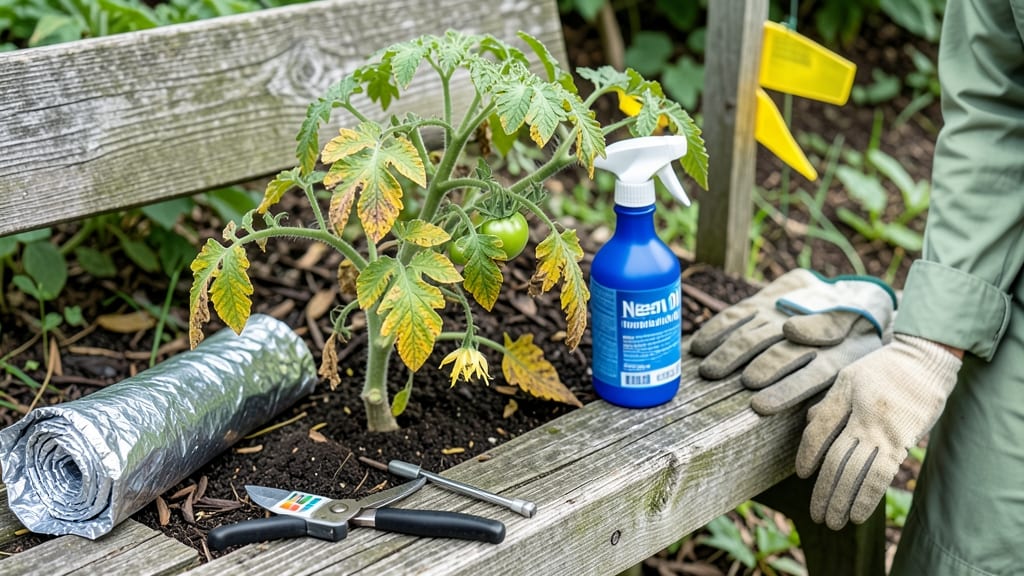
When your tomato leaves curl into crispy little cups, it’s not just heat stress tomato leaf curl virus treatment—it’s a battle with heat stress and ToLCV. 🌿 I’ve watched my prize heirlooms go from lush and green to sad, crinkled messes, and I’ll show you how to turn that around without losing your plants (or your sanity).
The key? Neem oil, strategic pruning, and a few sneaky tricks to outsmart the virus.
This isn’t about expensive sprays or hopeless fixes—it’s about what actually works in your garden.
We’re talking neem oil sprays that disrupt the virus’s life cycle, pruning to improve airflow (which cuts down on both heat stress and virus spread), and even simple shade cloth hacks to keep your plants from wilting into submission. The goal?
Save your tomatoes while they’re still producing fruit, not just for the plant’s sake, but for that first taste of homegrown goodness when everything else fails.
By the time you’re done reading, you’ll know exactly how to spot the early signs (before the damage is irreversible), which treatments to use when, and how to prevent this from happening again next season.
No more guessing, no more watching your harvest shrink—just a clear, step-by-step plan to bring your tomatoes back from the brink. Let’s get those leaves unfurling and those vines productive again.
This works whether you’re dealing with a single infected plant or a full garden under siege. The same principles apply to greenhouses, containers, or in-ground beds—adjust the timing based on your local heat waves, and you’ll be back in business faster than you think. Ready to rescue your tomatoes?
Root Causes of Tomato Leaf Issues
When your tomato plants start showing signs of heat stress or tomato leaf curl virus (ToLCV), it’s often the result of a mix of environmental and biological factors. Understanding the why behind these problems is the first step to restoring your plants to peak health.
Below, we break down the key culprits—from scorching temperatures to viral invaders—and how they trigger those dreaded crinkled, curled, or yellowing leaves.
Tomatoes thrive in warmth, but when temperatures consistently exceed 90°F (32°C), they hit their stress limit. Heat stress disrupts cellular functions, leading to:
- Stomatal Closure: High temperatures cause leaf stomata (tiny pores) to close to conserve water. This reduces gas exchange, limiting photosynthesis and causing wilting, yellowing, or curling—even in healthy plants.
- Protein Denaturation: Enzymes and proteins in leaves unfold under extreme heat, disrupting metabolic processes. This leads to necrotic spots (dead tissue) and stunted growth.
- Water Deficits: Heat increases transpiration rates (water loss), but roots often can’t absorb enough water fast enough. The result? Leaf scorch and crinkling as cells shrink from dehydration.
💡 Pro Tip: Monitor soil moisture daily during heatwaves. Drip irrigation in early morning keeps roots hydrated without evaporative loss, while shade cloth (30-50% coverage) can lower leaf temps by 10-15°F.
The tomato leaf curl virus (ToLCV) doesn’t spread on its own—it hitches a ride on whiteflies (Bemisia tabaci). Here’s how the cycle works:
- Viral Transmission: Whiteflies feed on infected plants, then transmit ToLCV to healthy tomatoes via their saliva during feeding. The virus rewires plant DNA, causing:
- ✅ Leaf curling (upward or downward, like a "cup")
- ✅ Thickened, brittle leaves (from abnormal cell growth)
- ✅ Stunted growth (virus disrupts hormone signals)
- Whitefly Boom Conditions: These pests love heat and drought. When temperatures rise above 85°F (29°C), their reproduction rate doubles, flooding your garden with vectors for ToLCV.
- Secondary Stressors: Once infected, plants become more susceptible to heat stress because their damaged vascular system can’t regulate water or nutrients efficiently.
🔥 Warning: ToLCV has no cure. Infected plants should be removed and destroyed (not composted) to prevent spread. Focus on preventing whitefly infestations with sticky traps and reflective mulch.
Even with ideal weather, nutrient deficiencies or toxicities leave tomatoes vulnerable to stress and viral attacks. Key issues include:
| Nutrient Issue | Symptoms | Why It Matters |
|---|---|---|
| Potassium (K) Deficiency | Yellowing leaf edges ("scorch"), weak stems | Potassium regulates stomata and heat tolerance. Low levels = higher water loss and viral susceptibility. |
| Nitrogen (N) Excess | Dark green, soft leaves; poor root growth | Too much nitrogen attracts whiteflies (they love lush, sugary foliage) and weakens structural integrity of leaves. |
| Calcium (Ca) Deficiency | Curling at leaf margins, "blossom end rot" on fruit | Calcium strengthens cell walls. Without it, leaves curl and tear under heat stress. |
💡 Fix It: Conduct a soil test and amend with:
- Potassium-rich fertilizers (e.g., greensand or wood ash)
- Balanced NPK (e.g., 10-10-10) to avoid excess nitrogen
- Calcium sources like crushed eggshells or gypsum
Heat and viral stress weaken tomato plants’ immune systems, making them prime targets for secondary infections:
- Early Blight (Alternaria solani): Thrives in hot, humid conditions (85-95°F). Causes concentric brown spots that mimic heat damage but spread faster in stressed plants.
- Bacterial Spot (Xanthomonas): Bacterial populations explode in heat. Leaves develop water-soaked lesions that curl and drop, accelerating viral spread.
- Powdery Mildew: While more common in cool weather, high humidity + heat can trigger outbreaks, further clogging stomata and reducing photosynthesis.
🎯 Prevention: Apply copper fungicides preventatively during heatwaves and prune infected leaves immediately to improve airflow.
Fixing Tomato Leaf Curl Under Heat Stress
Now that you understand the causes of heat stress and tomato leaf curl virus (ToLCV) wreaking havoc on your plants, it’s time to roll up your sleeves and take action! The good news?
Many solutions are simple, cost-effective, and can even prevent future outbreaks. Below, we’ve mapped out practical fixes for each root cause—plus prevention tips to keep your tomato plants thriving.
---
When scorching heat zaps your tomatoes, immediate relief and long-term adjustments are key.
#### 💦 Cool Them Down Fast - Shade Cloth to the Rescue 🏖️: Install 30-50% shade cloth over your tomato plants during peak sun (10 AM–4 PM).
This blocks excess heat while allowing light for photosynthesis. - Mulch Like a Pro 🌿: Apply 2-3 inches of organic mulch (straw, wood chips, or grass clippings) around the base.
This keeps soil cooler and retains moisture. - Water Deeply at Dawn 💧: Morning watering (1-2 inches per week) reduces evaporation. Avoid overhead sprinklers—they can scorch leaves.
#### 🌱 Adjust Growing Conditions - Choose Heat-Tolerant Varieties 🍅🔥: Swap out sensitive heirlooms for heat-resistant tomatoes like ‘Heatmaster,’ ‘Solar Fire,’ or ‘Arkansas Traveler.’ - Move Potted Tomatoes 🏠: If growing in containers, relocate them to partial shade during heatwaves or place them in a cooler microclimate (e.g., near a north-facing wall). - Prune for Airflow 🌬️: Trim dense foliage to improve circulation, reducing heat buildup and humidity that fuels fungal issues.
#### 💡 Prevention Tip: Monitor soil temperature—if it exceeds 85°F (29°C), your roots may struggle. Use a soil thermometer to track conditions.
---
Since ToLCV spreads via whiteflies, infected plants, and contaminated tools, your defense strategy must be proactive and multi-layered.
#### 🛡️ Stop the Spread - Remove Infected Plants Immediately 🚮: Burn or bag (do not compost) plants showing curls, yellowing, or stunted growth.
This prevents virus transmission. - Quarantine New Plants 🏝️: Keep unplanted tomatoes in a separate area for 2-4 weeks to monitor for symptoms before introducing them to your garden. - Clean Tools Thoroughly 🧼: Disinfect pruners, gloves, and pots with 70% rubbing alcohol or a 10% bleach solution between uses.
#### 🦟 Whitefly Control (Virus Vectors) - Sticky Traps 🕸️: Hang yellow sticky traps near plants to catch adult whiteflies before they reproduce. - Neem Oil Spray 🌿: Mix 1 tsp neem oil + 1 tsp mild soap + 1 quart water, spray undersides of leaves (where whiteflies hide), and repeat every 5-7 days. - Beneficial Insects 🐞: Release ladybugs, lacewings, or parasitic wasps (like Encarsia formosa) to naturally control whitefly populations.
#### 🌱 Boost Plant Resilience - Strengthen with Compost 🌱: Side-dress plants with well-aged compost to improve root health and stress resistance. - Avoid Over-Fertilizing 🚫💥: Too much nitrogen = soft, vulnerable leaves.
Use a balanced fertilizer (10-10-10) or fish emulsion sparingly. - Interplant with Repellents 🌿: Grow marigolds, basil, or nasturtiums nearby—they deter whiteflies and improve airflow.
#### 💡 Prevention Tip: Rotate crops—never plant tomatoes (or other solanaceae like peppers/eggplants) in the same spot two years in a row. This breaks the virus cycle.
---
Stagnant, humid air amplifies heat stress and virus spread. Here’s how to dry things out:
- Space Plants Properly 📏: Give tomatoes 18-24 inches of spacing (or 3-4 feet for indeterminate varieties) to maximize airflow. - Use Fans Strategically 🌬️: Place a small oscillating fan on low near plants to reduce humidity and deter pests. - Avoid Overwatering 💧🚫: Water only when the top inch of soil is dry—soggy soil = more fungal risks.
--- | Action | How to Do It | When to Do It | |--------------------------|------------------------------------------|----------------------------| | Test Soil | Use a pH test kit (aim for 6.0-6.8). | Before planting season. | | Solarize Beds | Cover soil with clear plastic for 4-6 weeks in summer to kill pests/viruses. | Early summer. | | Rotate Crops | Avoid planting tomatoes in the same family (Solanaceae) yearly. | Annual garden planning. | | Monitor Weather | Check heat advisories and humidity levels via local forecasts. | Planting & growing season. |
--- Combine neem oil with kaolin clay for a double defense—neem kills whiteflies, while clay creates a protective barrier on leaves, reducing heat damage and virus entry.
--- By tackling heat stress and ToLCV with these targeted solutions, your tomato plants will bounce back stronger—and you’ll be one step ahead of next season’s pests. Stay vigilant, act fast, and keep those vines happy! 🍅💚
Frequently asked questions
Can I still save tomato plants with leaf curl if they're already showing severe symptoms?
Unfortunately, tomato leaf curl virus (ToLCV) has no cure, but you can still manage heat stress symptoms and prevent further spread. Remove severely infected plants immediately to stop the virus cycle. For less affected plants, focus on neem oil sprays, shade cloth, and pruning for airflow to reduce heat damage. The goal is to protect healthy foliage and maximize fruit production from existing growth.
How often should I apply neem oil for whitefly control during heatwaves?
Apply a neem oil spray every 5-7 days during heatwaves to disrupt whitefly life cycles. Mix 1 teaspoon neem oil + 1 teaspoon mild soap + 1 quart water, and always spray undersides of leaves where whiteflies hide. For best results, apply early in the morning to avoid leaf burn from heat. Combine with yellow sticky traps for maximum effectiveness.
Will shade cloth really help if my tomatoes are already curled from heat stress?
Yes! 30-50% shade cloth can lower leaf temperatures by 10-15°F and reduce transpiration, giving stressed plants time to recover. Install it during peak sun hours (10 AM–4 PM) and remove it in the early morning/evening to maintain photosynthesis. Pair with deep watering at dawn for fastest relief.
Can I use chemical pesticides instead of neem oil for whiteflies?
Chemical pesticides like pyrethrin or imidacloprid can kill whiteflies quickly, but they don’t address the virus and may harm beneficial insects. For organic gardens, neem oil + kaolin clay is safer and disrupts whitefly reproduction. If chemicals are necessary, use targeted sprays (like soaps or horticultural oils) and follow label instructions to minimize environmental impact.
How do I know if my tomato leaves are curling from heat stress or the virus?
Heat stress curls often appear suddenly on all leaves, with yellowing edges and wilting that improves at night. ToLCV curls are asymmetrical, thickened, and often paired with stunted growth. Check for whiteflies (tiny white insects) on undersides of leaves—if present, the virus is likely spreading. Test with a soil moisture meter too: dry soil worsens heat stress.