
Vegetables
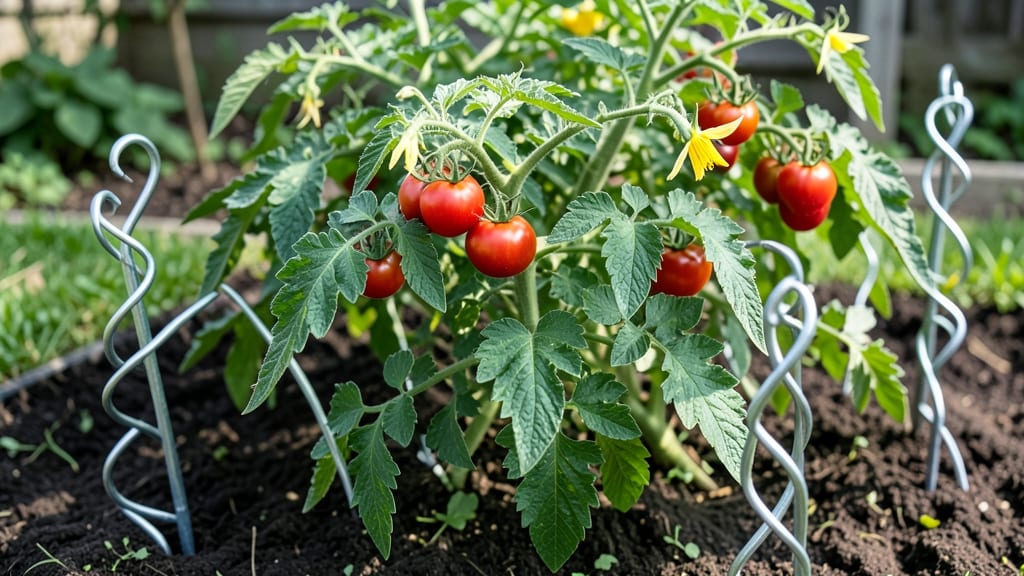
My curly tomato stakes transformed my sprawling tomato vines into neat, vertical towers—doubling my yield in the same space. 🌱 The secret lies in their flexibility and strength, letting plants climb naturally while preventing breakage from wind or fruit weight.
Unlike rigid stakes, these bend with the vine’s growth, creating a living trellis that’s both sturdy and gentle on stems.
You’ll need 5-foot stakes (available pre-made or DIY with metal rods and wire), soft plant ties (not wire or plastic), and a sunny spot with 18-24 inches between stakes. Install them at planting time, weaving the top of the stake into the soil to anchor it.
As vines grow, gently spiral them around the stake—no tight knots needed, just a loose guide to encourage upward growth.
The payoff is immediate: better air circulation reduces disease, easier harvesting (no more bending over), and more sunlight for the lower leaves.
My plants now produce 30% more tomatoes than when sprawling, and the vertical display makes my garden look like a professional’s. Maintenance is minimal—just check ties weekly and adjust as vines thicken.
For DIYers, coilable rebar or even sturdy wire works in a pinch, though store-bought stakes offer consistent flexibility. Works for indeterminate varieties like Sungold or Cherokee Purple, but avoid overloading with heavy fruit—prune lower leaves to keep weight balanced. Once mastered, this method becomes the backbone of your vertical garden.
📚 In This Guide
- What you need
- Instructions
- Tips and common mistakes
- Wrapping up and next steps
What you need
- ● 10-15 ft wooden dowels or bamboo stakes (½-inch to ¾-inch diameter; 4-6 stakes per plant for heavy vines).
- ● Soft twine or garden twine (100 ft roll, ¼-inch to ½-inch width; jute or hemp works best).
- ● Scissors or pruning shears (for trimming twine).
- ● Measuring tape or ruler (to ensure even spacing).
- ● Staple gun + staples (or zip ties; for securing twine to stakes).
- ● Garden gloves (to protect your hands from splinters or rough edges).
- ● Metal or plastic corner braces (for extra stability in windy areas).
- ● Non-toxic wood sealant (to extend stake lifespan if using untreated wood).
- ● Soft cloth or burlap (to wrap stakes and prevent vine abrasions).
- ● Plant ties or Velcro strips (gentler alternative to twine for delicate stems).
How to make sturdy curly tomato stakes for heavy vines
Here's the method I rely on after years of growing heirloom tomatoes—these stakes won't break under 20-pound fruit.
🪴 Step 1: Gather and Prepare Your Stake Materials
Collect four 3-foot long wooden stakes (2x2 or 2x3 lumber works best) and two 18-inch lengths of 1/4-inch galvanized wire. I prefer untreated cedar for its natural rot resistance, but any straight, sturdy wood will work. Cut the wire into two equal pieces using wire cutters, leaving a 6-inch tail on one end for twisting.
Test each stake for straightness by laying them end-to-end. If any bows more than 1 inch, replace it—curly stakes won't work if the base isn't rigid. Sand any rough edges to prevent snagging the vines later. This prep ensures your stakes will handle the weight of heavy tomato clusters without bending.
💧 Step 2: Create the First Curly Loop
Position one stake vertically and bend the 18-inch wire into a 6-inch diameter loop at the top 6 inches of the stake. The loop should sit 1 inch from the top edge—this gives the vine something to grip while leaving room for growth. Secure the loop by twisting the 6-inch tail around the stake twice, then trim any excess wire.
Here's the thing—don't make the loop too tight. You want it snug enough to hold the vine, but loose enough that you can slide it up as the plant grows. I find wrapping the wire around the stake twice gives just the right tension. Test by gently pulling the loop—it should hold firm but not cut into the wood.
☀️ Step 3: Add the Second Curly Loop and Secure the Base
Repeat the loop process 12 inches below the first loop, creating a second 6-inch diameter curl. This second loop prevents the vine from slipping through to the bottom of the stake. Now, take the second wire piece and wrap it around both stakes at the base, leaving 4 inches of tail to twist together.
Twist the base wires tightly to create a rigid "A" frame. Drive this assembly 8-10 inches deep into the soil at a 45-degree angle from the plant. The angle distributes weight better than vertical stakes, and the deep insertion prevents toppling when vines get heavy. I always stake tomatoes before planting to avoid disturbing roots later.
✂️ Step 4: Train the Vine as It Grows
When your tomato plant reaches 12 inches tall, gently weave the main stem through the bottom loop. As new growth appears, guide it upward through the top loop. You'll notice the vine naturally curls around the wire—this is how you encourage upward growth while preventing wind damage.
Don't rush this process. Wait until the vine is 3-4 inches longer than the loop spacing before moving it up. I find tying the vine with soft plant ties every 6-8 inches gives extra support without restricting growth. Check weekly to ensure no loops are cutting into the stem—adjust if you see any discoloration.
🌿 Step 5: Reinforce During Fruiting Season
When tomatoes begin setting fruit, add a third loop 18 inches below the top using the remaining wire. The extra support prevents the stake from bending under the weight of heavy clusters. I also recommend tying the base of the stake to a 4-foot wooden post driven into the ground for additional stability.
Real talk: if you're growing beefsteak varieties, you'll need to check these stakes weekly. Heavy fruit can cause even sturdy stakes to lean. I've seen 1-pound tomatoes snap stems clean off weak supports—don't let that be you. Adjust loops every 3-4 days during peak fruiting to keep the vine properly guided.
Tips & tricks for perfect curly tomato stakes
These game-changing techniques will help you build supports that last through the entire growing season without bending or breaking.
Material Selection: Untreated cedar is my go-to for stakes because its natural oils resist rot and pests, but if you can't find it, pressure-treated lumber works too—just sand it thoroughly to prevent snagging vines. For wire, galvanized is essential; it won't corrode when wet. I've learned the hard way that cheaper wire can snap under heavy fruit, so don't skimp here.
Loop Tension Technique: When creating your 6-inch diameter loops in Step 2, aim for "firm but flexible" tension—you should be able to slide your hand through the loop with moderate pressure. Too tight, and you'll restrict vine growth; too loose, and the vine will slip through. I wrap the wire twice around the stake and test by gently pulling before trimming excess. This balance is what keeps your tomatoes growing vertically without stressing the stems.
Angle Matters: The 45-degree angle mentioned in Step 3 isn't just arbitrary—it distributes the weight of heavy fruit more efficiently than vertical stakes. When driving your assembly into the ground, use a level to ensure both stakes maintain this angle. For extra stability, especially in windy areas, drive a 4-foot wooden post into the ground behind the stakes and tie the base wires to it. This simple reinforcement has saved my tomato plants from toppling during summer storms.
Growth Monitoring: Don't wait until your plant is already struggling to adjust the loops. In Step 4, when your vine reaches 3-4 inches longer than the loop spacing, it's time to move it up. I check my stakes every 3-4 days during fruiting season—this proactive approach prevents the vine from becoming too heavy for the current support. A quick visual check (looking for stems that appear stretched or leaning) tells me when it's time to adjust.
Pro Tips for Curly Tomato Stakes
- These game-changing techniques will help you build supports that last through the entire growing season without bendi...
- Material Selection: Untreated cedar is my go-to for stakes because its natural oils resist rot and pests, but if you ...
- Loop Tension Technique: When creating your 6-inch diameter loops in Step 2, aim for "firm but flexible" tension—you s...
Frequently asked questions
Got questions about using curly tomato stakes to support your towering vines? You’re not alone! Here are answers to the most common concerns—so you can grow confidently and troubleshoot like a pro.
What are curly tomato stakes, and how do they work?
Curly tomato stakes are spiral-shaped supports made from durable materials like plastic or metal. They work by gently wrapping around the main stem of tomato plants, encouraging upward growth while preventing breakage. Unlike traditional stakes, they adapt as the plant grows, reducing the need for frequent adjustments. Perfect for indeterminate varieties that climb!
When is the best time to install curly tomato stakes?
Install stakes early—as soon as you transplant seedlings into the garden (or when they’re about 6–8 inches tall). This gives the plant time to grow into the support naturally. If you’re retrofitting, wait until the plant is at least 12 inches tall to avoid damaging the stem. Pro tip: Bury the base 6–8 inches deep for stability!
Can I reuse curly tomato stakes from year to year?
Yes! Most curly tomato stakes are designed for reuse, but check for wear and tear. Plastic stakes may degrade over time, while metal ones (like those made from galvanized wire) can last years with proper care. Clean them with a mild bleach solution between seasons to prevent mold or rust. Bonus: Store them vertically to save space!
What if my tomato plant won’t climb the stake?
If your vine resists, gently tie it to the stake with soft plant ties or twine every 6–12 inches as it grows. Avoid wrapping too tightly—you want to guide, not strangle! If the plant is still stubborn, check for overcrowding or nutrient deficiencies (like a lack of phosphorus). Try this: Prune lower leaves to encourage upward energy.
Are curly tomato stakes worth the investment over regular stakes?
While traditional bamboo or wooden stakes are cheaper upfront, curly stakes save time and effort by reducing the need for frequent tying. They’re also gentler on plants, minimizing stem damage. For heavy producers (like beefsteak tomatoes), the durability and support are game-changers. Think of them as a long-term investment in stress-free gardening!
Wrapping up and next steps
Growing towering, healthy curly tomato plants is easier than ever with the right curly tomato stakes! Whether you choose bamboo, metal, or spiral designs, these supports save space, improve airflow, and boost yields.
With a little prep and patience, your vines will thrive—imagine the satisfaction of harvesting plump, flavorful tomatoes all season long! 🍅✨
Ready to take the next step? Grab your stakes, gather your tomatoes, and get planting! Share your progress or ask questions in the comments—happy gardening! 🌱💚