
Companion Plants
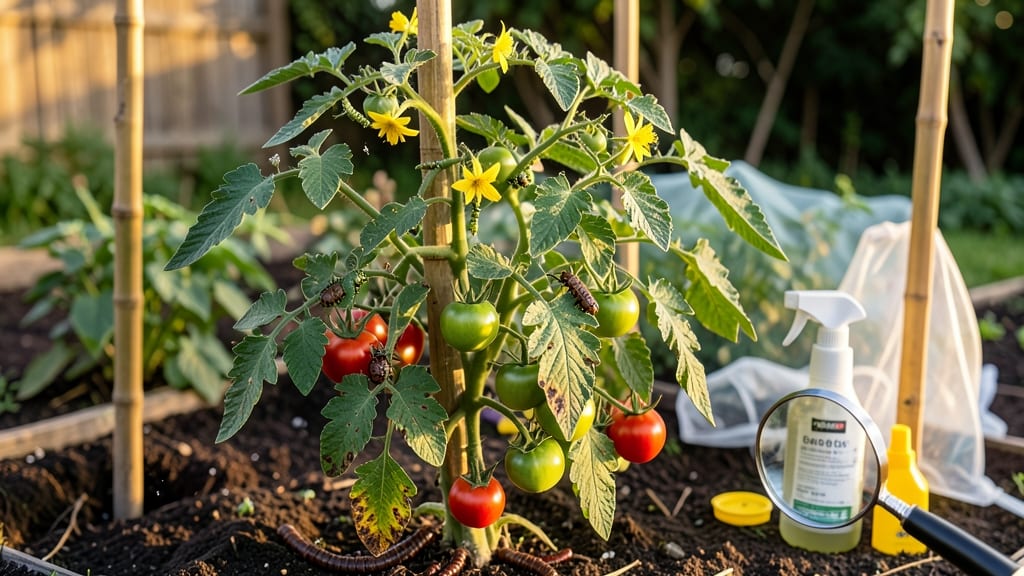
What pests eat tomato plants can devastate your garden faster than almost any other vegetable—aphids, hornworms, and Colorado potato beetles can strip a plant bare in days if you don’t act fast. 🌱 I’ve lost entire harvests to these invaders, but I’ve also learned which organic defenses work best in my zone 7 garden. The damage tells the story: chewed leaves, skeletonized foliage, sticky residue, or silvery webbing all mean trouble. Slugs leave shiny trails at night, while hornworms hide under leaves by day—spotting them early is half the battle. With the right mix of companion plants (basil, marigolds), neem oil sprays, and hand-picking, you can protect your tomatoes without chemicals. My plants now stay lush and productive all season long. This works for backyard gardens, containers, or even small urban plots. Let’s keep those pests in check!
Root Causes Of Tomato Plant Attacks
Tomato plants are a buffet for pests, but why do these critters target them so aggressively? The answer lies in a mix of biological triggers, environmental factors, and even human gardening habits. Understanding these root causes helps you outsmart invaders before they strike.
Tomatoes are like nature’s candy for pests because they’re packed with sugars, proteins, and water—the perfect all-you-can-eat meal. Here’s the science behind their appeal:
- High Water Content 💧: Soft, juicy tomato leaves and fruit are easy for pests like aphids and caterpillars to chew through.
Their high moisture levels make them an energy-efficient snack. - Sweet Nectar & Sugars 🍬: Many tomato varieties produce nectar on leaves or flowers, attracting aphids, whiteflies, and even bees (which can indirectly bring pests).
Overripe or damaged fruit ferments, releasing volatile organic compounds (VOCs) that signal pests: "Free food here!" - Protein-Packed Leaves 🥦: Young tomato foliage is rich in nitrogen, a key protein source for herbivorous pests like hornworms and flea beetles. Fast-growing plants with lush green leaves are especially vulnerable.
Pro Tip: 💡 If your tomatoes are over-fertilized with nitrogen, they’ll grow fast but become a magnet for leaf-munching pests. Balance your fertilizer with phosphorus and potassium to toughen up the plant’s defenses.
Pests don’t just show up—they’re triggered by environmental cues. Tomato plants thrive in warm, humid conditions, and so do many of their predators:
- Warm Temperatures ☀️: Most tomato pests (like hornworms and Colorado potato beetles) metabolize faster in heat. A stretch of 75–90°F (24–32°C) can turn a few stragglers into an infestation overnight. - Humidity & Rain 🌧️: Fungal-loving pests (e.g., early blight, aphids) thrive in damp conditions.
Rain washes away natural predators like ladybugs and encourages slugs/snails to slime their way to your plants. - Drought Stress 💦: When tomato plants wilts from lack of water, their osmotic pressure drops, making them easier for pests to penetrate.
Stress weakens the plant’s cuticle (its natural protective layer), leaving it vulnerable to chewing insects.
Action Step: 🌡️ Monitor your garden’s microclimate. Use shade cloth in peak heat or drip irrigation to keep foliage dry and reduce pest activity.
Even the best-intentioned gardeners can accidentally create a pest paradise. Here’s how:
- Overcrowded Plants 🌿: Tomatoes need air circulation—when plants are too close, humidity lingers, and pests like whiteflies and spider mites thrive in the damp, shaded conditions. - Poor Sanitation 🧹: Leftover plant debris, fallen fruit, or weeds harbor pest eggs and larvae.
For example, Colorado potato beetles overwinter in soil near old tomato stems. - Monoculture Gardening 🌍: Planting only tomatoes (or nightshades like peppers/eggplants) removes natural predators and gives pests a non-stop food source. Diversity breaks their life cycle.
Fix It: ✨ Rotate crops yearly, remove plant waste, and interplant with pest-repelling companions (like basil, marigolds, or nasturtiums).
Tomatoes release chemical signals that pests can detect from yards away. Here’s how it works:
- Volatile Organic Compounds (VOCs) 👃: Damaged tomato leaves emit green leaf volatiles (GLVs), which act like a "help, I’m under attack!" distress signal to pests like whiteflies and spider mites.
- Floral Nectar & Pollen 🌸: Bees and other pollinators visit tomatoes, but they also unintentionally spread aphids and thrips from plant to plant.
- Root Exudates 🌱: Tomato roots secrete sugary compounds into the soil, attracting root-feeding pests like cutworms and nematodes.
Solution: 🎯 Prune regularly to remove damaged leaves (which emit VOCs) and use reflective mulch (like aluminum foil) to disrupt pest navigation.
Many tomato pests evolved to attack at specific growth stages of the plant:
| Pest | Target Stage | Why? |
|---|---|---|
| Aphids | New shoots & flowers | Soft tissue is easy to pierce. |
| Hornworms | Flower buds & fruit | High protein for rapid growth. |
| Flea Beetles | Seedlings (first 2 weeks) | Young leaves are tender. |
| Whiteflies | Undersides of lower leaves | They prefer warm, humid microclimates. |
Key Takeaway: 🔍 Monitor your plants weekly—early intervention (like handpicking eggs or neem oil sprays) can prevent outbreaks before they explode.
One pest often leads to another. For example:
- Aphids weaken plants → opens doors for fungal infections.
- Caterpillars chew holes → invites bacterial rot.
- Slugs feed on stressed plants → reduces vigor, making them easier prey.
By addressing the root causes—nutrient imbalances, weather patterns, gardening habits, and biological triggers—you can disrupt the pest cycle before it starts.
Organic Solutions for Tomato Plant Pests
Tomato plants are a magnet for pests, but the good news is that most infestations can be managed—without harsh chemicals. Below, we break down cause-specific fixes using organic, practical methods.
Whether you’re dealing with chewers, suckers, or burrowers, these strategies will help you reclaim your garden while keeping your tomatoes thriving.
Problem: These pests devour leaves, stems, and fruit overnight, leaving behind ragged edges or half-eaten plants.
🔥 Immediate Action: Manual Removal
- 👨🍳 Hunt at dawn or dusk when slugs and cutworms are most active. Drop them into a bucket of soapy water.
- 🔪 Pick off hornworms (they’re green with white stripes—easy to spot!).
Drop them in a jar of water or feed them to chickens. - 🥘 Create a "cutworm collar" by wrapping the base of young plants with cardboard or aluminum foil (1–2 inches high) to block crawling pests.
🌿 Long-Term Prevention
- 💡 Plant companion herbs like basil, thyme, or marigolds—their strong scents repel slugs and hornworms.
- 🌡️ Use diatomaceous earth (DE) around the base of plants (reapply after rain).
It’s a natural abrasive that dehydrates soft-bodied pests. - ✨ Set up beer traps for slugs: Bury a shallow dish filled with beer near tomato plants. Slugs crawl in and drown.
Problem: These tiny pests siphon sap, causing leaves to yellow, curl, or develop sticky residue ("honeydew"), which attracts mold.
🍳 Spray Solutions (Safe & Effective)
- 💦 Neem oil spray: Mix 1 tbsp neem oil + 1 tsp mild soap + 1 quart water.
Spray directly on undersides of leaves (where pests hide) every 5–7 days. - 🌿 Homemade garlic spray: Blend 3 garlic cloves + 1 tsp cayenne pepper + 1 quart water.
Strain and spray—aphids hate the smell. - 🔪 Blast off pests: Use a strong stream of water from a hose to knock them off plants.
🎯 Cultural Controls
- 🌿 Introduce beneficial insects: Ladybugs, lacewings, and parasitic wasps love eating aphids. Buy them online or attract them with dill or fennel.
- 🌡️ Yellow sticky traps catch whiteflies.
Hang them near plants to reduce populations. - 🌿 Prune heavily infested leaves and dispose of them in a sealed bag (not compost).
Problem: Flea beetles skeletonize leaves, while nematodes attack roots, stunting growth and causing wilting.
🔪 Physical & Soil Barriers
- 🥘 Floating row covers (lightweight fabric) block flea beetles from reaching plants.
Secure edges with soil or bricks. - 🌿 Plant trap crops: Grow radishes or mustard greens nearby—flea beetles prefer these over tomatoes. - 🌡️ Solarize soil for nematodes: In hot climates, cover soil with clear plastic for 4–6 weeks to bake out pests.
💡 Organic Soil Amendments
- 🌿 Add compost + beneficial microbes: Healthy soil supports nematode-resistant tomato varieties (e.g., 'Defiant' or 'Mountain Merit').
- 🌿 Plant nematode-repelling crops: Marigolds, garlic, or chives suppress nematode populations when planted nearby.
- 🌿 Rotate crops: Never plant tomatoes in the same spot two years in a row—this breaks pest life cycles.
- 🌿 Keep garden clean: Remove debris, fallen fruit, and weeds where pests hide.
- 🌿 Water at the base: Avoid wetting leaves (encourages fungal diseases that attract pests).
- 🌿 Inspect plants weekly: Catch problems early before they spread.
Pro Tip: 💡 The 30-Second Rule – If you see just one pest, act immediately. A single aphid can turn into hundreds in days!
By combining manual removal, companion planting, and organic sprays, you can keep tomato pests under control without chemicals. Your plants—and your harvest—will thank you! 🍅🌿
Frequently asked questions
What are the most destructive pests for tomato plants?
Hornworms, Colorado potato beetles, and aphids are the top culprits. Hornworms can defoliate a plant in days, while Colorado potato beetles target leaves and fruit. Aphids weaken plants by sucking sap, creating sticky honeydew that attracts mold.
How do I tell if my tomato plant has pests?
Look for chewed leaves, skeletonized foliage, or sticky residue (honeydew). Slugs leave shiny trails at night, while hornworms hide under leaves. Check undersides of leaves for tiny white eggs or crawling insects—early detection is key!
Can I use neem oil on tomato plants?
Yes! Neem oil is safe for tomatoes when used correctly. Mix 1 tbsp neem oil + 1 tsp mild soap + 1 quart water and spray on leaves (avoid flowering/fruiting stages). Reapply every 5-7 days for best results—it disrupts pests' life cycles.
What’s the best way to prevent slugs from eating my tomatoes?
Combine beer traps (bury a shallow dish of beer near plants) with diatomaceous earth around the base. For extra protection, plant basil or thyme nearby—slugs avoid their strong scents. Check plants at dawn when slugs are most active.
Will companion planting really work against pests?
Planting marigolds, nasturtiums, or basil near tomatoes confuses pests with conflicting scents. Marigolds repel nematodes, while basil deters whiteflies. Just ensure companions get enough sunlight—they’re your garden’s natural pest patrol!