
Companion Plants
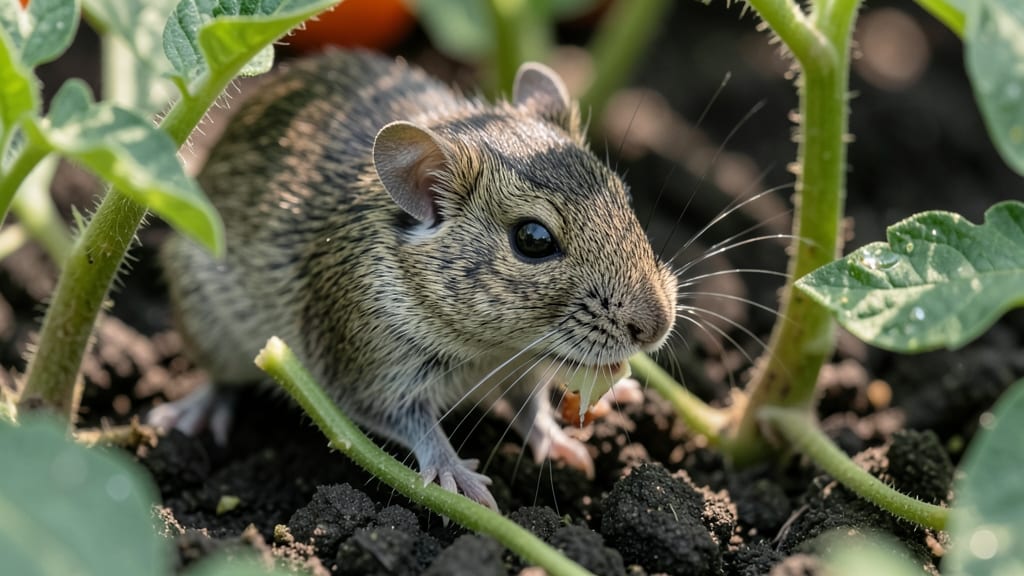
Voles eat tomato plants aggressively, chewing through stems at ground level, devouring roots, and sometimes nibbling ripe fruit. This girdling behavior severs nutrient flow, causing plants to wilt or die, while their burrowing creates unstable soil conditions.
Voles are notorious for their hidden destruction—these small, mouse-like rodents prefer chewing plant stems just above the soil line, which is exactly where young tomato seedlings are most vulnerable. 🌱 Unlike rabbits that graze leaves or deer that browse entire plants, voles create clean-cut damage that looks like someone used scissors, often leaving behind chewed stems and collapsed plants.
Their burrowing also disrupts root systems, making plants more susceptible to disease and stress.
What makes them particularly problematic is their preference for moist, well-drained garden soil—the same conditions that thrive tomato plants. A single vole can destroy multiple plants overnight, and their damage often goes unnoticed until it's too late.
The key to protecting your tomato garden is understanding their behavior and implementing targeted prevention strategies before they become a full-blown infestation.
💡 In This Article
- How Voles Damage Tomato Plants and Gardens
- Effective Vole Control Methods for Tomato Gardens
How voles damage tomato plants and gardens
Voles cause damage primarily through two destructive behaviors: stem girdling and root consumption. Their sharp incisors allow them to chew through stems at ground level, creating clean cuts that sever the plant's vascular system.
This girdling action is particularly devastating to tomato seedlings, as it cuts off water and nutrient flow, causing wilting within 24-48 hours. 🌱 Unlike rabbits that tear leaves or deer that browse foliage, voles leave behind telltale signs—collapsed stems with no visible bite marks on leaves, only the precise cuts at soil level.
Their burrowing habits further complicate matters. Voles dig extensive tunnel networks, often just below the surface where tomato roots spread. These tunnels create unstable soil conditions, making plants more prone to toppling or disease.
A single vole can create up to 30 feet of tunnels in a season, which destabilizes entire garden beds. The damage isn't just aesthetic—it disrupts the plant's ability to absorb water and nutrients, leading to stunted growth or complete death of affected plants.
What sets voles apart from other garden pests is their preference for moist, well-drained soil—the ideal conditions for tomato cultivation. While rabbits might graze on leaves or deer might trample plants, voles target the plant's life support system.
Their feeding patterns create a cascading effect: weakened plants become more susceptible to fungal infections, and the disrupted soil structure makes recovery nearly impossible. 🌿 This hidden destruction often goes unnoticed until gardeners spot the telltale signs of collapsed stems or unexplained wilting.
Another critical difference is their feeding behavior compared to other rodents. Mice, for example, nibble randomly, while voles create precise, surgical cuts. This targeted approach makes their damage more predictable—and more devastating.
Their burrowing also creates ideal conditions for other pests, as the disturbed soil attracts slugs and beetles that further stress tomato plants. The combination of stem damage, root disruption, and secondary pest attraction makes voles one of the most challenging garden pests to manage.
Understanding these mechanics is crucial for effective prevention. Voles thrive in dense ground cover, which provides both food and shelter. They're most active during dawn and dusk, when they venture above ground to feed. This behavior pattern means traditional repellents applied during the day may miss them entirely.
The key to protection lies in disrupting their access to both food and shelter while monitoring for early signs of their activity.
One often overlooked aspect is how voles' damage escalates during wet seasons. Their tunnels collapse more easily when saturated, creating larger gaps in garden beds. This is why gardeners in regions with heavy rainfall often report more severe vole damage.
The combination of soft soil and increased vole activity creates a perfect storm for tomato plant destruction. 🌧️ Recognizing these seasonal patterns can help gardeners implement preventive measures at the right time.