Vegetables
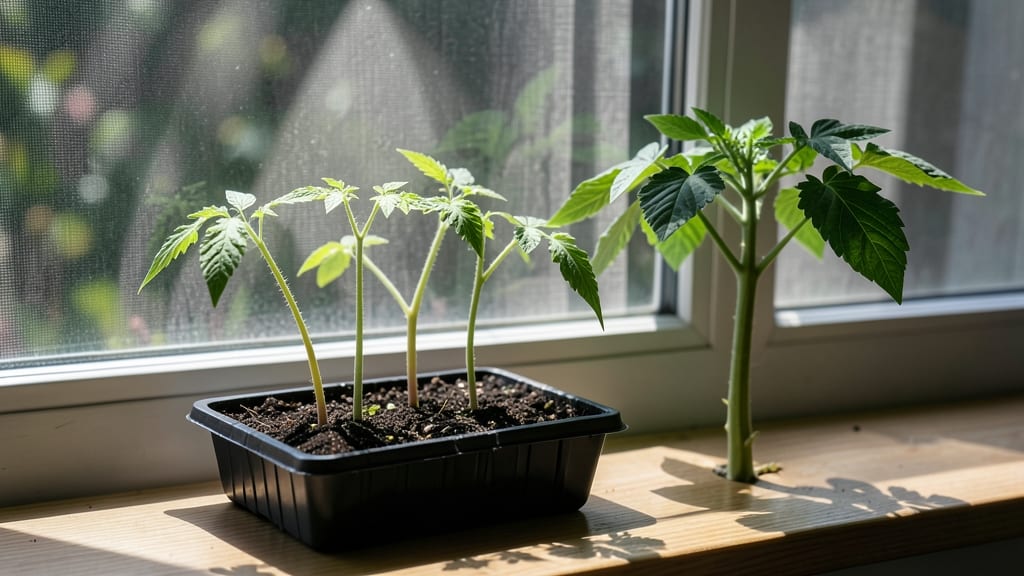
Leggy tomato seedlings are the fastest way to kill your gardening dreams before they even start. I’ve saved dozens of my own by acting fast—when those spindly stems reach for the light instead of growing strong, it’s time to intervene with the right supports and light adjustments.
The problem isn’t just weak stems; it’s usually a mix of poor light, overcrowding, or planting too deep. Seedlings stretch toward any light source, and without enough of it, they become top-heavy and prone to snapping.
My first year, I lost half my seedlings because I assumed a sunny windowsill would be enough—it wasn’t. With just three simple supports—grow lights, reflective surfaces, and proper spacing—you’ll see stocky stems in 5-7 days. The key is replicating sunlight intensity, not just duration.
Even a basic 10-inch grow light hung 6 inches above seedlings can transform them in a week. This method works for any seed-starting setup, from basement grow tents to kitchen windows.
The goal isn’t just survival—it’s seedlings that hit the garden ready to thrive, not flop over at the first breeze.
Root Causes Of Weak Seedling Growth
Understanding why your tomato seedlings stretch tall and spindly—rather than growing strong and sturdy—starts with recognizing the key factors at play. These causes often overlap, but addressing them early can save your plants from becoming weak and vulnerable.
Let’s break down the science behind leggy seedlings and what triggers this common (but fixable!) issue.
---
🌱 The #1 villain in leggy seedlings is light—or, more accurately, the lack of it.
Tomato seedlings rely on photosynthesis to convert light into energy, fueling healthy growth. When they don’t get enough light, they stretch toward any available source (a process called etiolation).
This causes: - Elongated stems (to reach light) - Pale, weak leaves (chlorophyll production slows) - Thin, brittle stems (prone to snapping)
Why it happens: - Indoor growing: Seedlings under artificial lights (or too far from windows) struggle to absorb enough blue and red spectrum light, which are critical for stem strength. - Overcrowding: Shady spots in trays or greenhouses block light from reaching lower seedlings. - Weather delays: Cloudy days or early spring planting can stunt light exposure.
Actionable insight: Aim for 12–16 hours of light daily (grow lights or sunny windowsills). Keep trays 1–2 inches below lights and rotate them weekly for even growth.
---
🌿 Too many seedlings competing for resources = leggy losers.
When seedlings are planted too closely, they compete aggressively for light, water, and nutrients. This forces them to stretch upward instead of growing compact and robust. Signs include: - Stems leaning or touching neighbors - Yellowing lower leaves (nutrient starvation) - Slow, uneven growth
Why it happens: - Thin sowing: Seeds planted less than 1 inch apart (or in dense trays) create a "jungle" effect. - Slow germination: If some seeds sprout later, early seedlings stretch to dominate space. - Poor air circulation: Crowded plants trap moisture, promoting fungal diseases that weaken stems.
Actionable insight: Thin seedlings to 2–3 inches apart once they have 2–3 true leaves. Use a small knife or scissors to avoid disturbing roots.
---
🔥 Heat speeds up growth—but not the good kind.
Tomato seedlings grow faster in warm conditions, but excessive heat (especially at night) leads to rapid, weak elongation.
This happens because: - Ethylene gas (a plant hormone) breaks down in heat, reducing stem strength. - Transpiration (water loss) outpaces root absorption, causing stems to weaken. - Soil temperature >85°F (29°C) can damage delicate roots, starving the plant.
Why it happens: - Greenhouse heat buildup: Plastic or glass traps warmth, especially in sunny climates. - Heating mats left on too long: Keeping seedlings warmer than 75°F (24°C) for extended periods. - No ventilation: Stagnant air raises humidity and temperature around seedlings.
Actionable insight: Maintain daytime temps of 70–75°F (21–24°C) and nighttime temps of 60–65°F (15–18°C). Use shade cloth or ventilation fans in greenhouses.
--- 💡 Fertilizer isn’t always the answer—sometimes it’s the problem.
While nitrogen is essential for leafy growth, too much (especially early on) causes seedlings to prioritize foliage over stem strength. Over-fertilized seedlings show: - Dark green, soft leaves (but weak stems) - Slow root development (nutrients go to leaves first) - Prone to disease (excess nitrogen attracts pests)
Why it happens: - Overzealous starter fertilizer: Using high-nitrogen mixes (like 10-10-10) before seedlings are established. - Compost or manure too soon: Organic amendments can burn tender roots if applied before transplanting. - Tap water with minerals: Hard water may add unintended nitrogen, tipping the balance.
Actionable insight: Skip fertilizer until seedlings have 2–3 true leaves. Use a balanced 5-5-5 or 3-4-6 mix at half-strength once transplanted.
--- 🌱 Moving seedlings too soon (or roughly) triggers emergency growth.
When seedlings are disturbed (e.g., during transplanting or thinning), they release stress hormones that trigger rapid, weak growth. This is nature’s way of saying, "Grow fast before you die!" Signs include: - Sudden stretching after handling - Wilting or drooping (even after watering) - Delayed root establishment
Why it happens: - Early hardening off: Moving seedlings outdoors too soon (before they’re 4–6 weeks old). - Root disturbance: Pulling seedlings instead of digging gently to preserve root balls. - Temperature swings: Moving from cozy indoor conditions to cold or windy outdoor spots.
Actionable insight: Harden off seedlings gradually (1–2 weeks before transplanting) and water thoroughly before and after moving. Use seedling clips or collars to protect stems during transplanting.
--- 🌿 Some tomatoes are just naturally leggy—here’s how to spot them.
Certain tomato varieties are bred for vining or indeterminate growth, making them more prone to stretching. Examples: - Cherry tomatoes (e.g., 'Sungold', 'Sweet 100') - Indeterminate heirlooms (e.g., 'Brandywine', 'Cherokee Purple') - Dwarf varieties (e.g., 'Tiny Tim') may stretch if light is poor.
Why it happens: - Fast growth habit: These varieties prioritize height to reach sunlight in competitive environments. - Long internodes: The spaces between leaves (nodes) are naturally longer in some genetics.
Actionable insight: If growing leggy-prone varieties, start with stronger supports (like cages or stakes) and prune lower leaves to encourage bushier growth. Choose determinate varieties (e.g., 'Roma', 'Celebrity') for stockier seedlings if space is limited.
Quick Fixes for Weak Tomato Stems
Leggy tomato seedlings can feel like a setback, but with the right adjustments, you can turn those wobbly stems into strong, productive plants. Below are practical, step-by-step solutions tailored to the most common causes—plus prevention tips to keep your seedlings sturdy from the start.
---
Cause: Too much competition for light and nutrients.
How to Fix It: 🔥 Thin seedlings early – Use clean scissors or your fingers to snip or gently pull out weaker seedlings, leaving only the strongest 2–3 inches apart. This gives remaining plants room to grow upright.
🍳 Repot immediately – If seedlings are cramped in trays, transplant them into individual pots (3–4 inches deep) with well-draining soil. This mimics outdoor spacing and encourages vertical growth.
👨🍳 Boost light exposure – Move seedlings to a sunny windowsill or under grow lights (12–16 hours/day). Avoid placing them in dim corners where they’ll stretch toward light.
💡 Pro Tip: If repotting isn’t an option, prune lower leaves to reduce strain on the stem while keeping the plant focused on upward growth.
---
Cause: Seedlings stretching toward weak or insufficient light.
How to Fix It: 🔪 Adjust light sources – If using artificial lights, position them 2–4 inches above seedlings (closer than you think!). Use full-spectrum LED grow lights for best results.
⏰ Extend daylight hours – Supplement natural light with grow lights in the evening (even 2–3 extra hours helps). A simple timer makes this effortless.
🌡️ Rotate seedlings daily – Turn trays quarter-turns every 24 hours so all sides get even light, preventing lopsided growth.
🎯 Prevention: Start seeds indoors 6–8 weeks before the last frost date to ensure they’re strong enough for transplanting when outdoor light improves.
---
Cause: Moisture stress weakens stems and encourages legginess.
How to Fix It: 💧 Check soil moisture – Stick your finger 1 inch deep into the soil. Water only when the top layer feels dry. Overwatering suffocates roots, while underwatering stresses plants.
🥗 Use the right soil mix – Amend potting soil with perlite or vermiculite (20% mix) to improve drainage. Avoid compacted or waterlogged soil.
🍎 Water at the base – Avoid wetting leaves to prevent fungal diseases. Use a watering can with a narrow spout for precision.
✨ Prevention: Let seedlings dry slightly between waterings—this builds root strength. A moisture meter can help gauge consistency.
---
Cause: Too much nitrogen (or too little) leads to weak stems.
How to Fix It: 📊 Test soil pH – Aim for 6.0–6.8. Use a simple pH kit or digital meter to adjust with lime (to raise pH) or sulfur (to lower it).
💪 Fertilize lightly – Switch to a balanced fertilizer (e.g., 5-5-5 or 10-10-10) diluted to half strength. Over-fertilizing burns roots and encourages leggy growth.
🥗 Add compost tea – Brew a weak compost tea (1:10 ratio) to provide micronutrients without overwhelming seedlings.
🎯 Prevention: Hold off on fertilizer until seedlings have 2–3 true leaves. At that point, use a low-dose organic option like fish emulsion.
--- Cause: Seedlings lack stability, leading to weak stems.
How to Fix It: 🔥 Stake or cage early – Insert toothpicks, chopsticks, or small stakes beside seedlings as soon as they’re 3–4 inches tall. Gently tie stems with soft plant ties or old pantyhose.
🍳 Use a DIY trellis – For multiple seedlings, create a mini trellis with bamboo stakes and twine to encourage upward growth.
👨🍳 Prune strategically – Once seedlings hit 12 inches tall, pinch off the top set of leaves (just above a leaf node). This prompts bushier growth and stronger stems.
💡 Pro Tip: If seedlings are already leggy, bury 1/3 of the stem when transplanting—roots will form along the buried section, creating a sturdier base.
--- Final Thought: Leggy seedlings aren’t a death sentence—they’re just asking for better conditions. With these fixes, your tomatoes will grow taller, stronger, and ready for the garden in no time! 🍅✨
Frequently asked questions
Why do my tomato seedlings grow tall and skinny instead of sturdy?
This happens when seedlings don't get enough light, causing them to stretch toward any available source in a process called etiolation. Other common causes include overcrowding, inconsistent moisture, or excessive heat. The good news is that these issues are easily fixable with proper light exposure and spacing adjustments.
Can I save leggy tomato seedlings, or should I start over?
You can absolutely save them! Simply provide stronger light (12-16 hours daily), thin them to 2-3 inches apart, and add support like toothpicks or small stakes. With these adjustments, you'll see stronger stems within 5-7 days. Starting over is rarely necessary unless the stems are already too weak to support themselves.
What's the best way to support leggy seedlings without damaging them?
Use soft materials like old pantyhose, plant ties, or even paper clips to gently secure stems to supports. Insert toothpicks or small stakes beside each seedling and tie them loosely—just enough to provide stability without constricting growth. For extra strength, bury 1/3 of the stem when transplanting to encourage root formation along the stem.
How close should grow lights be to prevent leggy seedlings?
Keep grow lights 2-4 inches above seedlings—closer than you might think! Use a timer for 12-16 hours of light daily and rotate trays quarter-turns every 24 hours to prevent lopsided growth. LED grow lights are ideal as they provide the full spectrum of light needed for strong stem development.
Will pruning help leggy tomato seedlings grow stronger?
Yes! Prune by removing the bottom set of leaves to reduce strain on weak stems. Once seedlings reach 12 inches tall, pinch off the top set of leaves just above a leaf node to encourage bushier, stronger growth. This redirection of energy helps produce stockier stems and more compact plants.