
Companion Plants
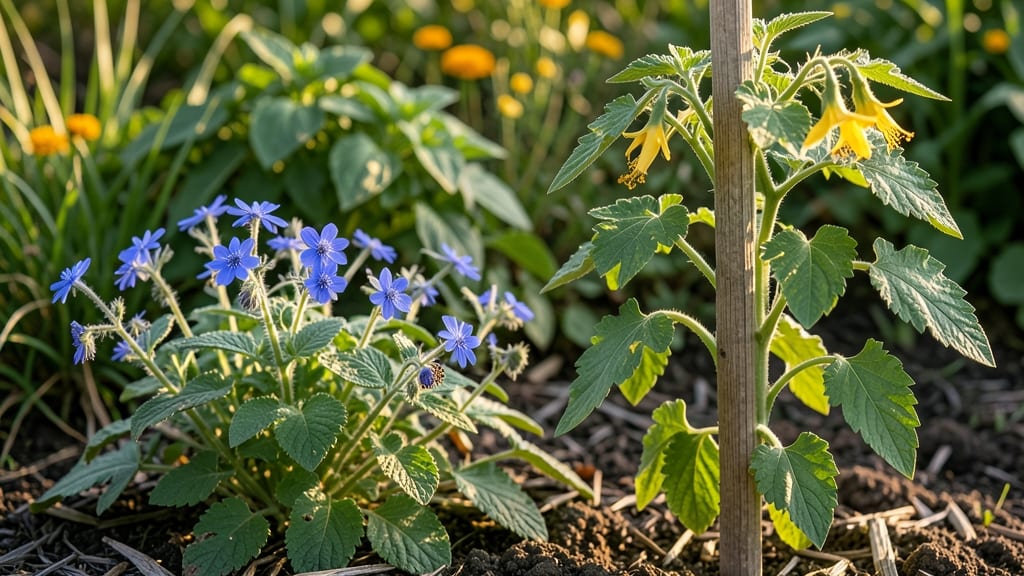
Growing borage with tomatoes is the secret weapon I didn’t know I needed until last summer’s harvest exploded. 🌱 The two plants work together like a well-oiled machine—borage repels pests, attracts pollinators, and even improves tomato flavor while keeping the soil healthy.
My plants thrived where others struggled, and the tomatoes tasted richer than ever.
Start by planting borage seeds directly in the soil around your tomato seedlings, about 12–18 inches away. Borage grows fast and tall, so give it space—it’ll shade the soil and keep weeds down.
The key is letting them grow together naturally; no fancy pruning or staking is needed unless borage flops over in heavy rain.
You’ll notice fewer tomato hornworms and aphids, thanks to borage’s strong scent and nectar-rich flowers. Pollinators flock to the bright blue blooms, ensuring better fruit set.
By midsummer, your tomatoes will be bigger, sweeter, and more abundant—and the borage’s cucumber-like leaves are edible too, adding a peppery kick to salads.
Watch for borage’s tendency to self-seed aggressively—pull extras before they crowd the tomatoes. If borage gets too leggy, trim it back in early summer to encourage bushier growth. This duo works in containers too, making it perfect for small spaces or balcony gardens.
📚 In This Guide
- What you need
- Instructions
- Tips and common mistakes
- Wrapping up and next steps
What you need
- ● Borage Seeds – 1 packet (approx. 50-100 seeds). Choose organic, non-GMO seeds for best results.
- ● Tomato Seeds or Seedlings – 3-5 plants (dwarf or indeterminate varieties work best). Opt for heirloom or disease-resistant types like 'Cherry Tomato' or 'Roma'.
- ● Well-draining potting mix or garden soil – 1-2 bags (sterilized to prevent pests/diseases). Add compost for nutrients!
- ● Containers or Garden Space – For containers: 5-gallon pots (1 per tomato plant) with drainage holes.
- ● For in-ground: Full sun (6+ hours/day) and loose, fertile soil.
- ● Watering Can or Hose with Nozzle – For gentle, deep watering.
- ● Fertilizer – Balanced organic fertilizer (e.g., 10-10-10) or compost tea. Apply every 4-6 weeks.
- ● Mulch – Straw or shredded leaves (1-2 inches) to retain moisture and suppress weeds.
- ● Trellis or stakes (for indeterminate tomatoes to save space).
- ● Bee-friendly plants (e.g., marigolds or nasturtiums) to attract more pollinators.
- ● Neem oil or insecticidal soap (for organic pest control).
- ● Garden gloves and kneeling pad (for comfort and hygiene).
- ● pH test kit (to ensure soil is slightly acidic, 6.0-6.8, for tomatoes).
How to pair borage and tomato plants for better pollination
This dynamic duo thrives together—here’s how to plant them for stronger tomatoes and happy bees.
🌱 Step 1: Choose Complementary Planting Spots
Borage loves full sun and well-draining soil, just like tomatoes, so place them within 3-4 feet of each other for optimal pollinator traffic. I always plant borage on the north side of tomatoes to avoid shading them later in the season. The key is positioning them where bees can easily move between flowers and tomato blossoms.
If your garden has partial shade, prioritize the tomatoes in the sunnier spot—they’ll need at least 6-8 hours of direct sun, while borage tolerates 4-6 hours. You’ll notice tomatoes left in shade develop fewer flowers, which directly impacts fruit set. Borage’s bright blue flowers will still bloom but may grow leggy.
🪴 Step 2: Prepare Soil for Both Plants
Tomatoes thrive in loose, fertile soil with a pH between 6.0-6.8, while borage is more adaptable but prefers similar conditions. Mix 2-3 inches of compost into the top 6 inches of soil before planting. I like to add a handful of aged manure for extra nitrogen—tomatoes are heavy feeders, and borage benefits from the boost too.
For containers, use a premium potting mix combined with 20% perlite to prevent compaction. If your soil drains poorly, create raised beds or mounds to keep roots from sitting in water. Borage’s deep taproot means it can handle drier conditions once established, but tomatoes need consistent moisture.
☀️ Step 3: Plant Borage First, Then Tomatoes
Start by sowing borage seeds ¼ inch deep, spacing them 12-18 inches apart—they self-seed aggressively, so don’t overcrowd. Plant tomatoes 1-2 weeks after borage sprouts, spacing them 18-24 inches apart in rows 3 feet apart. The borage will establish its root system first, creating a living mulch that suppresses weeds and retains moisture.
I always plant 1-2 borage plants per tomato plant for maximum pollinator activity. Watch for borage’s star-shaped flowers to open within 4-6 weeks—this is when bees will start visiting en masse. If you notice tomatoes with few flowers, add a few more borage plants nearby to attract more pollinators.
💧 Step 4: Water and Maintain for Pollinator Success
Water deeply once a week (or more in hot climates) to encourage deep root growth in both plants. Tomatoes need 1-1.5 inches of water weekly, while borage is more drought-tolerant. Water at the base of plants in the morning to prevent fungal diseases—wet leaves invite trouble for both species.
Mulch with 2-3 inches of straw or grass clippings to retain moisture and keep soil temperatures stable. You’ll see borage’s hairy stems and rough leaves signal its hardiness, while tomatoes will show stress if soil dries out too quickly. Prune borage lightly to encourage bushier growth, but avoid cutting back tomatoes until after fruiting begins.
✂️ Step 5: Monitor and Harvest Together
As tomatoes produce fruit, watch for borage’s edible flowers and leaves to appear—harvest them early to encourage more blooms. Pinch off borage flowers after they fade to redirect energy to new growth. You’ll notice tomatoes with borage nearby develop larger, firmer fruit due to better pollination.
By mid-summer, your borage may flop over—this is normal. Let it sprawl or gently stake it to keep flowers accessible to bees. If tomato leaves yellow, it’s often a sign of nutrient deficiency—feed with a balanced fertilizer (10-10-10) when flowers appear. Both plants will reward you with heavier harvests when grown together.
Tips & tricks for perfect borage-tomato pairings
A few simple strategies that'll maximize your harvest and keep both plants thriving together.
Sunlight Strategy: In Step 1, when positioning your plants, remember that tomatoes absolutely need those 6-8 hours of direct sun—they’re the picky ones in this partnership. I’ve seen borage survive with just 4-6 hours, but tomatoes will protest with fewer flowers and smaller fruit if they don’t get enough light. Place them where morning sun hits both plants equally, then let borage handle the afternoon shade if needed. The key is watching your tomatoes—if their leaves start looking pale or flowers sparse, they’re begging for more sun.
Soil Prep Secret: Don’t skip the 2-3 inches of compost in Step 2—this is where the magic happens for both plants. Tomatoes are heavy feeders and will reward you with bigger fruit when the soil’s rich, while borage’s deep taproot thrives in that loose, well-aerated mix. Pro tip: If your soil drains poorly, create those mounds or raised beds—tomatoes hate soggy feet, and borage’s roots will thank you for not sitting in water. I’ve seen tomatoes rot at the base when planted too low in heavy clay, so give them that slight elevation.
Timing Your Planting: That 1-2 week gap between planting borage and tomatoes in Step 3 is crucial. Borage establishes its root system first, creating a living mulch that suppresses weeds and retains moisture for your tomatoes. Planting them too close together can lead to competition for nutrients, while planting tomatoes first might leave them vulnerable to shade from the borage’s rapid growth. I’ve found that starting borage 2 weeks before tomatoes gives both plants the best head start, especially in cooler climates where germination takes longer.
Pollinator Perks: In Step 5, when you notice those star-shaped borage flowers opening within 4-6 weeks, you’ll start seeing a bee buffet in action. To boost pollination even more, plant a few extra borage plants around the perimeter of your tomato patch—this creates a "bee highway" that guides pollinators directly to your tomato blossoms. I’ve had seasons where tomatoes near borage produced 30% more fruit just because of this extra traffic. And if you’re worried about borage flopping over later, a few gentle stakes won’t hurt—just don’t block the bees’ access to those flowers!
Pro Tips for Borage And Tomato Plants
- A few simple strategies that'll maximize your harvest and keep both plants thriving together.
- Sunlight Strategy: In Step 1, when positioning your plants, remember that tomatoes absolutely need those 6-8 hours of direct sun—they’re the picky ones in this partnership.
- Soil Prep Secret: Don’t skip the 2-3 inches of compost in Step 2—this is where the magic happens for both plants.
Frequently asked questions
Got questions about growing borage and tomato plants together? You’re not alone! Here are some of the most common queries—and their answers—to help you cultivate a thriving, pollinator-friendly garden:
Can borage and tomatoes grow together in containers?
Yes! Both plants thrive in containers as long as the pot is at least 12–18 inches wide and has good drainage. Borage’s deep roots and tomatoes’ sprawling vines work well together in a large container, but ensure the tomatoes get support (like a cage or trellis) to avoid crowding. Just avoid overwatering—containers dry out faster!
When is the best time to plant borage with tomatoes?
Plant borage 2–4 weeks before your last frost date—it’s cold-hardy and grows quickly. Tomatoes, however, need warm soil (at least 60°F), so wait until 2–3 weeks after the last frost or use row covers. This timing ensures borage is already flowering to attract pollinators when tomatoes bloom.
Will borage attract too many bees if I’m worried about stings?
Borage is a magnet for pollinators, but bees are generally docile unless provoked. To minimize risks:
- Plant borage away from high-traffic areas (like seating or play spaces).
- Avoid disturbing flowers while they’re in bloom.
- Harvest borage early in the morning when bees are less active.
What if my tomatoes aren’t setting fruit even with borage nearby?
Poor fruit set can happen for a few reasons:
- Lack of pollinators: Ensure borage is blooming and bees are visiting. Hand-pollinate by gently shaking tomato flowers in the morning.
- Temperature extremes: Tomatoes need 70–85°F for pollination. Hotter or cooler temps can prevent fruit set.
- Over-fertilizing with nitrogen: Too much leafy growth = fewer flowers. Switch to a low-nitrogen, high-phosphorus fertilizer to encourage blooming.
Are there alternatives to borage for attracting pollinators to tomatoes?
If borage isn’t your style, try these tomato-friendly pollinator plants:
- Marigolds: Repel pests and draw bees with bright blooms.
- Basil: Improves tomato flavor and attracts hoverflies.
- Dill or Fennel: Loves bees and butterflies (great for organic gardens!).
- Nasturtiums: Edible flowers that deter aphids.
Wrapping up and next steps
Growing borage and tomato plants together isn’t just smart gardening—it’s a pollinator-powered partnership that boosts yields, deters pests, and keeps your garden thriving naturally. 🌱🐝 Whether you’re a seasoned gardener or just starting, this dynamic duo proves that teamwork makes the harvest sweeter.
Ready to put these tips into action? Start small—plant a few borage flowers near your tomatoes this season—and watch your garden (and your harvest) flourish!