
Planting
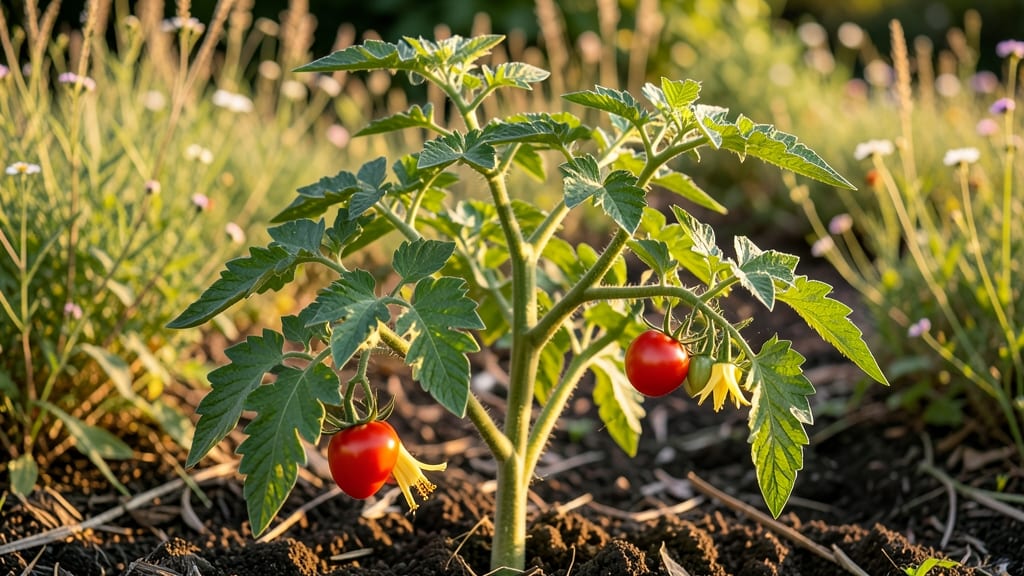
Tomato plant leaves look like deep green, oval-shaped leaflets with jagged serrated edges, arranged in compound clusters of 5-9 leaflets per stem. Healthy leaves appear glossy and firm, while sick leaves often show yellowing, spots, or curled edges.
Tomato plant leaves are easy to recognize once you know what to look for. 🌿 The deep green color and serrated edges are classic signs of a thriving plant, while the compound arrangement of leaflets (5-9 per stem) sets them apart from other garden plants.
What's fascinating is how these features vary slightly between heirloom and hybrid varieties—some have broader leaflets, while others are more finely divided. This visual diversity helps gardeners quickly identify their tomato plants among other greens.
Understanding these details helps you catch problems early. For example, yellowing leaves often signal nutrient deficiencies, while dark spots could indicate fungal infections like early blight. The key is regular inspection—just a few minutes spent observing your plants can prevent major issues down the line.
I always check the undersides of leaves first, as that's where many pests and diseases first appear.
💡 In This Article
- Identifying Healthy Tomato Plant Leaf Characteristics
- Visual Guide to Common Tomato Leaf Diseases and Pests
Identifying healthy tomato plant leaf characteristics
The botanical beauty of healthy tomato leaves lies in their compound structure, where each stem typically supports 5-9 leaflets arranged in a pinnate pattern. These leaflets are oval-shaped with serrated edges that resemble a saw blade under magnification, giving them about 15-20 teeth per inch.
The leaflets grow alternately along the stem, creating a staggered appearance that maximizes sunlight exposure—a key adaptation for photosynthesis efficiency.
Color-wise, healthy tomato leaves display a vibrant deep green hue, thanks to high chlorophyll content that absorbs blue and red light wavelengths. Younger leaves often appear slightly lighter, almost lighter green with reddish veins, while mature leaves develop a richer dark green color.
The surface is smooth and waxy, which helps repel water and reduce fungal infections. This waxy coating is especially noticeable when you run your fingers along the leaf surface—it feels almost slightly slippery, similar to a fresh basil leaf.
Vein structure plays a crucial role too. The central vein runs down the middle of each leaflet, with secondary veins branching out at 45-degree angles, creating a network that supports the leaf's structure.
Heirloom varieties like 'Brandywine' often have broader leaflets with more pronounced veins, while hybrid varieties such as 'Early Girl' tend to have narrower leaflets with finer vein patterns. This structural difference affects how quickly water and nutrients are transported throughout the plant.
Growth patterns also vary by variety. Determinate tomatoes (like 'Roma') produce leaves that grow in a more compact, bushy formation, while indeterminate varieties (like 'Sungold') develop long, trailing vines with leaves spaced further apart.
The leaf size itself ranges from 2-6 inches long, with heirlooms often producing larger leaves compared to their hybrid counterparts. These variations help gardeners identify their specific tomato varieties just by examining the foliage.
One fascinating detail is how leaf texture changes with maturity. Young leaves start out soft and velvety, but as they mature, they develop a sturdier, leathery texture that protects against physical damage. This hardening process is triggered by plant hormones like ethylene, which also influence the leaf's final shape.
The undersides of healthy leaves are typically lighter green and slightly hairy—a trait that helps reduce water loss and deter some pests.
What most gardeners don't realize is how leaf arrangement affects airflow. The compound structure creates natural gaps between leaflets, allowing air to circulate freely through the plant. This airflow is crucial for preventing fungal diseases, as it reduces humidity levels that fungi thrive in.
When you see dense, overlapping foliage, it's often a sign that the plant needs pruning to improve this natural ventilation system.