
Pruning
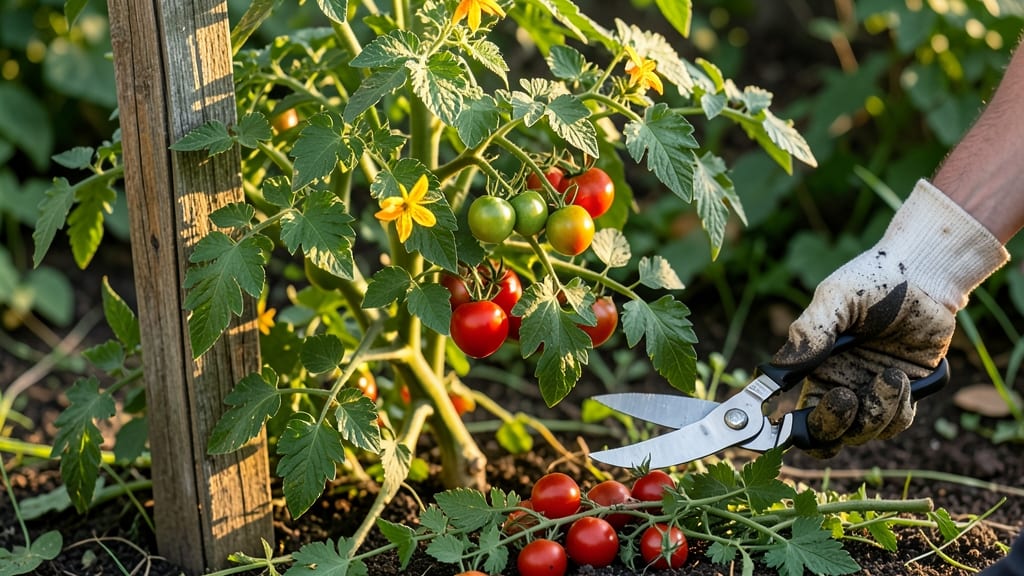
Trimming tomato leaves isn't just about tidying up—it's the secret to doubling your harvest this season. 🌱 I learned the hard way that skipping this step leaves plants crowded, fruits stunted, and pests hiding in the shadows. The right cuts redirect energy to where it matters: bigger, sweeter tomatoes.
Start early by removing the bottom leaves that touch soil (they rot and attract disease). Then, snip suckers—those little shoots between stems and leaves—before they drain your plant.
Use clean pruners or your fingers for a quick pinch; no need for fancy tools. The goal? Sunlight on every leaf and airflow to prevent fungal problems.
You'll notice the difference in just two weeks: plants stand taller, flowers multiply, and fruit swells faster. My heirloom tomatoes went from 6 pounds to 20 pounds per plant last summer after I mastered this.
The key? Less is more—never trim more than 20% of the plant at once, or you'll shock it.
Works for determinate (bush) and indeterminate (vining) varieties, though indeterminate plants need more frequent trimming. Even in small spaces, this technique delivers professional-level results with minimal effort. Ready to transform your tomatoes?
📚 In This Guide
- What you need
- Instructions
- Tips and common mistakes
- Wrapping up and next steps
What you need
- ● Pruning shears: Clean, sharp bypass pruners (avoid anvil pruners—they crush stems). Size: 5–7 inches for precision.
- ○ Gloves: Heavy-duty gardening gloves (to protect against thorns and dirt). Optional: Nitrile-coated for extra grip.
- ● Disinfectant: 70% isopropyl alcohol or a 10% bleach solution (1 part bleach to 9 parts water) to sterilize tools between cuts.
- ● Trimming tray or bucket: A shallow container to collect trimmed leaves and debris (5–10 gallons capacity).
- ● Tomato plants: Healthy, established plants (3–6 weeks post-transplant for best results). Note: Avoid trimming determinate varieties unless necessary.
- ● Hose or spray bottle: For rinsing tools or wetting leaves before trimming (reduces dust and stress on plants).
- ● Plant markers: Small flags or labels to track trimmed sections (helpful for large gardens).
- ● Compost bin: For repurposing trimmed leaves (avoid composting if leaves show signs of disease).
- ● Sunscreen & hat: Because even pruning pros need to stay protected! ☀️
Step-by-step instructions for precision tomato leaf pruning
Here’s how to prune tomatoes like a pro—boosting fruit production while keeping plants healthy.
✂️ Step 1: Identify and Remove Suckers Early
Suckers are the small shoots that grow between the main stem and branches. These compete with your fruit for energy, so remove them when they’re no bigger than a pencil—this prevents wasted growth. Use clean, sharp pruning shears or your fingers to pinch them off at the base. I like to do this in the morning when the plant is turgid and easier to handle.
Focus first on the bottom third of the plant, where suckers appear most frequently. If you spot a sucker larger than 2 inches, cut it back to a leaf node below it. This ensures the plant redirects energy to existing fruit rather than new growth. Real talk: if you wait too long, those suckers will turn into thick, woody stems that are harder to remove later.
☀️ Step 2: Thin Leaves for Better Airflow and Sunlight
Overcrowded foliage traps moisture and invites disease, so aim to keep the plant open and airy. Start by removing lower leaves that touch the soil—these are prone to rot and pests. Use a sterilized pruner (wipe with rubbing alcohol between cuts) to avoid spreading pathogens. I usually trim leaves up to 12 inches from the ground, but adjust based on your plant’s health and sunlight exposure.
Next, focus on the upper canopy. Remove leaves that shade the fruit clusters—you want sunlight to reach the developing tomatoes for even ripening. A good rule of thumb: if a leaf blocks light from hitting a fruit, it’s time to go. This step is especially critical in humid climates, where poor airflow leads to fungal issues like early blight.
🌱 Step 3: Prune for Structural Balance and Fruit Load
Tomatoes need a balance between vegetative growth and fruit production. If your plant is laden with more than 3-4 clusters of fruit, prune back some of the smaller or lower clusters to prevent overburdening. Focus on keeping the strongest, healthiest branches—these will produce the largest, ripest tomatoes. I often leave just one or two main stems on indeterminate varieties to simplify care and improve airflow.
For determinate (bush) tomatoes, minimal pruning is key—just remove diseased or yellowing leaves. Over-pruning these can reduce yield. Watch for new growth at the leaf axils (where leaves meet the stem) and prune those suckers aggressively. This encourages the plant to focus on ripening existing fruit rather than sending out new shoots.
⏰ Step 4: Time Your Pruning for Maximum Impact
Prune early in the morning when temperatures are cooler and the plant is hydrated. Avoid trimming in the heat of the day—stressed plants are more vulnerable to pests and disease. I also recommend pruning in stages rather than all at once. Start with suckers and lower leaves in early season, then shift to canopy thinning as fruit sets. This gradual approach reduces shock and keeps the plant productive.
Stop pruning 4-6 weeks before your first frost date—you want the plant to focus on ripening existing fruit, not new growth. If you’re growing in a short-season climate, prioritize pruning early in the season to maximize harvest time. And here’s the thing—if your plant looks stressed after pruning, give it a deep watering and a light fertilizer application (like fish emulsion) to help it recover.
🌿 Step 5: Monitor and Adjust for Ongoing Health
After your initial pruning, check your tomatoes weekly for new suckers, yellowing leaves, or signs of disease. I keep a small notebook to track pruning dates and plant responses—this helps me adjust my approach for next season. If you notice wilting or stunted growth after pruning, you may have removed too much foliage. In that case, leave some leaves to recover and avoid heavy pruning for a few weeks.
Pay special attention to the fruit clusters. If you see blossoms but no fruit setting, your plant might be over-pruned or stressed. In this case, reduce pruning and focus on watering deeply and providing balanced fertilizer. The goal is a plant that looks like it’s working hard—vigorous but not overwhelmed. With consistent pruning, you’ll see bigger, riper tomatoes and fewer issues with disease or pest infestations.
Tips & tricks for precision tomato pruning
These game-changing strategies will transform your tomato harvest—here’s how to prune like a seasoned gardener.
Tool Prep Matters: Sterilize your pruning shears between cuts with rubbing alcohol to prevent spreading disease from one part of the plant to another. I also keep a small spray bottle of diluted bleach (1 part bleach to 9 parts water) handy for quick disinfection if I don’t have alcohol. This simple step prevents fungal infections that can devastate your crop—especially in humid conditions where spores spread rapidly.
Visual Pruning Cues: When thinning leaves in Step 2, look for the "light test"—hold a flashlight behind the plant and remove leaves that cast shadows over fruit clusters. This ensures sunlight reaches developing tomatoes for even ripening. I also watch for leaves with yellowing edges (nutrient deficiency) or brown spots (early blight)—these should go first, as they’re already compromised. The goal is to create an open canopy that allows air circulation while maintaining the plant’s ability to photosynthesize.
Seasonal Adjustments: In Step 4, the 4-6 week pruning cutoff before frost is critical for short-season climates. If you’re in a warmer region, you can extend this slightly, but never prune after the first frost—cold-stressed plants won’t recover. I’ve learned this the hard way after accidentally pruning too late in fall and losing potential harvest. For indeterminate varieties, focus pruning efforts on the lower third of the plant early in the season, then shift upward as fruit sets to maximize sunlight exposure to developing tomatoes.
Recovery Strategy: If your plant shows signs of stress after pruning (wilting, stunted growth), immediately provide deep watering and a light fertilizer application like fish emulsion. The plant needs to rebuild its energy reserves after the shock of pruning. I’ve found that a 1-inch deep watering (about 1 gallon per plant) helps stabilize the plant while it recovers. This is particularly important for container-grown tomatoes, which have less root system to recover from pruning stress.
Pro Tips for Trim Tomato Leaves
- These game-changing strategies will transform your tomato harvest—here’s how to prune like a seasoned gardener.
- Tool Prep Matters: Sterilize your pruning shears between cuts with rubbing alcohol to prevent spreading disease from one part of the plant to another.
- Visual Pruning Cues: When thinning leaves in Step 2, look for the "light test"—hold a flashlight behind the plant and remove leaves that cast shadows over fruit clusters.
Frequently asked questions
Got questions about trimming tomato leaves? You’re not alone! Here are some of the most common queries—and straightforward answers—to help you prune like a pro.
When is the best time to trim tomato leaves?
Trim tomato leaves early in the morning when plants are hydrated and temperatures are cooler. Avoid pruning in extreme heat or late in the day, as this can stress the plant. Focus on removing leaves below the first flower cluster to maximize airflow and sunlight for fruit development.
How much of the tomato plant should I trim?
Remove only the lower leaves (up to 12–18 inches from the ground) and any yellow or diseased foliage. Avoid over-pruning—never trim more than 25–30% of the plant at once. Indeterminate tomatoes (like Roma or Cherry) benefit from ongoing trimming, while determinate varieties (like Bush Early Girl) need minimal pruning.
What if I trim too much? Will my tomatoes suffer?
Over-pruning can reduce fruit production by limiting the plant’s energy. If you’ve already trimmed too aggressively, stop immediately and focus on watering deeply and fertilizing lightly (with a balanced 10-10-10 mix). The plant may recover, but growth could be slower. Next time, err on the side of caution!
Can I use scissors or should I pinch leaves by hand?
Both work, but clean pruning shears (sterilized with rubbing alcohol) are best for larger stems to avoid tearing. For small leaves or suckers, pinching by hand is faster and gentler. Always cut just above a leaf node (the bump where leaves grow) to encourage healthy regrowth.
What if my tomato plant looks stressed after trimming?
Stress is normal—just give it time! Water the base (not the leaves) to reduce shock, and avoid fertilizing for a week. If leaves wilt or yellow, it could signal underwatering or disease. If the issue persists, check for pests (like aphids) or fungal spots. Most plants bounce back within 3–5 days with proper care.
Wrapping up and next steps
Trimming tomato leaves isn’t just about aesthetics—it’s a game-changer for healthier plants and bigger, juicier harvests! 🍅 By focusing on precision pruning, you’ll improve airflow, reduce disease risks, and direct energy to fruit production.
Whether you’re a seasoned gardener or just starting, these techniques are easy to master with the right tools and timing.
Ready to elevate your tomato game? Grab your pruners, head to the garden, and start trimming with confidence. Your future harvests will thank you—one leaf at a time! 🌱