
Pruning
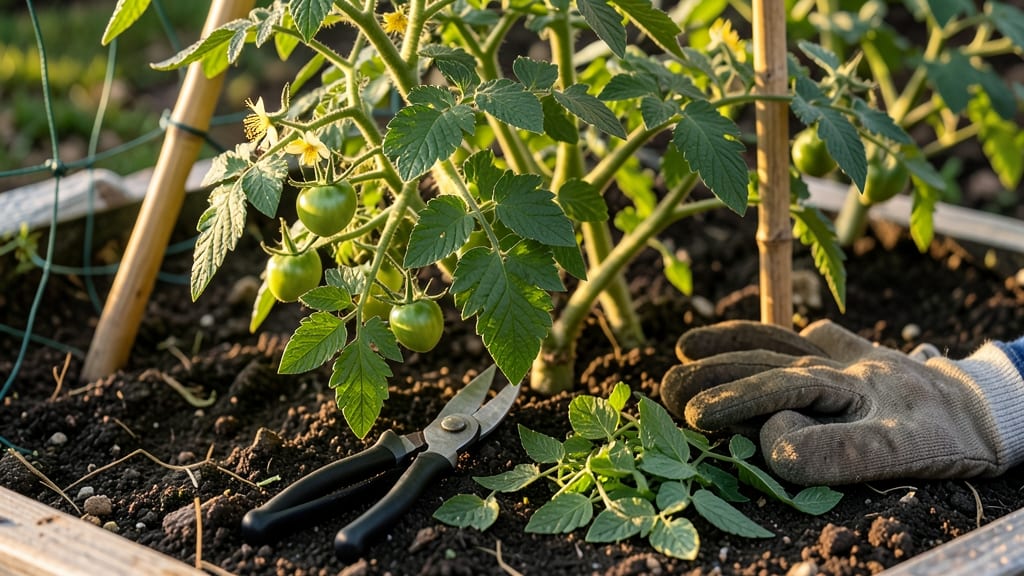
Trimming the leaves of your tomato plants now means pounds more fruit later. 🌱 I learned the hard way that skipping leaf trimming leads to crowded vines, fewer tomatoes, and plants that struggle to stay upright.
The right cuts improve airflow, prevent disease, and direct energy where it matters—straight to those juicy red (or yellow, or purple) rewards you're growing for.
You'll need sharp pruners, a clean towel for wiping blades, and about 15 minutes of focused time every 1-2 weeks. The key moves are removing suckers (those little shoots between stems), trimming lower leaves that touch soil, and snipping any yellow or diseased foliage.
For indeterminate varieties, this keeps plants growing upward; determinate types need less pruning but still benefit from better airflow.
What you end up with is a tomato plant that stays strong through heat waves, produces 30-50% more fruit, and resists common diseases like blight.
The first harvest arrives earlier, and each vine supports heavier clusters without snapping. Even my black-thumb neighbor can master this—it's more about timing than skill.
Works for both backyard gardens and container-grown tomatoes. The same principles apply whether you're growing heirlooms or cherry varieties. Let's get those plants pruned right—your future salads will thank you.
📚 In This Guide
- What you need
- Instructions
- Tips and common mistakes
- Wrapping up and next steps
What you need
- ● Pruning shears or bypass pruners: Sharp, sterilized shears (1 pair) with a 4- to 6-inch blade for clean cuts. Avoid dull tools—they crush stems!
- ● Gloves: A pair of gardening gloves (nitrile-coated for grip and protection) to shield hands from thorns and dirt.
- ● Disinfectant (70% isopropyl alcohol or bleach solution): A small spray bottle or cloth to sterilize tools between cuts and prevent disease spread.
- ● Trash bag or bucket: A 10-20 gallon container (with a lid) to collect pruned leaves and stems—keep them far from your garden!
- ○ Ladder (optional but helpful): A stable, lightweight step ladder (4-6 feet tall) for reaching tall tomato plants safely.
- ● Labeling tags or markers: Small tags or a permanent marker to label pruned branches if composting or repurposing them.
- ● Hand pruners with a bypass blade: For delicate cuts on smaller stems (great for determinate tomato varieties).
- ● Knee pads or a small stool: For comfort when working close to the ground.
- ● Spray bottle with water: To mist shears and prevent rust between uses.
- ● Compost bin or pile: If you’re repurposing trimmings, keep a designated area for dry, leaf-free stems.
- ● Sunscreen and hat: Because even tomato trimming can turn into a sunny outdoor session! ☀️
Step-by-step guide to trimming tomato leaves for healthier plants
Here's how to prune like a pro—no guesswork, just bigger yields and stronger stems.
🌿 Step 1: Identify Leaves to Remove
Focus on leaves that aren't contributing to fruit production. The first leaves to go are those on the lower stem—any below the first flower cluster should be cut away. These shaded leaves compete for energy, and removing them improves airflow, reducing disease risk like blight. I always start at the base and work upward, keeping only the leaves that can photosynthesize effectively.
Watch for leaves with yellowing edges or spots—these are already struggling and should be trimmed immediately. Healthy leaves should be deep green and firm to the touch. If a leaf feels papery or has brown patches, it's time to snip it off. Use clean, sharp pruners to avoid tearing the stem.
✂️ Step 2: Make Clean Cuts at the Right Spots
Never rip leaves—always cut just above a leaf node where new growth can emerge. Look for the small bump on the stem where leaves and branches grow out. Cutting ¼ inch above this node ensures the plant can heal properly and new shoots will form. I angle my cuts slightly downward to prevent water from pooling on the wound, which could lead to rot.
For suckers—the little shoots that grow in the V-shaped junction between the main stem and a branch—pinch them off when they're still small. Suckers drain energy from your plant, so removing them early keeps the focus on fruit production. If you wait too long, the sucker will grow larger and become harder to remove without damaging the main stem.
☀️ Step 3: Prune for Light and Airflow
Step back and look at your plant from all sides. You want sunlight to reach the center where tomatoes form. Trim any leaves that block light from hitting the fruit clusters. I like to leave just enough foliage to shade the tomatoes slightly from intense afternoon sun, which can cause sunscald. Aim for a balanced canopy—not too dense, not too sparse.
After pruning, give your plant a quick inspection for pests like aphids or spider mites. These hide in dense foliage, so removing leaves disrupts their habitat. If you spot any, wipe the stems with a damp cloth or spray with neem oil. Pruning is your chance to catch problems early before they spread.
🌱 Step 4: Monitor and Adjust as the Plant Grows
Tomatoes grow fast, so check your plant every 5-7 days during peak growing season. Remove any new suckers or leaves that are shading the fruit. I always prune on a dry, sunny morning—this gives the plant time to recover before evening. Avoid pruning after rain or in the heat of the day, as the plant will be more stressed.
By late summer, you'll want to focus on fruit-bearing branches rather than leaf growth. Let the plant put its energy into ripening tomatoes rather than producing new leaves. If you see leaves turning yellow or dying back naturally, let them go—they’re just making room for the harvest.
Tips & tricks for perfect tomato leaf trimming
Here's what nobody tells you—these tricks will transform your tomato plants from struggling bushes to productive powerhouses.
Timing Secret: Early morning is the best time to prune—between 8 AM and 10 AM. The plant's natural sugars are flowing, and the air is dry, which helps wounds heal faster. I've noticed that pruning at this time reduces stress on the plant, leading to quicker recovery and more vigorous growth. Avoid pruning after rain or in the evening when humidity is high, as this can invite fungal infections.
Tool Technique: Use clean, sharp pruners or scissors—never your fingers! Dull tools crush stems and create larger wounds that take longer to heal. I keep a small bottle of rubbing alcohol handy to wipe down my tools between cuts. This prevents spreading any potential diseases from one part of the plant to another. For suckers, pinch them off with your fingers when they're still small—this is faster than cutting and prevents damage to the main stem.
Visual Cues: Look for the "V" shape where the main stem meets a branch—that's where suckers grow. Cutting these early saves energy for fruit production. Also, watch for leaves that are yellowing or spotted—these are signs of disease or nutrient deficiency. Removing them immediately prevents the problem from spreading to healthy leaves. I always check the undersides of leaves for pests like aphids while I'm pruning—it's like giving your plant a free health check!
Seasonal Strategy: During the growing season, focus on removing leaves that shade the fruit clusters. By late summer, shift your attention to the fruit-bearing branches—let the plant concentrate its energy on ripening tomatoes rather than producing new leaves. I've found that plants pruned this way produce larger, sweeter tomatoes with fewer blemishes. Just remember: less foliage means more sunlight reaches the fruit, which is exactly what we want for that perfect tomato flavor.
Pro Tips for Trimming Tomato Leaves
- Here's what nobody tells you—these tricks will transform your tomato plants from struggling bushes to productive powe...
- Timing Secret: Early morning is the best time to prune—between 8 AM and 10 AM. The plant's natural sugars are flowing...
- Tool Technique: Use clean, sharp pruners or scissors—never your fingers! Dull tools crush stems and create larger wou...
Frequently asked questions
When is the best time to trim tomato leaves?
Trim tomato leaves early in the morning when plants are hydrated and temperatures are cooler. Avoid pruning during heatwaves or late afternoon—this reduces stress and speeds up recovery. Focus on lower leaves first (especially those touching soil) to prevent disease, then move upward as the plant grows.
How much of the tomato plant can I safely remove?
Never remove more than 20-30% of the foliage at once. For indeterminate varieties (like cherry tomatoes), aim to trim 1-2 leaves per node to encourage airflow and fruit production. Determinate tomatoes (bush types) need minimal pruning—just remove yellow or diseased leaves and suckers.
Will trimming tomato leaves reduce my yield?
No—done correctly, pruning increases yield! Removing excess leaves improves airflow, reducing fungal diseases like blight. It also directs energy to fruit production. However, over-pruning (especially in hot climates) can stress plants. Balance is key: prioritize healthy leaves over aggressive cuts.
Can I trim tomato leaves in hot or humid weather?
Trimming in high heat (above 90°F/32°C) or humidity stresses plants and opens wounds for pests/diseases. Wait for mild, dry conditions (early morning or overcast days). If you must prune in humidity, sterilize tools with rubbing alcohol and avoid cutting during rain.
What’s the difference between suckers and leaves I should trim?
| Suckers | Leaves to Trim |
|---|---|
| Small shoots growing in the v-fork between the stem and a branch (remove these to shape the plant). | Lower leaves touching soil, yellow/brown leaves, or diseased foliage (trim these to improve airflow and health). |
Pro tip: Suckers are green and woody; diseased leaves often have spots or wilting. Always cut suckers below the leaf node to avoid damaging the main stem.
Wrapping up and next steps
Trimming tomato leaves isn’t just about aesthetics—it’s a game-changer for healthier plants and bigger, juicier harvests. By focusing on precision cuts, you improve airflow, reduce disease risk, and redirect energy to fruit production.
Whether you’re a seasoned gardener or just starting, mastering this skill will absolutely pay off in your garden! 🌱
Ready to take your tomato game to the next level? Grab your pruners and give it a try—your future tomatoes will thank you! For even more tips, check out our guide on optimal tomato care.