
Pruning
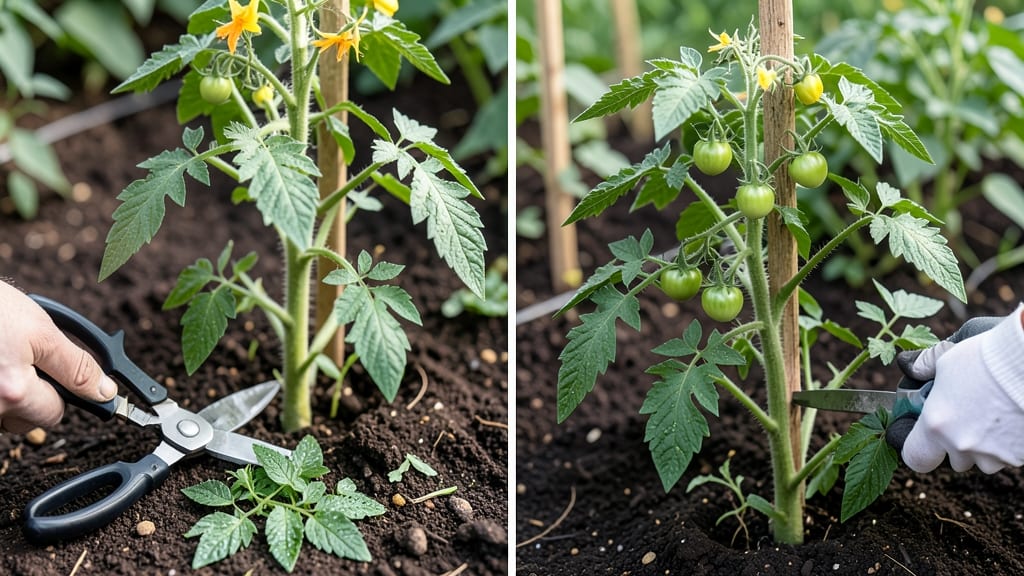
Trimming leaves of tomato plants isn’t just about tidiness—it’s the secret to 30% bigger harvests by directing energy where it matters most. 🌱 I learned this the hard way after my cherry tomatoes split from overloaded vines, but now I prune with purpose to keep plants focused on fruit production.
The key is removing only the right leaves: suckers (those little shoots between stems), lower leaves touching soil, and any yellowing or diseased foliage. Use clean, sharp pruners to avoid damaging stems, and work on dry mornings to minimize disease risk.
Indeterminate varieties need regular pruning, while determinate types stay bushier with minimal trimming. You'll notice better airflow, fewer pests, and fruit that ripens evenly. Within weeks, your plants will look stronger, and the tomatoes will be bigger and sweeter than ever.
The effort pays off in both quantity and quality. This works for both backyard gardens and container-growing setups. Here's exactly how to do it without over-pruning—because less is often more with tomatoes.
📚 In This Guide
- What you need
- Instructions
- Tips and common mistakes
- Wrapping up and next steps
What you need
- ● Sharp pruning shears – Bypass pruners (4–6 inches long) for clean cuts (avoid dull blades that crush stems).
- ○ Hand pruners or small scissors – For delicate trimming of smaller leaves or suckers (optional but handy).
- ● Disinfectant (70% isopropyl alcohol or bleach solution) – 1 part bleach to 9 parts water to sterilize tools between cuts and prevent disease spread.
- ○ Gloves (optional but recommended) – Nitrile or leather gloves to protect against thorns and sap.
- ● Trash bag or bucket – For collecting pruned leaves (avoid composting diseased foliage).
- ● Watering can or hose – To hydrate plants post-pruning (especially in hot weather).
- ● Pruning saw – For thick, woody stems (rare in tomato plants but useful for older varieties).
- ● Plant ties or stakes – If your tomatoes need support after heavy pruning.
- ● Horticultural spray (copper fungicide) – If your plants show signs of early blight or disease.
- ● Notebook & pen – To track pruning dates and plant responses for future reference.
How to trim tomato leaves for maximum fruit production
Here's the straightforward method I use to prune tomato plants for stronger growth and bigger harvests.
🌿 Step 1: Identify Leaves to Remove
Start by examining your tomato plant for leaves that aren't contributing to fruit production. The first leaves to go are those on the lower stem—any below the first flower cluster. These leaves block airflow and trap moisture, creating ideal conditions for disease. Use clean, sharp pruning shears to make cuts just above a leaf node where new growth can emerge.
Also remove any yellow or diseased leaves immediately. Healthy leaves should be deep green and firm to the touch. If you see brown spots, curled edges, or leaves that feel soft, those need to go—no hesitation. This prevents fungal diseases like early blight from spreading upward.
✂️ Step 2: Prune for Airflow and Light Penetration
Focus next on the plant's interior. Remove any leaves that grow inward where they would shade the fruit or block sunlight from reaching the center. You want sunlight to hit as much of the plant as possible, especially the developing tomatoes. Aim to create an open, airy structure—this helps prevent humidity buildup that leads to rot.
For indeterminate varieties (those that grow continuously), remove suckers—those small shoots that form in the leaf axils (where the leaf meets the stem). These compete with your main fruit-bearing stems for energy. Pinch them off with your fingers or cut with shears, leaving a small stub to prevent disease entry.
☀️ Step 3: Maintain Balance Between Foliage and Fruit
As your plant grows, continue pruning to maintain a 3:1 ratio of leaves to fruit clusters. For every three leaves, you should have one flower cluster. Too many leaves mean the plant puts energy into foliage instead of fruit production. If you notice new leaves appearing below existing fruit clusters, remove about half of them to redirect energy upward.
Don't over-prune—never remove more than one-third of the plant's foliage at once. You'll see the plant respond within a week with new growth at the nodes where you made cuts. Watch for signs of stress like wilting or yellowing, which means you've removed too much. A well-pruned plant will have sturdy stems and vibrant new leaves emerging from the nodes.
⏰ Step 4: Time Your Pruning for Best Results
Prune during the cooler parts of the day—early morning or late afternoon—to reduce stress on the plant. Avoid pruning when the plant is already under stress from heat, drought, or disease. I also recommend pruning every 1-2 weeks during the growing season to keep the plant in balance as it grows.
Stop pruning about 4-6 weeks before your first frost date. This gives the plant time to recover and mature any remaining fruit. You'll know you've done it right when your tomatoes are plump, red, and ready to pick—with minimal leaf litter around the base of the plant.
Tips & tricks for precision tomato pruning
Here's what nobody tells you about pruning tomato plants that actually makes a difference in your harvest.
Tool Tip: Sterilize your pruning shears between cuts with rubbing alcohol or a 10% bleach solution. This prevents spreading disease from infected leaves to healthy parts of the plant. I learned this the hard way after losing a whole plant to blight—now I keep a small spray bottle of diluted bleach nearby for quick sterilization between cuts.
Sucker Removal Strategy: For indeterminate tomato varieties, focus on removing suckers when they're still small—about the size of a pencil. Larger suckers have already established roots and will require more energy from your plant to remove. I check for new suckers every time I water the plant, usually every 1-2 weeks as recommended, and pinch them off before they grow more than 2 inches long.
Visual Cue for Balance: When maintaining that 3:1 leaf-to-fruit ratio, think of your plant as a pyramid. The top should have the most leaves (for photosynthesis), while the middle should have your fruit clusters. Bottom leaves should be minimal—just enough to support the stem. If you're unsure, take a photo of your plant before pruning; it helps visualize the balance you're aiming for.
Post-Pruning Care: After a significant pruning session (more than one-third of foliage), give your plant a boost with a balanced fertilizer or compost tea. The roots will need extra nutrients to support new growth after you've removed so many leaves. I always follow a heavy pruning with a light application of fish emulsion—my plants bounce back noticeably within days.
Pro Tips for Trim Leaves Tomato Plants
- Here's what nobody tells you about pruning tomato plants that actually makes a difference in your harvest.
- Tool Tip: Sterilize your pruning shears between cuts with rubbing alcohol or a 10% bleach solution. This prevents spr...
- Sucker Removal Strategy: For indeterminate tomato varieties, focus on removing suckers when they're still small—about...
Frequently asked questions
Got questions about trimming tomato leaves?
You’re not alone! Here are answers to the most common queries to help you prune like a pro and maximize your harvest.
When is the best time to trim leaves off tomato plants?
Prune your tomato plants early in the morning when temperatures are cooler and humidity is lower. This reduces stress on the plant and minimizes disease risk. Avoid trimming during wet or rainy conditions, as open wounds can attract pests or fungal infections. For indeterminate varieties, start pruning when plants reach 12–18 inches tall.
Which leaves should I trim off tomato plants?
Focus on removing:
- Suckers: Small shoots growing between the stem and branches (they drain energy from fruit production).
- Lower leaves: Yellow or diseased leaves near the soil (prune these first to improve airflow).
- Overcrowded foliage: Leaves blocking sunlight from reaching fruit clusters.
What happens if I don’t trim tomato leaves at all?
Skipping pruning can lead to:
- Smaller, fewer fruits (energy wasted on excess foliage).
- Higher risk of blossom end rot (poor airflow traps moisture).
- Pests/diseases thriving in dense, shaded leaves.
Can I trim tomato plants in hot or cold weather?
Extreme temperatures stress plants, so avoid pruning when:
- Hot (above 90°F/32°C): Causes shock and slows recovery.
- Cold (below 50°F/10°C): Weakens the plant’s ability to heal.
Are there alternatives to trimming tomato leaves?
If pruning feels overwhelming, try these low-maintenance options:
- Topping: Pinch off the top of indeterminate plants to redirect energy to fruit (do this when plants hit your trellis height).
- Thinning suckers only: Skip full pruning but remove suckers weekly to improve airflow.
- Natural pruning: Let lower leaves yellow naturally (they’ll fall off), then focus on upper growth.
Wrapping up and next steps
Trimming the leaves of your tomato plants isn’t just about aesthetics—it’s a game-changer for healthier growth and bigger, juicier harvests! 🌱 By focusing on precision pruning, you redirect energy to fruit production, improve airflow, and prevent disease.
Whether you’re a seasoned gardener or a beginner, these techniques are simple to master and yield amazing results.
Ready to put your new skills to work? Grab your pruners and give your tomato plants the care they deserve—your future salads (and bragging rights) will thank you! 🍅 For even more tips, check out our tomato-growing guide to keep your garden thriving all season long.