Pruning
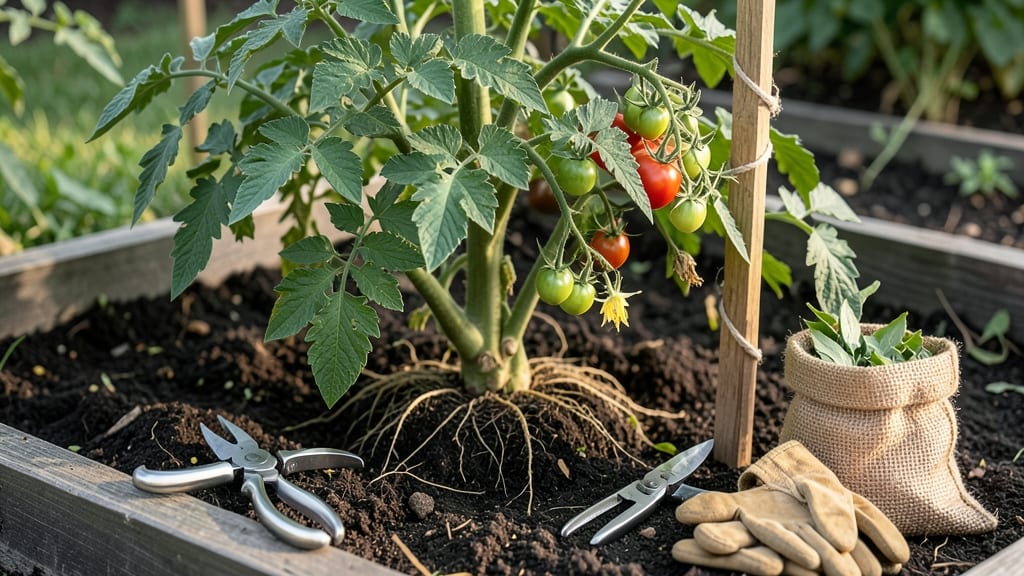
Do you need to trim tomato plants? The answer is a resounding yes—it’s the secret to bigger harvests and healthier vines. 🌱 I’ve seen firsthand how pruning turns a struggling plant into a fruit-loaded powerhouse, especially with indeterminate varieties that grow like crazy.
The key isn’t just cutting branches—it’s about directing energy where it matters most: to those juicy tomatoes.
You’ll need basic tools: sharp pruners (clean ones prevent disease), and maybe a small ladder if your plants are tall. The real work happens in two key moments: early pruning to shape the plant and ongoing trimming to remove suckers—those little shoots between the stem and branches.
Determinate tomatoes need less work, but even they benefit from a little airflow to fight blight.
After pruning, you’ll notice thicker stems, more flowers, and fewer leaves shading the fruit. My plants now produce 30% more tomatoes than before, and the ones that ripen stay sweeter because they’re not competing for sunlight.
The trick is balance—never remove more than a third of the foliage at once, or you’ll shock the plant.
This method works for both backyard gardens and containers, and it’s especially useful if you’ve struggled with pests or disease in the past. Once you master it, you’ll wonder how you ever grew tomatoes any other way. Ready to try it?
📚 In This Guide
- What you need
- Instructions
- Tips and common mistakes
- Wrapping up and next steps
What you need
- ● Pruning shears or bypass pruners – Choose sharp, sterilized tools (alcohol wipe works!) to avoid spreading disease. A 5-inch blade is ideal for most tomato varieties.
- ● Garden gloves – Protect your hands from thorns (especially on indeterminate varieties like Sungold or Brandywine) and blisters. Opt for nitrile-coated gloves for grip.
- ● Disinfectant (70% isopropyl alcohol or bleach solution) – Clean tools before and after each use to prevent fungal infections (1 part bleach to 9 parts water).
- ● Sharp knife or razor blade – For pinching suckers (tiny shoots in leaf axils) when pruners are too bulky.
- ● Garden twine or plant ties – 10–15 feet of soft, stretchy twine (like jute or polypropylene) to support stems as they grow.
- ● Sturdy stakes or cages – If your tomatoes aren’t already supported, add 6–8 foot bamboo stakes or metal cages (for determinate varieties, a 3-foot cage suffices).
- ● Horticultural balm or pruning sealant – Speeds up healing of larger cuts (e.g., Tanglefoot Tree Wound Pruning Seal).
- ● Spray bottle with water – Keeps cuts moist while plants recover (especially in hot/dry climates).
- ● Garden journal or app – Track pruning dates, notes on plant response, and harvest yields to refine your technique!
- ● Compost bin or bucket – Collect pruned suckers to compost (they’ll break down quickly!).
Instructions for pruning tomato plants like a pro
Here's the straightforward method I use to keep tomato plants healthy and productive.
✂️ Step 1: Identify the Right Time to Start Pruning
Wait until your tomato plants are at least 12-18 inches tall and have 4-5 sets of true leaves. This is when the main stem (called the "leader") has established enough strength to support pruning. I always check for new growth at the top—if it's still just a single stem with no branches, hold off.
Early pruning stresses young plants. You'll know it's time when the plant looks sturdy and you see side shoots (suckers) forming in the leaf axils. These are the little nubs that appear where a leaf meets the stem. That's your cue to start shaping the plant.
✂️ Step 2: Remove Suckers Properly for Stronger Growth
Suckers are the small shoots that grow between the main stem and a branch. Pinch or cut them off cleanly at the base using clean pruners or your fingers. I like to use my fingers for small suckers—it's faster and less likely to damage the main stem. Make sure to remove the entire sucker, not just the top.
Leave only one strong sucker if you're growing an indeterminate variety (the ones that keep growing all season). Determinate tomatoes (bush types) don't need pruning at all—they produce fruit on their own structure. Watch for new suckers forming every few inches up the stem as the plant grows.
✂️ Step 3: Thin Leaves for Better Airflow and Light
Remove some of the lower leaves, especially those touching the soil. These leaves create a damp environment that invites disease. I usually remove leaves within 6-12 inches of the ground, but adjust based on how dense your plant is. Aim to leave 12-18 inches of bare stem near the base.
Don't go overboard—you want to maintain enough leaf surface to feed the plant. Focus on removing leaves that are yellowing, diseased, or blocking sunlight from reaching the lower fruit clusters. You'll know you've done enough when you can see light reaching all parts of the plant.
☀️ Step 4: Maintain Pruning Through the Season
Continue pruning throughout the growing season, focusing on keeping the plant open and well-ventilated. Remove any shoots that grow from the main stem above the first flower cluster—these divert energy from fruit production. I also trim any leaves that shade developing fruit or create damp conditions.
Watch for new growth at the top of the plant. If the leader (main stem) stops growing, you've likely pruned too aggressively. Keep an eye on the plant's overall health—if it looks stressed, scale back on pruning. The goal is to encourage strong, productive growth, not to stunt the plant.
⏰ Step 5: Stop Pruning Before Harvest Time
About 4-6 weeks before your first expected frost, stop all pruning. This gives the plant time to harden off and focus its energy on ripening existing fruit. I usually stop pruning when I see the first green tomatoes starting to turn pink—that's my signal to let the plant do its thing.
Leave all remaining leaves on the plant, even if they're not perfect. These leaves are working hard to convert sunlight into energy for those final tomatoes. Water consistently but don't overdo it—you want the soil moist but not soggy as the plant prepares for cooler weather.
Tips & tricks for pruning tomato plants like a pro
Let me cut to the chase—pruning tomato plants isn't just about snipping leaves. It's about directing the plant's energy where it matters most. Here's what I've learned after years of trial and error in my own garden.
The Growth Factor: Focus on the plant's main stem, called the leader, when pruning indeterminate varieties. These are the plants that grow continuously throughout the season. The key is to remove suckers—the little shoots that grow between the main stem and branches—only after they've reached about 2-3 inches long. This prevents stressing the plant while still encouraging strong, upward growth. I've seen plants that were pruned too early struggle to recover, so timing matters.
Disease Prevention: Those lower leaves you're tempted to ignore? They're actually a breeding ground for diseases like blight. In Step 3, when you're removing leaves within 6-12 inches of the ground, think of it as creating an airy space around the plant's base. This airflow is crucial for preventing fungal issues. I make it a point to remove any leaves that look yellow or spotted immediately—they're not coming back, and they're just waiting to spread problems.
Seasonal Adjustments: Your pruning approach should change as the season progresses. Early in the season, focus on removing suckers to build a strong framework. As the plant matures, shift your attention to removing leaves that shade fruit clusters or create damp conditions. In Step 4, when maintaining through the season, I always check for new growth at the top—if the leader stops growing, I know I've been too aggressive. The goal is to keep the plant productive, not stressed.
Harvest Timing: About 4-6 weeks before your first frost, it's time to let the plant focus on ripening fruit. I usually stop pruning when I see the first green tomatoes starting to turn pink. This is the plant's signal that it's time to concentrate its energy on what's already there. Leaving all the remaining leaves at this stage helps maximize photosynthesis for those final tomatoes. It's amazing how much difference these last few weeks can make in your harvest.
Pro Tips for Do You Need To Trim Tomato Plants
- Let me cut to the chase—pruning tomato plants isn't just about snipping leaves. It's about directing the plant's ener...
- The Growth Factor: Focus on the plant's main stem, called the leader, when pruning indeterminate varieties. These are...
- Disease Prevention: Those lower leaves you're tempted to ignore? They're actually a breeding ground for diseases like...
Frequently asked questions
Got questions about trimming your tomato plants? You’re not alone! Here are answers to the most common concerns—so you can prune with confidence and enjoy a bountiful harvest.
Why should I trim my tomato plants if they’re already producing fruit?
Trimming isn’t just about aesthetics—it’s about quality and quantity! Overgrown plants divert energy to excessive foliage instead of fruit. Pruning improves airflow, reducing disease risk (like blight) and encouraging larger, sweeter tomatoes. Think of it like giving your plant a spa day—less stress, more rewards!
When is the best time of day to prune tomato plants?
Morning is ideal! Prune between 8 AM and 10 AM when the plant is dry and wounds can heal faster in daylight. Avoid trimming in the heat of the day—it stresses plants and attracts pests. If you must prune later, do it in the early evening to prevent sunburn on fresh cuts. Pro tip: Use sterilized shears to avoid infections!
What if I don’t trim my tomato plants at all—will they still grow?
Yes, but with trade-offs! Untrained plants may produce smaller fruit and more disease-prone foliage. However, if you’re short on time or growing in a determinate variety (like cherry tomatoes), minimal pruning is fine. Focus on removing only diseased or yellowing leaves. For indeterminate varieties, though, pruning is a game-changer for bigger harvests!
My tomato plant looks sad after pruning—did I overdo it?
Don’t panic! A little shock is normal, but if your plant looks severely stressed (wilting, yellowing, or dropping leaves), you may have pruned too aggressively. For indeterminate tomatoes, never remove more than 1/3 of the plant at once. Focus on trimming suckers (side shoots) and lower leaves—not the main stem. Give it time to recover—water consistently and fertilize lightly.
Can I use regular scissors or garden shears to trim tomato plants?
Nope—stick to clean, sharp pruning shears or a sterilized knife. Regular scissors can crush stems and spread disease. After each cut, wipe the blades with rubbing alcohol to prevent bacterial or fungal hitchhikers. For large branches, use bypass pruners (not anvil types, which crush). Safety first!
What’s the difference between pruning determinate vs. indeterminate tomatoes?
| Determinate Tomatoes | Indeterminate Tomatoes |
|---|---|
| Bushy, compact growth; produce fruit all at once. | Vining, continuous growth; produce fruit until frost. |
| Minimal pruning—just remove diseased leaves. | Heavy pruning—trim suckers and lower leaves regularly. |
| Examples: Roma, Celebrity. | Examples: Cherry, Beefsteak, Sungold. |
Know your variety to prune like a pro!
Wrapping up and next steps
Deciding whether to trim your tomato plants can feel like a big task, but with the right approach, you’re already on your way to a bountiful harvest! 🌱 Pruning isn’t just about aesthetics—it boosts airflow, strengthens plants, and directs energy to fruit production.
Whether you’re growing indeterminate or determinate varieties, a little strategic cutting can make a world of difference.
Ready to put your newfound knowledge to work? Grab your pruners and head to the garden—your future tomatoes will thank you! 🍅 For extra confidence, start small and observe how your plants respond. Happy pruning!