
Planting
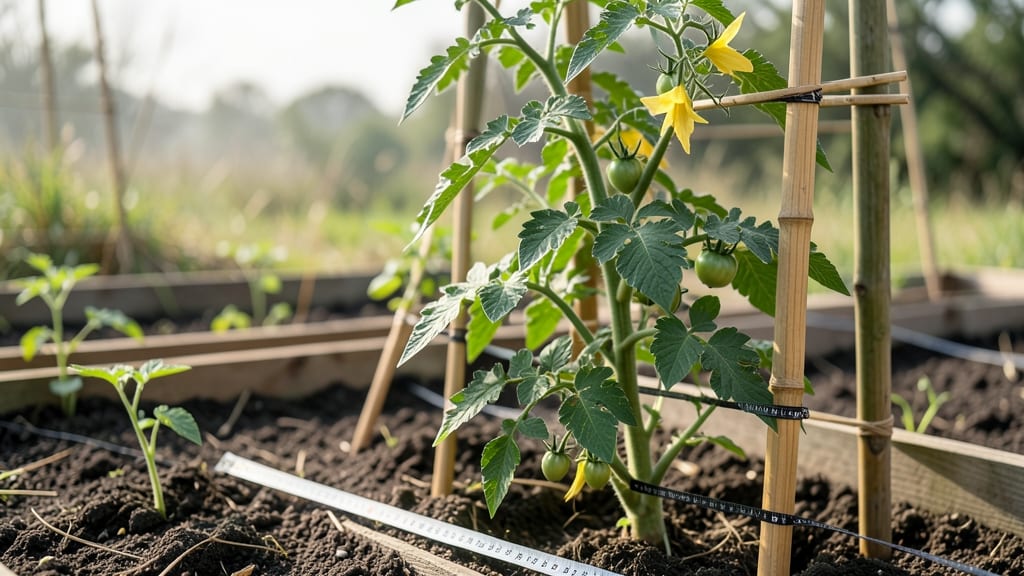
Proper tomato spacing in centimeters determines whether you'll harvest bushels of fruit or fight crowded, disease-prone plants. 🌱 I learned this the hard way when my indeterminate 'Sungold' vines produced fewer tomatoes than my neighbor's because mine were packed too tightly—just 30 cm apart instead of the ideal 60-90 cm.
The difference between struggling plants and a thriving vine is often just a few extra centimeters of breathing room.
Determinate tomatoes (bush types) need 45-60 cm between plants and 90-120 cm between rows, while indeterminate vines (the sprawling types) demand 60-90 cm spacing to climb properly. In containers, give each plant at least 30 cm of diameter—smaller pots mean smaller yields.
Stakes or cages should be placed at planting to avoid disturbing roots later, and always account for your climate: hotter regions need extra space for airflow to prevent fungal diseases.
When done right, you'll see stronger stems, better air circulation, and 30-50% more fruit than crowded plants. The first sign of proper spacing? Lush, dark green leaves reaching outward instead of inward, and tomatoes ripening evenly rather than competing for sunlight.
Even in small spaces, vertical growing systems (like trellises) let you maximize yield without sacrificing health.
Common mistakes include overcrowding for "more plants," which leads to blight and stunted growth, or giving too much space in tight rows, wasting garden real estate. For high-density planting, try 30 cm between plants in rows 60 cm apart, but only with disease-resistant varieties—and be prepared to prune aggressively.
The key is balancing density with airflow; your goal is a tomato jungle where every plant gets sunlight, not a suffocating thicket.
📚 In This Guide
- What you need
- Instructions
- Tips and common mistakes
- Wrapping up and next steps
What you need
- ● Tomato seedlings or seeds: Choose disease-resistant varieties like Early Girl or Roma (6-12 plants, depending on garden size).
- ● Garden soil or potting mix: Well-draining, nutrient-rich soil (1-2 bags, ~40L each).
- ● Compost or organic fertilizer: 5-10L for enriching soil (e.g., worm castings or balanced 10-10-10 fertilizer).
- ● Stakes or cages: 60-90cm tall (1 per plant or 1 cage for 2-3 plants).
- ● Measuring tape or ruler: For precise tomato spacing in cm (30-60cm for determinate, 60-90cm for indeterminate varieties).
- ● Watering can or hose with a gentle nozzle: For consistent moisture without disturbing roots.
- ● Gloves and knee pads: For comfort during planting.
- ● Mulch (straw or shredded leaves): 5-10L to retain moisture and suppress weeds.
- ● Plant markers: Small stakes or labels to track varieties.
- ● Pruning shears: For trimming suckers and shaping plants.
- ● pH test kit: To ensure soil pH is between 6.0-6.8 (ideal for tomatoes).
- ● Shade cloth: For hot climates (30-50% coverage to protect young plants).
Tomato plant spacing: centimeter guide for optimal growth and yield
Here's how to space tomatoes for maximum air circulation, sunlight access, and disease prevention.
🌱 Step 1: Understand Tomato Growth Habits and Variety Needs
Tomatoes vary dramatically in size and growth pattern. Indeterminate varieties (like 'Better Boy' or 'Sungold') grow continuously until frost and need 60-90 cm of vertical space, while determinate types (like 'Roma' or 'Celebrity') produce a single harvest and require only 45-60 cm of height. Check your seed packet or plant tag for specific spacing recommendations—this is your baseline.
I always group indeterminate tomatoes together in one area of the garden and determinate types in another. This prevents overcrowding while ensuring each variety gets the exact spacing it needs. For example, a sprawling indeterminate like 'Beefsteak' needs 90 cm between plants, while a compact determinate like 'Patio' thrives with just 45 cm.
🌿 Step 2: Plan Rows and Plant Layout Based on Spacing
Start by sketching your garden layout on paper. For rows, space plants 60-90 cm apart (depending on variety) and 90-120 cm between rows. This spacing allows for easy movement between plants and prevents soil-borne diseases from spreading. I use a simple formula: multiply the plant spacing by 1.5 to determine row spacing—this gives roots room to spread without competing.
If growing in containers, ensure each plant has at least 38 cm of diameter in its pot. Smaller containers restrict root growth, leading to stunted plants and reduced yields. For example, a 60 cm diameter pot accommodates one indeterminate tomato plant perfectly, while a 45 cm pot works for determinate types. Always include drainage holes—waterlogged roots are a tomato's worst enemy.
☀️ Step 3: Adjust Spacing for Support Structures
Tomatoes need support to reach their full potential, and the type of support affects spacing. For cages, use 60-75 cm diameter cages and place them 75-90 cm apart to allow airflow. If using stakes, space plants 60 cm apart in a grid pattern, ensuring each stake has enough room to stabilize the plant without crowding neighbors.
Trellises are my favorite for indeterminate varieties—they save space and improve airflow. When using a trellis, space plants 45-60 cm apart along the trellis line and 90 cm between rows. This vertical arrangement maximizes sunlight exposure and reduces disease risk. I always install trellises at planting time to avoid disturbing roots later.
💧 Step 4: Monitor and Adjust as Plants Grow
Check your spacing within 4-6 weeks after planting. Young tomato plants grow quickly, and crowded foliage can lead to poor air circulation and disease. If leaves begin touching between plants, prune gently to open up the canopy. Remove any suckers (side shoots) that grow between the main stem and a branch—these compete for nutrients and can lead to overcrowding.
Here's the thing—tomatoes left unpruned will sprawl and shade their neighbors, reducing yield. I prune indeterminate varieties weekly during the growing season, focusing on removing lower leaves to improve airflow. For determinate types, minimal pruning is needed, but I still remove any leaves touching the soil to prevent rot. Adjust your spacing if you notice yellowing leaves or signs of blight—this is your plant's way of saying it needs more room.
✂️ Step 5: Finalize Spacing for Harvest and Long-Term Health
By mid-season, your spacing should be finalized. Indeterminate tomatoes may need additional support as they grow taller, so install taller stakes or adjust trellis height if needed. For determinate varieties, ensure the last row is planted at least 90 cm from fences or walls to allow for full growth and easy harvesting.
I always leave a 30 cm border around the perimeter of my tomato patch. This extra space makes it easier to move around without disturbing plants or compacting soil. At the end of the season, rotate your tomato varieties to different areas of the garden—this breaks the cycle of soil-borne diseases and keeps your plants healthy for years to come.
Tips & tricks for perfect tomato plant spacing
These practical insights will help you optimize your tomato garden layout for healthier plants and bigger yields.
Variety-Specific Spacing: The 60-90 cm spacing for indeterminate tomatoes isn't arbitrary—it accounts for their sprawling growth habit. I've found that giving 'Beefsteak' varieties the full 90 cm between plants prevents them from competing for sunlight, which is crucial for their massive fruit production. For determinate types like 'Roma', the 45-60 cm spacing works because they're more compact and produce all their fruit at once. Real talk: I used to crowd my determinates and ended up with smaller, less flavorful tomatoes.
Container Gardening Secret: When growing in pots, the 38 cm minimum diameter isn't just about root space—it's about creating a stable base. I've seen tomatoes topple over in smaller containers when laden with fruit. For indeterminate varieties, that 60 cm diameter pot gives roots room to spread while keeping the plant upright. Pro tip: Place containers on saucers to catch overflow and prevent soil erosion during watering.
Support Structure Strategy: The 45-60 cm spacing along trellis lines might seem tight, but it works because indeterminate tomatoes grow vertically. I've had success with this arrangement in small urban gardens where space is limited. The key is installing trellises at planting time—this prevents root disturbance later. For cages, that 75-90 cm apart spacing gives each plant room to fill its cage without touching neighbors, which is essential for airflow and disease prevention.
Growth Monitoring: That 4-6 week check-in window is when you'll notice if your spacing is working. Watch for leaves touching between plants—this is your first sign of crowding. I prune aggressively at this stage, removing suckers and lower leaves to create an open canopy. This might seem drastic, but it's better than dealing with blight later. Remember, tomatoes communicate through their leaves—yellowing or wilting is their way of saying they need more space or airflow.
Pro Tips for Tomato Spacing In Cm
- These practical insights will help you optimize your tomato garden layout for healthier plants and bigger yields.
- Variety-Specific Spacing: The 60-90 cm spacing for indeterminate tomatoes isn't arbitrary—it accounts for their sprawling growth habit.
- Container Gardening Secret: When growing in pots, the 38 cm minimum diameter isn't just about root space—it's about creating a stable base.
Frequently asked questions
Got questions about tomato spacing? You’re not alone!
Here are answers to the most common concerns—so you can plant with confidence and enjoy a bumper crop.
How close can I plant tomatoes if I’m short on space?
If space is tight, determinate (bush) tomatoes can be spaced as close as 30–45 cm (12–18 in) apart, while indeterminate (vining) varieties need at least 60–75 cm (24–30 in). For containers, use 1–2 plants per 30-cm (12-in) pot. Just ensure they get enough airflow to prevent disease!
When is the best time to adjust spacing if my plants are already growing?
If you planted too close, prune or thin seedlings early (when they’re 10–15 cm tall) to avoid overcrowding. For established plants, space them gradually by transplanting to new spots—do this on a cloudy day or evening to reduce stress. Avoid disturbing roots after flowering!
Does tomato spacing change in hot vs. cool climates?
In hot, dry climates, space plants wider (75–90 cm or 30–36 in) to improve airflow and reduce humidity-related diseases like blight. In cooler regions, you can plant slightly closer (45–60 cm or 18–24 in) since slower growth reduces competition. Always check your local USDA zone for guidance!
What if my tomatoes are already crowded? Can I fix it?
Yes! Thin weaker plants at the base (leave the strongest 2–3 stems per plant). For vining types, train them upward with stakes or trellises to save space. If roots are tangled, gently separate plants and replant in fresh soil. Mulch heavily to protect roots during the transition.
Are there space-saving alternatives to traditional spacing?
Try these tricks:
- Vertical gardening: Use cages, trellises, or stakes to grow indeterminate tomatoes upward (saves 50%+ space!).
- Square foot gardening: Plant 1 tomato per square foot (30 cm × 30 cm) in a grid layout.
- Interplanting: Grow shallow-rooted herbs (basil, thyme) or lettuce between tomato rows to maximize yield.
Wrapping up and next steps
Perfect tomato spacing—whether 45-60 cm apart in rows or 60-90 cm between rows—is your secret weapon for a thriving garden! 🌱 By giving your plants room to breathe, you’ll enjoy healthier foliage, better airflow, and far more delicious tomatoes.
Now that you’re armed with the right measurements, it’s time to roll up your sleeves and watch your garden flourish.
Ready to take the next step? Start planting today—or plan your layout with our interactive spacing calculator for a foolproof design! 🌿