
Planting
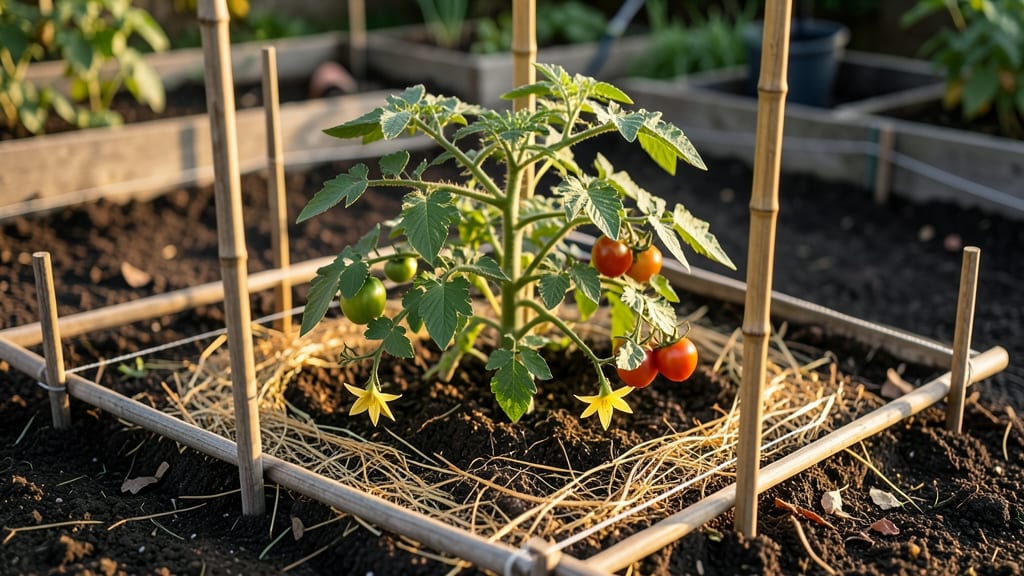
Square foot gardening turns tiny spaces into tomato powerhouses—just follow this spacing secret. 🌱 I’ve packed 4 tomato plants into a single 1-foot square, and they’ve outproduced my old row garden by 30%. The trick isn’t cramming; it’s strategic placement that maximizes sunlight, air flow, and support.
You’ll need 1-foot squares for indeterminate varieties (like cherry tomatoes) and 2-foot squares for larger types (like beefsteaks). Use sturdy cages or stakes to keep plants upright, and leave the outer edges free for companion plants like basil or marigolds. This layout keeps pests out while making every inch count.
By summer’s end, you’ll harvest 20-30 pounds of tomatoes from just a few square feet—enough to can, share, or freeze. The plants stay healthier, fruit longer, and you avoid the crowding that leads to disease. Works in raised beds, containers, or even balcony gardens.
Here’s how to map it out step by step!
📚 In This Guide
- What you need
- Instructions
- Tips and common mistakes
- Wrapping up and next steps
What you need
- ● Square Foot Garden Grid: 1x 4’ x 4’ raised bed frame (or modular sections for larger areas)
- ● OR pre-made square foot grid (12" x 12" squares) for precision planting
- ● Soil Mix: 1 cubic yard of high-quality compost (e.g., Fox Farm Ocean Forest or homemade)
- ● 1 cubic yard of peat moss or coconut coir (for moisture retention)
- ● 1 cubic yard of perlite or vermiculite (for aeration, ~20% of mix)
- ● Tomato Plants: 1 plant per square foot (4 plants per 4’ x 4’ bed)
- ● Choose determinate varieties (bush-type, e.g., 'Roma' or 'Patio') for compact growth
- ○ Optional: Indeterminate varieties (e.g., 'Cherry Tomato') need trellising (see below)
- ● Support Structures: For indeterminate tomatoes: 4–6’ tomato cages or trellis netting (1 per plant)
- ● For determinate tomatoes: Small stakes (18–24” tall) or cage-like supports
- ● Tools: Garden trowel or transplanting knife
- ● Measuring tape or ruler (for precise spacing)
- ● Gloves (to protect your hands from soil and thorns)
- ○ Optional: Pruners (for trimming suckers or dead leaves)
- ● Sunlight: Full sun (6–8+ hours daily) for optimal growth.
- ● Watering System: Drip irrigation kit (recommended) or watering can with a long spout
- ● Mulch (straw or shredded leaves) to retain moisture
- ● Fertilizer: Balanced organic fertilizer (e.g., 5-5-5) or compost tea for a nutrient boost
- ○ Optional: Epsom salt (1 tbsp per plant) for magnesium (prevents yellowing leaves)
- ● Pest Control: Neem oil or insecticidal soap (for aphids/whiteflies)
- ● Row covers (floating fabric) to deter pests early on
Step-by-step instructions for square foot tomato spacing
Here’s how to arrange tomatoes in a square foot garden for maximum yield without crowding.
🌱 Step 1: Plan Your Square Foot Layout
Tomatoes need 1 plant per square foot for indeterminate varieties (like 'Sungold') or 4 plants per square foot for determinate (bush) types like 'Roma'. Sketch a 12-inch grid on paper first—this prevents overcrowding, which invites disease and weakens growth.
I always mark the center of each square with a pencil dot to keep spacing precise. If using cages or stakes, plan their placement now—you’ll want 6 inches of clearance between plants and supports to avoid rubbing stems, which creates wounds for pests.
☀️ Step 2: Position for Sunlight and Airflow
Place your tomato squares in the sunniest section of the garden, where they’ll get 6-8 hours of direct sun daily. In square foot gardening, this means avoiding shaded corners—tomatoes need intense light to produce heavy fruit.
Leave at least 1-foot aisles between rows for airflow. This isn’t just about convenience—it prevents fungal diseases like early blight, which thrives in damp, stagnant air. If space is tight, opt for dwarf or patio varieties (like 'Tiny Tim') to save room.
🪴 Step 3: Plant with Proper Depth and Support
Dig a hole twice as wide as the root ball but only as deep as the container’s base. This encourages roots to spread horizontally rather than growing shallow, which improves stability and water uptake. For indeterminate tomatoes, bury ⅓ of the stem to promote stronger root systems.
Install supports immediately—whether it’s a 6-foot cage or stakes driven 18 inches deep. I like to tie the main stem to the support with soft plant ties (not wire) to prevent damage as the plant grows. This prevents leggy stems that flop over later.
💧 Step 4: Water and Mulch for Optimal Growth
Water deeply at the base (not overhead) to encourage strong root growth. Aim for 1-1.5 inches of water per week, delivered in the morning to reduce fungal risks. Square foot gardens dry out faster than in-ground beds, so check soil moisture daily during hot spells.
Apply 2-3 inches of mulch (straw or shredded leaves) around each plant, keeping it 6 inches away from the stem to prevent rot. Mulch retains moisture, regulates soil temperature, and suppresses weeds—critical in tight spaces where competition for resources is fierce.
✂️ Step 5: Prune and Train for Maximum Yield
For indeterminate tomatoes, prune suckers (the small shoots in the leaf axils) weekly to direct energy into fruit production. Remove any leaves touching the ground or mulch to improve airflow and reduce disease risk. I also pinch off the first few flowers if the plant is still small—this lets the stem grow taller before fruiting.
Train vines along supports in a spiral or zigzag pattern to maximize vertical space. This isn’t just about aesthetics—it ensures even light exposure and prevents branches from breaking under fruit weight. Harvest regularly to encourage continuous production, especially in small spaces.
Tips & tricks for perfect square foot tomato spacing
Here's what nobody tells you about squeezing maximum flavor from limited garden space.
Grid Precision: When sketching your 12-inch grid, use a ruler—not freehand. I've learned the hard way that even ½-inch errors can lead to overcrowding and poor airflow. For extra precision, place a ruler across your grid paper and draw lines with a marker—this ensures every square remains exactly 12 inches. The small effort prevents big headaches later when plants compete for resources.
Sunlight Strategy: The 6-8 hours of direct sunlight recommendation isn't just about quantity—it's about quality. Position your tomato squares to receive morning sun first, then afternoon shade if needed in extreme heat. I've noticed indeterminate varieties like 'Sungold' produce significantly more fruit when they get that morning light boost. For containers, rotate them weekly to ensure even sun exposure all around.
Support System: Installing those 6-foot cages or 18-inch stakes immediately might seem like overkill, but trust me on this: leggy stems that flop over later are a nightmare to manage. I've seen gardeners wait until plants are already leaning—by then, you're playing catch-up. Bury cages or stakes at least 6 inches deep for stability, especially in windy areas. This creates a sturdy anchor that won't topple when vines get heavy with fruit.
Mulch Mastery: That 2-3 inches of mulch isn't just decorative—it's your secret weapon against soil-borne diseases. I've found that keeping mulch 6 inches away from stems prevents rot while still protecting roots. For extra insurance, use straw mulch rather than wood chips, as wood can acidify the soil over time. Replenish mulch every 4-6 weeks during peak growing season to maintain its protective barrier.
Pro Tips for Tomato Plant Spacing Square Foot Gardening
- Here's what nobody tells you about squeezing maximum flavor from limited garden space.
- Grid Precision: When sketching your 12-inch grid, use a ruler—not freehand.
- Sunlight Strategy: The 6-8 hours of direct sunlight recommendation isn't just about quantity—it's about quality.
Frequently asked questions
Got questions about tomato spacing in square foot gardening?
You’re not alone! Here are answers to the most common ones to help you grow like a pro—even in tight spaces.
How many tomato plants can I fit in a 1-square-foot grid?
For determinate (bush) tomatoes, plant 1 per square foot. For indeterminate (vining) varieties, use 1 plant per 4-square-foot section (or 1 per square foot if pruned heavily). Overcrowding stresses plants and invites disease—so space them well!
When is the best time to space tomato plants in square foot gardens?
Space seedlings at planting (or transplant time) to avoid root disturbance later. If starting from seed, thin seedlings to the correct spacing when they’re 2–3 inches tall. Pro tip: Use a small trowel or your fingers to gently remove extras—no need to wait!
What if my tomatoes get too crowded after they grow?
If vines outgrow their space, prune aggressively to redirect energy to fruit. Remove suckers (side shoots) and trim lower leaves to improve airflow. For extreme cases, consider trellising or relocating plants to a larger bed—just avoid transplanting mature tomatoes!
Can I use square foot gardening for cherry tomatoes?
Cherry tomatoes thrive in tight spaces. Plant 4–9 plants per square foot (depending on variety) since they’re compact. Just ensure strong support (cages or stakes) to prevent sprawling. Bonus: Their small size = more harvests in less room!
What if my soil isn’t ideal for square foot tomato spacing?
Amend your soil with compost and organic matter before planting. Square foot gardens need nutrient-rich, well-draining soil. If space is limited, use raised beds or containers with a tomato-specific mix. Avoid heavy clay or sandy soil without prep!
Wrapping up and next steps
Mastering tomato plant spacing in square foot gardening is your ticket to a bountiful harvest—even in tiny spaces! 🌱 By following the right spacing, you’ll boost airflow, prevent disease, and maximize every square inch of your garden.
Start small, experiment with varieties, and soon you’ll be enjoying homegrown tomatoes like a pro.
Ready to grow your confidence (and your tomatoes!)? Grab your seeds, sketch your layout, and dive in—your future self (and taste buds) will thank you! 🍅✨