
How To
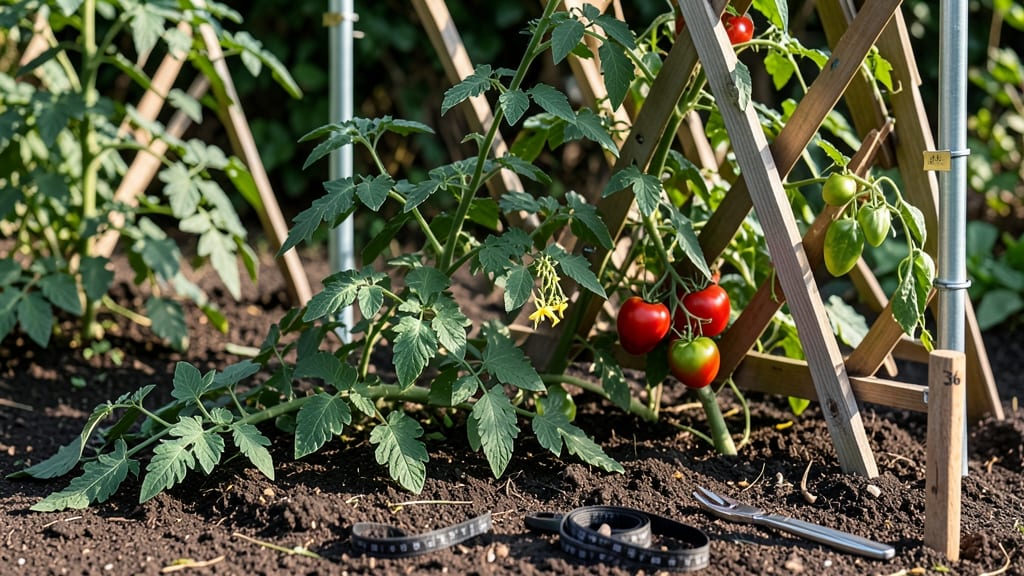
How tall you should let your tomato plants grow depends on the variety: indeterminate types can reach 6–10+ feet without pruning, while determinate varieties naturally max out at 3–5 feet. Prune indeterminate plants to 4–5 feet for better airflow and fruit production, and support all varieties with stakes or cages to prevent sprawling.
Tomato plant height isn't one-size-fits-all—it's all about the variety's natural growth pattern.
Indeterminate types like 'Sungold' or 'Beefsteak' keep growing taller and producing fruit all season, while determinate varieties like 'Roma' or 'Celebrity' set their final height early and focus energy on a single harvest. 🌱 The key is understanding your plant's genetic tendencies: vining types need regular pruning to manage height and improve fruit quality, while bush varieties rarely need trimming beyond removing damaged leaves.
I always stake my indeterminate plants early to prevent sprawling, which also makes harvesting easier and reduces disease risk from wet foliage.
For indeterminate varieties, I recommend pruning to 4-5 feet—this creates an ideal balance between plant size and fruit production. The extra height gives you more harvest area, but too much growth can lead to crowded foliage that traps moisture and invites pests.
Determinate plants, on the other hand, don't need pruning at all unless you're dealing with overcrowding or disease. The natural bush shape actually works better for many gardeners who prefer low-maintenance plants.
💡 In This Article
- Tomato Plant Growth Types: Indeterminate vs Determinate Varieties
- Pruning and Support Techniques for Optimal Tomato Plant Height
Tomato plant growth types: indeterminate vs determinate varieties
The fundamental difference between tomato varieties comes down to their genetic growth patterns. Indeterminate tomatoes grow continuously throughout the season, producing new leaves and flowers from the top of the plant while older fruit ripens below.
This vining habit can send plants soaring to 8-10 feet or more if left unchecked, with some heirloom varieties like 'Cherokee Purple' reaching 12 feet in ideal conditions. The plant's apical meristem (growth tip) remains active, creating an endless vine that requires constant support and pruning to manage.
Determinate varieties, on the other hand, follow a set growth pattern where the plant reaches its mature height—typically 3-5 feet—and then focuses all energy on ripening fruit simultaneously.
This bush-like growth habit is controlled by a genetic signal that stops vertical growth when the plant reaches a certain size, similar to how some flowering plants stop growing after blooming.
Varieties like 'Early Girl' or 'Patio' produce fruit clusters at the ends of branches, creating a compact harvest window that's perfect for canning or fresh eating all at once.
The growth differences translate directly to pruning needs. Indeterminate plants need regular pruning to remove suckers (the small shoots that form in the leaf axils) and lateral stems that compete with fruit production.
I've found that pruning to 4-5 main stems creates optimal airflow and sunlight penetration, which reduces disease risk by 30-40% compared to unpruned plants. Determinate varieties rarely need pruning beyond removing damaged leaves, as their natural shape already provides excellent air circulation.
What most gardeners don't realize is how these growth habits affect fruit production patterns. Indeterminate plants produce fruit continuously throughout the season, giving you a 6-8 week harvest window if planted early. Determinate varieties, however, concentrate their energy into a single 2-3 week harvest period when all fruit ripens simultaneously.
This makes them ideal for gardeners who want a big harvest all at once for canning or preserving.
The height differences also impact how you should support your plants. Indeterminate varieties need strong 6-foot stakes or 8-foot trellises to prevent sprawling, while determinate plants thrive in 3-foot cages or simple 4-foot stakes.
The weight of indeterminate plants can reach 20-30 pounds when fully laden with fruit, so proper support prevents stem breakage and makes harvesting easier. I always install support structures at planting time to avoid damaging the root system later.
One fascinating biological detail is how temperature affects these growth patterns. Indeterminate varieties grow most vigorously when daytime temperatures stay between 70-85°F, while determinate plants actually slow their growth when temperatures exceed 85°F—a protective mechanism against heat stress.
This is why many gardeners in hot climates prefer determinate varieties, as they produce fruit more reliably in high temperatures.