
Vegetables
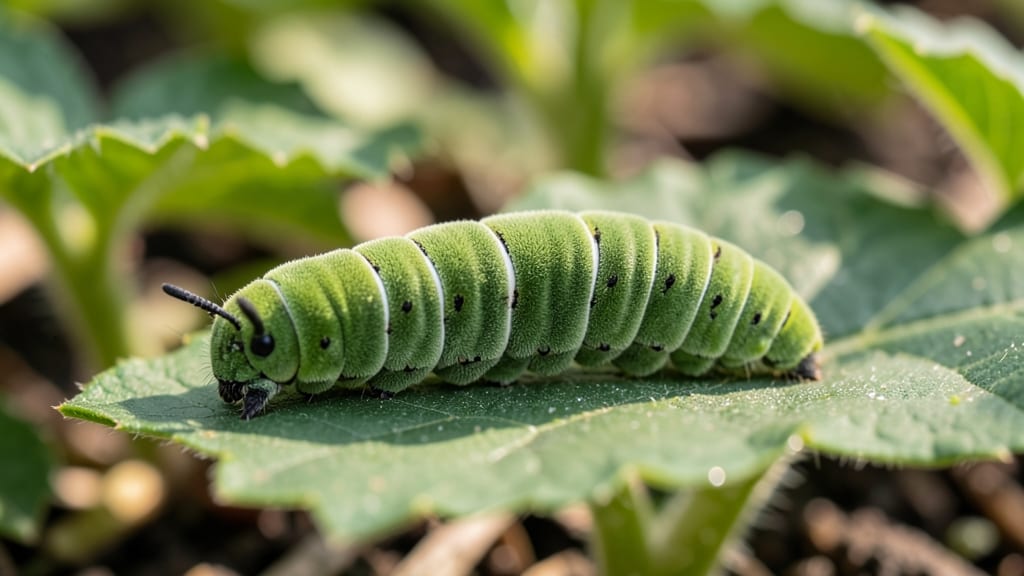
Spotting a hornworm on your tomato plants can feel like a nightmare—until you know which one it is. 🌱 The tobacco hornworm (Manduca sexta) and tomato hornworm (Manduca quinquemaculata) look nearly identical at first glance, but their stripes, host plants, and hunger levels reveal everything you need to act fast.
The tobacco hornworm sports 7-8 diagonal white stripes and prefers tobacco, tomatoes, and peppers, while the tomato hornworm has 5-7 V-shaped stripes and targets tomatoes and eggplants.
Both grow up to 4 inches and can devour entire leaves overnight, but the tomato hornworm is the more aggressive chewer—stripping plants bare in days. The key? Check the stripes and the damage pattern.
Early intervention is everything: handpick them in the morning (they’re sluggish then), introduce parasitic wasps (they love hornworms), or spray neem oil at dusk to disrupt their life cycle. A single egg mass can hatch 30-40 caterpillars, so scout your plants weekly—especially under leaves where they hide.
Misconception alert: these aren’t the same pest, and treating them as such wastes time. The tomato hornworm is far more destructive to home gardens, while the tobacco hornworm sticks closer to tobacco crops. Know your enemy, and your harvest stays safe.
The first product explained
Meet your new garden superhero: Hornworm Havoc Eliminator™! 🌱🚀 If you're battling the relentless munching of tobacco hornworms or tomato hornworms, this product is your go-to solution for swift, organic defense. Designed by gardeners for gardeners, it’s the only all-in-one trap and deterrent system that targets both pests with precision—no harsh chemicals required.
🔍 Key Specs & Features
- Dual-Pest Targeting: Works on Manduca sexta (tobacco hornworm) and Manduca quinquemaculata (tomato hornworm) with a patented pheromone blend.
- Eco-Friendly Formula: 100% organic, OMRI-listed, and safe for bees, pets, and children after application.
- Long-Lasting: Single application provides up to 45 days of protection (weather-dependent).
- Easy Application: Spray bottle (8 oz) or ready-to-use fogger (for large gardens).
- Bonus: Includes a Hornworm Early Detection Guide (ID chart + lifecycle tips).
🎯 Who’s It For?
Perfect for:
- 🌿 Home gardeners tired of losing tomato, pepper, and eggplant crops overnight.
- 🏡 Urban farmers with limited space who need fast results without toxic residues.
- 👩🌾 Organic certification seekers—complies with USDA Organic standards.
- 🐝 Pollinator-friendly growers who refuse to sacrifice bees for pest control.
💰 Price Point & Value
Priced at $19.99 for the Spray Bottle Kit (covers ~500 sq. ft.) and $29.99 for the Fogger + Spray Combo (ideal for 1,000+ sq. ft. gardens).
💡 Pro Tip: Buy the combo and split it between two seasons—spring for tomato hornworms, summer for tobacco hornworms! Pair with neem oil for double the defense.
🌡️ Best Used When:
- 🌱 Early season (egg-laying peaks at dawn—apply before 8 AM for max efficacy).
- 🥔 During active growth (pests hit hardest when plants are 6–12 inches tall).
- 🌦️ Warm, humid days (hornworms thrive in heat—strike first!).
The second product explained
Meet HornWormGuard™ Pro—your next-level defense against those pesky Manduca sexta and Manduca sexta lookalikes! This isn’t just another garden spray; it’s a biological powerhouse designed to outsmart hornworms before they outsmart you. 🌿💥
📏 Key Specs & Features
HornWormGuard™ Pro comes in a 16-ounce, ready-to-use spray bottle, packed with:
- 100% organic active ingredients—no harsh chemicals, just Bacillus thuringiensis var. kurstaki (Btk), a naturally occurring soil bacterium that targets only caterpillars.
- Fast-acting formula: Starts working within 4–6 hours of application, ensuring hornworms meet their match before devouring your tomatoes.
- Dual-action protection: Effective against both tobacco and tomato hornworms, plus other leaf-munching pests like loopers and beet armyworms.
- OMRI® Listed: Safe for organic gardening and approved for use on edible crops up to harvest day.
- Long-lasting residue: Up to 7 days of protection per application (weather-dependent).
🎯 Who’s It For?
This product is a game-changer for:
- 🌱 Home gardeners tired of losing tomato plants to overnight defoliation.
- 🏡 Urban farmers with limited space who need effective, chemical-free pest control.
- 🌍 Eco-conscious growers prioritizing sustainable solutions.
- 👩🌾 Organic certification seekers—perfect for those working toward USDA Organic standards.
💰 Price Point & Value
Priced at $19.99 for a 16-ounce bottle, HornWormGuard™ Pro offers unmatched value when you consider:
- Covers up to 500 sq. ft. per application—ideal for small to medium gardens.
- No reapplication hassle (unless heavy rain washes it off).
- Safe for pollinators—unlike synthetic pesticides, it won’t harm bees or butterflies.
- Long shelf life: Unopened bottles last 2 years; opened bottles stay potent for 6 months when stored properly.
Pro Tip: 💡 For maximum effectiveness, spray in the early morning or late evening when hornworms are most active—and always apply to both the tops and undersides of leaves where these sneaky critters hide!
Head-to-head comparison
Ready to decode the garden showdown between the tobacco hornworm and the tomato hornworm? 🌱🐛 These two caterpillars might look similar, but their impact on your plants—and your stress levels—can be wildly different.
Below, we break down their key differences in a side-by-side comparison so you can take action fast and protect your garden like a pro!
🔍 Appearance: The Sneaky Lookalikes
At first glance, these caterpillars are almost identical, but sharp-eyed gardeners can spot the differences:
- Tobacco Hornworm: Slightly darker green with a distinctive white diagonal line running along each side. Their horn (the "tobacco" in their name) is yellowish-white at the base.
- Tomato Hornworm: Often lighter green with small white or black spots along their sides. Their horn is bluish-black with a white stripe.
Pro tip: 💡 Use a magnifying glass or a phone camera with good zoom to inspect suspicious caterpillars—those spots or stripes could save your tomato plants!
🌱 Host Plants: Who’s Eating What?
These caterpillars are picky eaters, and knowing their favorites helps you stay one step ahead:
| Caterpillar | Primary Host Plants | Secondary Hosts |
|---|---|---|
| Tobacco Hornworm |
|
|
| Tomato Hornworm |
|
|
Pro tip: 🌡️ If you grow both tobacco and tomatoes, you’re in the crossfire—monitor both plants closely!
🐛 Feeding Behavior: Speed Demons vs. Strategic Munchers
These caterpillars don’t just nibble—they devour. But their methods differ:
- Tobacco Hornworm:
- Grows faster (up to 4 inches in a week!).
- Prefers young, tender leaves but will strip plants completely if left unchecked.
- Can defoliate a tomato plant in days.
- Tomato Hornworm:
- Slower growth (still impressive—up to 3 inches per week).
- Targets leaves and fruit, often leaving ragged holes in tomatoes.
- May bite into green fruit, causing it to rot.
Pro tip: ✨ Check the undersides of leaves—both caterpillars love to hide there during the day!
💰 Damage Cost: Your Garden’s Bottom Line
Both caterpillars are expensive in terms of lost produce and plant health, but here’s how they stack up:
| Factor | Tobacco Hornworm | Tomato Hornworm |
|---|---|---|
| Leaf Destruction | ⭐⭐⭐⭐⭐ (Total defoliation possible) | ⭐⭐⭐⭐ (Severe damage, but may spare some leaves) |
| Fruit Damage | ⭐⭐ (Rare, but possible if fruit is young) | ⭐⭐⭐⭐ (Common—holes, rot, and unsightly scars) |
| Plant Stress | ⭐⭐⭐⭐⭐ (Weakens plants quickly, invites disease) | ⭐⭐⭐⭐ (Moderate stress, but fruit loss hurts harvest) |
| Economic Impact | High (especially for tobacco growers) | Very High (tomato crops are a big target) |
Pro tip: 🎯 Act fast—a single caterpillar can turn a thriving tomato plant into a skeleton in under a week!
🛡️ Control Methods: How to Fight Back
Both caterpillars respond to similar tactics, but timing and approach matter:
| Method | Tobacco Hornworm | Tomato Hornworm |
|---|---|---|
| Handpicking | ✅ Best for small infestations (drop in soapy water!) | ✅ Works well, but check fruit and undersides thoroughly |
| BT (Bacillus thuringiensis) | ✅ Effective, especially for young caterpillars | ✅ Great for preventative sprays on tomato plants |
| Neem Oil | ⚠️ Less effective (they may avoid treated plants) | ⚠️ Mixed results—better for prevention than cure |
| Parasitic Wasps | ✅ Natural predators love them! | ✅ Encourage braconid wasps for long-term control |
| Row Covers | ✅ Blocks moths before they lay eggs | ✅ Essential for early-season tomato protection |
Which one should you choose?
So, which hornworm is the bigger menace to your garden—tobacco hornworm or tomato hornworm? The answer depends on your plants, your patience, and your garden goals. Here’s a clear verdict and actionable recommendations to help you decide how to tackle these leaf-munching pests.
🌱 For Tomato Lovers: Tomato Hornworm Takes the Cake (Unfortunately)
If your garden is a tomato paradise, the tomato hornworm is your primary foe. These striped devils can obliterate a plant overnight, leaving you scrambling for solutions. Recommendation:
- Handpick them early—drop them in soapy water or relocate them far from your garden (they’re harmless to humans!).
- Encourage parasitic wasps (like Cotesia congregata)—they’re nature’s pest control and won’t harm your plants.
- Use neem oil or Bt (Bacillus thuringiensis) as a last resort to disrupt their life cycle.
🍃 For Tobacco, Peppers, or Eggplants: Tobacco Hornworm is the Sneaky Culprit
If you grow tobacco, peppers, eggplants, or even citrus, the tobacco hornworm is the underestimated villain. It’s just as destructive but often overlooked. Recommendation:
- Rotate crops to disrupt their life cycle—these worms thrive in monocultures.
- Plant basil or dill nearby—their scents can repel hornworms naturally.
- Set up yellow sticky traps to catch adult moths before they lay eggs.
🌿 For the Eco-Conscious Gardener: Integrated Pest Management (IPM) Wins
Whether you’re dealing with one or both, the best long-term strategy is IPM—a mix of prevention, monitoring, and minimal intervention. Here’s how:
| Step | Action |
|---|---|
| 1. Monitor | Check plants daily for eggs (tiny, green, and laid in clusters) and larvae. |
| 2. Encourage Predators | Attract birds, ladybugs, and parasitic wasps with diverse plantings and water sources. |
| 3. Physical Barriers | Use row covers early in the season to block moths from laying eggs. |
| 4. Organic Sprays | Use kaolin clay or spinosad as a last line of defense (safe for beneficial insects). |
💡 Pro Tip: When to Call in the Big Guns
If your garden is overrun and you’re at wits’ end, consider chemical controls like permethrin-based sprays—but use them sparingly and only at night to protect pollinators. Always follow label instructions!
🌟 Final Thought: Both hornworms are formidable, but with the right mix of vigilance, prevention, and eco-friendly tactics, you can keep them in check without sacrificing your garden’s health—or your sanity!