
Vegetables
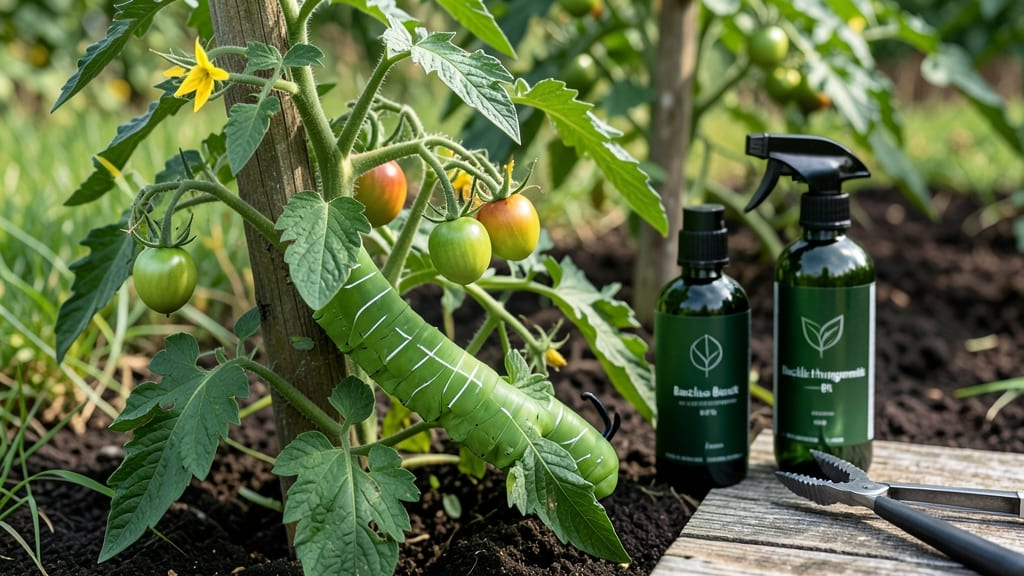
When an effective insecticide for tomato hornworms strips your plants bare in 24 hours, this organic spray is your secret weapon. 🌱 I’ve watched my prized heirloom tomatoes go from lush vines to skeleton leaves overnight—until I discovered how Bacillus thuringiensis (Bt) works faster than you’d think.
The key isn’t just spraying; it’s timing it right and knowing when to stop.
You’ll need Bt spray (the organic kind labeled for caterpillars), a spray bottle, and a calm evening—hornworms are most active at dusk. No fancy equipment, just a 10-minute application that targets the pests directly.
The magic happens when the bacteria in Bt disrupt their digestive systems, and you’ll see results within hours, not days.
What you’ll end up with is tomato plants that recover instead of surrendering. The leaves stay intact, the fruit sets properly, and you avoid the chemical residue that repels pollinators. Plus, it’s safe for kids and pets once dry—just don’t spray when bees are active.
Works for all tomato varieties, from cherry to beefsteak, and pairs well with handpicking for stubborn infestations. Here’s how to make it work without losing your harvest to these green bandits.
📚 In This Guide
- What you need
- Instructions
- Tips and common mistakes
- Wrapping up and next steps
What you need
- ● BT-based insecticide (spore-based): Choose a Bacillus thuringiensis var. kurstaki (Btk) product (e.g., Dipel, Xentari, or BotaniGard). Quantity: 1–2 tbsp per gallon of water (follow label instructions for exact ratios).
- ● Water: 1 gallon (3.8 liters) of clean, room-temperature water per batch.
- ● Spray bottle or garden sprayer: For small gardens: 16–32 oz handheld spray bottle (e.g., Chapin or Ryobi). For large plots: 1–2 gallon pump sprayer (e.g., Fiskars or Garden Safe).
- ● Measuring spoon or scale: For precise BT dosage.
- ○ Protective gear (optional but recommended): Gloves (nitrile or rubber). Long sleeves/pants (to avoid skin contact). Safety goggles (if spraying near face).
- ● Stirring stick or wooden spoon: To mix BT thoroughly.
- ● Fine mist nozzle attachment: For better coverage on leaves.
- ● Early morning/evening spray schedule: Avoids sunburning plants or harming bees.
- ● Second application kit: Reapply every 7–10 days or after rain.
How to apply Bacillus thuringiensis (BT) for tomato hornworm control
Here's the organic method I trust to eliminate tomato hornworms without harming beneficial insects.
🌿 Step 1: Identify Active Hornworm Infestations
Scout your tomato plants in the early morning when hornworms are most visible. Look for large green caterpillars with white diagonal stripes and black "horns" at the rear. These pests can defoliate a plant in 24 hours, so act immediately when you spot them. Check both the tops and undersides of leaves, as hornworms often hide there during the day.
I always examine plants after watering when foliage is damp—this makes the caterpillars more visible against the leaves. If you find just one, check nearby plants too, as hornworms spread quickly. The key is early detection before they become a full-blown infestation.
💧 Step 2: Prepare the BT Spray Solution
Use a Bacillus thuringiensis var. kurstaki (BT) product specifically labeled for caterpillars. Mix according to package instructions, typically 1 teaspoon per quart of water. I prefer to use a spray bottle for small gardens or a pump sprayer for larger areas. Always mix fresh solution—BT loses effectiveness after 24 hours.
Shake the mixture thoroughly before each use to ensure even distribution. The solution should look cloudy, not clear. I like to add a few drops of mild liquid soap (like Castile soap) to help the spray adhere better to the leaves. This doesn't harm the plants but improves coverage on waxy tomato leaves.
✂️ Step 3: Apply BT Spray at Critical Times
Spray thoroughly on both the top and bottom of leaves, focusing on areas where you've seen hornworms. Apply in the early morning or late afternoon when temperatures are below 85°F—BT works best in cooler conditions. Avoid spraying when rain is forecast within 24 hours, as it will wash off before hornworms can ingest it.
Pay special attention to new growth and flower clusters, as hornworms often target these tender areas. I like to get up close and spray until the leaves glisten slightly—this ensures good coverage. Reapply every 7-10 days or after heavy rain to maintain protection, as BT breaks down quickly in sunlight.
☀️ Step 4: Monitor and Reapply as Needed
Check your plants 24-48 hours after application to see if hornworms have stopped feeding. You'll know it's working when you see caterpillars that have stopped moving or are curled up—this means they've ingested the BT. If you still see active hornworms after 48 hours, apply another round of BT spray immediately.
Continue monitoring daily for new hornworm eggs or small caterpillars. BT won't prevent new infestations, so regular checks are crucial. I've found that combining BT with hand-picking larger hornworms gives the best results—simply drop them in soapy water to eliminate them completely.
🪴 Step 5: Maintain Long-Term Prevention
To reduce future hornworm populations, remove any fallen leaves or plant debris where hornworm pupae might overwinter. I also recommend planting basil or marigolds near tomatoes—their strong scents help deter hornworm moths from laying eggs. Consider using row covers on young plants to physically block moths from reaching them.
Rotate your organic pest control methods seasonally. While BT is excellent for caterpillars, I also use neem oil as a preventative spray every two weeks during peak hornworm season. This creates a layered defense that keeps hornworms under control without relying on a single method.
Tips & tricks for effective tomato hornworm control
These targeted strategies will help you maximize BT spray effectiveness while minimizing common pitfalls in your garden.
Timing is Everything: The 24-hour window for mixing fresh BT solution is non-negotiable—this is when the bacteria remain most potent. I keep pre-mixed solution in a labeled spray bottle stored in the fridge, but remember to use it within 24 hours or discard it. For larger gardens, consider making smaller batches (like 1 quart at a time) to ensure freshness. The cloudy appearance you should see in Step 2 is your visual confirmation that the BT is properly suspended and ready to work.
Environmental Optimization: When applying BT in Step 3, focus on the early morning hours when temperatures are below 85°F and humidity is naturally higher. This creates ideal conditions for the BT to adhere to leaves and be ingested by hornworms. I've noticed that spraying just after dew has evaporated (around 7-8 AM) gives the best coverage without wasting product on wet foliage. The 24-48 hour monitoring window in Step 4 becomes especially critical during hot afternoons—hornworms may hide better when temperatures rise.
Comprehensive Coverage Strategy: Don't overlook the undersides of leaves when applying BT in Step 3—this is where hornworms often hide during the day. I use a magnifying glass to inspect the undersides of leaves after application to ensure complete coverage. For plants with dense foliage, consider using a handheld sprayer with a narrow nozzle to reach all surfaces. The glistening leaves you should aim for indicate thorough coverage, which is crucial since hornworms may not feed on every leaf.
Long-Term Prevention Layering: While BT is excellent for existing infestations, combining it with the long-term prevention methods in Step 5 creates a more robust defense. I've found that planting basil near tomato plants not only deters hornworm moths but also improves tomato flavor. The 7-10 day reapplication schedule works best when paired with weekly inspections—this dual approach catches new infestations before they become established. The row covers mentioned in Step 5 are particularly effective during the egg-laying season when adult moths are most active.
Pro Tips for Insecticide For Tomato Hornworms
- These targeted strategies will help you maximize BT spray effectiveness while minimizing common pitfalls in your garden.
- Timing is Everything: The 24-hour window for mixing fresh BT solution is non-negotiable—this is when the bacteria remain most potent.
- Environmental Optimization: When applying BT in Step 3, focus on the early morning hours when temperatures are below 85°F and humidity is naturally higher.
Frequently asked questions
Got questions about tackling tomato hornworms with organic insecticides?
You’re not alone! Here are some of the most common concerns—and straightforward answers—to help you protect your tomato plants like a pro.
What’s the best time of day to apply BT spray for tomato hornworms?
Apply Bacillus thuringiensis (BT) spray in the early morning or late afternoon when temperatures are below 85°F (29°C) and the sun isn’t intense. This prevents the spray from drying out too quickly and ensures maximum effectiveness. Avoid spraying when dew is present, as it can wash the bacteria off the leaves.
How long does it take for BT spray to kill tomato hornworms?
BT works fast but isn’t instant—expect to see results within 24 to 72 hours after application. Hornworms typically stop feeding within hours, but death may take a day or two. For severe infestations, reapply every 3–7 days or after heavy rain, as BT degrades quickly in sunlight.
Are there any natural alternatives to BT for tomato hornworms?
Yes! If you prefer non-spray options, try:
- Handpicking: Remove hornworms manually (bonus: they’re edible for chickens or compost!).
- Neem oil: Disrupts feeding and growth (mix with soap for better adhesion).
- Parasitic nematodes: Soil-dwelling microbes like Steinernema carpocapsae target hornworm larvae.
- Beneficial insects: Encourage braconid wasps (they lay eggs in hornworms—nature’s pest control!).
Will BT spray harm bees or other beneficial insects?
BT is selectively toxic—it only targets caterpillars (like hornworms) and won’t harm bees, ladybugs, or other pollinators. However, avoid spraying when flowers are open to prevent accidental drift. Always apply after bees have finished foraging for the day (late afternoon is ideal).
Does rain wash away BT spray? What should I do?
Yes, heavy rain can reduce BT’s effectiveness within 24 hours. If rain is forecasted, reapply after 24–48 hours to maintain protection. For a stronger barrier, mix BT with a light horticultural oil (1 tsp per gallon) to help it stick to leaves. Always check the weather before spraying!
Wrapping up and next steps
Protecting your tomato plants from tomato hornworms doesn’t have to be a battle—with the right organic insecticide, like BT spray, you’re already on the right track! 🌱 The key takeaway? Act fast when you spot these hungry caterpillars, and use Bacillus thuringiensis (BT) for a safe, effective, and eco-friendly solution that works in hours.
Your garden will thank you!
Ready to take action? Check your tomato plants regularly and keep a bottle of BT spray handy. Happy gardening! 🌿