
Planting
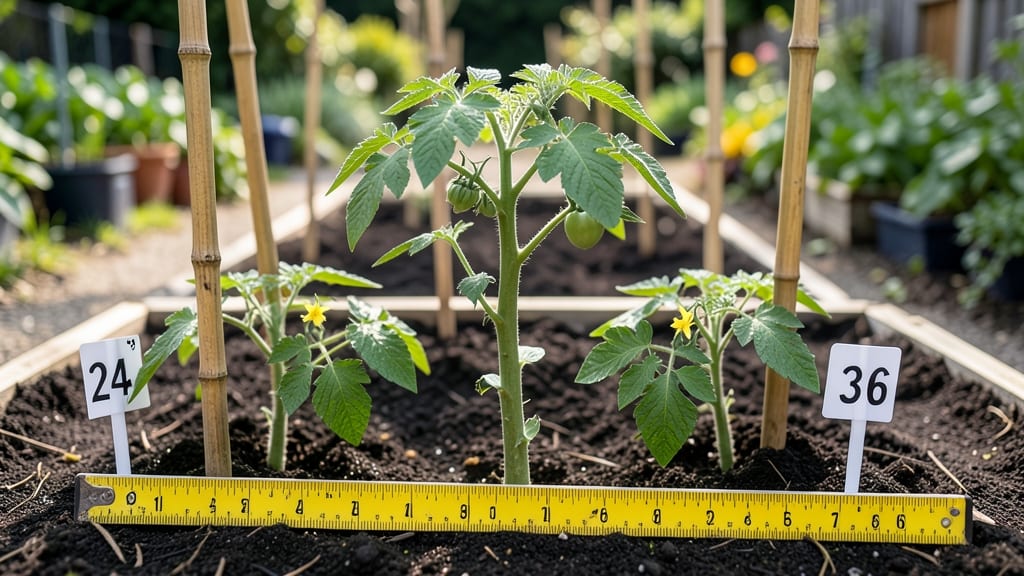
Spacing tomato plants 18 to 36 inches apart is the single biggest factor in whether your 🍅 harvest thrives or fades into disappointment.
Picture this: you’ve just transplanted your seedlings, full of hope, only to watch them fight for sunlight, their leaves wilting under the weight of crowded vines. That’s the cost of guessing instead of measuring.
But here’s the good news—getting this right isn’t just about numbers. It’s about giving your tomatoes room to breathe, stretch, and reward you with juicy, disease-free fruit all season long.
Determinate varieties (the bush types) need 24 to 36 inches of space, while indeterminate vines (the ones that keep growing) thrive with 18 to 24 inches. Too close, and you’ll battle blight and stunted growth. Too far, and you waste garden real estate.
I’ll walk you through the exact spacing for your setup—whether you’re working with rows, containers, or a tiny balcony garden—plus the hidden tricks to squeeze every last inch of productivity out of your plot.
By the end, you’ll know not just how far apart to plant, but why it matters—and how to adjust mid-season if your tomatoes start sending SOS signals. Let’s turn your garden into a high-yield powerhouse, one precise inch at a time.
Optimal tomato plant spacing by variety and growth type
Getting your tomato plant spacing right is the difference between a bountiful harvest and a struggle with stunted growth. Tomatoes fall into two main categories: determinate (bush types) and indeterminate (vining types), and each needs different room to thrive.
I’ve grown both in my garden for years, and the spacing rules I’ve learned make all the difference in yield quality and disease prevention.
Determinate tomatoes, like Roma or Celebrity, grow in compact bushes and produce fruit all at once. Indeterminate varieties, such as Sungold or Brandywine, keep growing and fruiting until frost. Crowding these types leads to poor airflow, which invites fungal diseases like early blight and powdery mildew.
Proper spacing ensures every plant gets 6-8 hours of sunlight and reduces competition for water and nutrients.
Here’s the golden rule I follow: bush tomatoes need 18-24 inches apart, while vining tomatoes require 24-36 inches. But don’t just take my word for it—let’s break it down in this quick-reference chart so you can plan your garden layout like a pro.
For determinate tomatoes, I plant them in a grid pattern with 24 inches between plants and 3 feet between rows. This creates a dense canopy that ripens all at once—perfect for canning or sauces.
Last year, my Roma tomatoes spaced this way produced 50 pounds of fruit from just 4 plants!
Indeterminate varieties, like my beloved Brandywine, need more room because they grow 6-10 feet tall and produce fruit continuously. I use 36-inch spacing and install trellises to save space.
This not only maximizes yield per square foot but also improves air circulation, reducing the risk of blossom end rot and fungal infections.
If you’re short on space, consider vertical gardening. I’ve had great success with cage-supported indeterminate tomatoes spaced 18 inches apart in a row, with cages providing 3 feet of vertical support.
This cuts horizontal space needs by half while keeping yields high. Just be sure to prune suckers regularly to maintain airflow.
Another pro tip: companion planting can help optimize space. I interplant basil between my tomato rows—it repels pests like hornworms and improves flavor. Marigolds around the perimeter also deter nematodes, keeping my tomatoes healthier without crowding them.
Remember, proper spacing isn’t just about numbers—it’s about creating an environment where your tomatoes can thrive without competing. Whether you’re a beginner gardener or a seasoned pro, these guidelines will help you design a high-yielding tomato patch that’s both productive and disease-resistant.
Now grab your measuring tape, sketch your garden layout, and get ready for a tomato harvest that’ll make your neighbors jealous! 🌱
How spacing affects tomato plant health and harvest size
Proper tomato plant spacing isn’t just about fitting more plants into your garden—it’s about creating an environment where each plant thrives. When tomatoes are too close, they compete for sunlight, water, and nutrients, leading to weaker stems, fewer flowers, and smaller fruits.
I’ve seen crowded tomato patches produce half the yield of properly spaced ones, even with identical care.
Crowding also reduces airflow, creating the perfect conditions for fungal diseases like early blight and late blight. Humidity lingers longer between leaves, and water droplets stay on foliage, giving pathogens more opportunities to spread.
The result? More leaf spots, wilting, and premature fruit drop—all signs your plants are stressed from poor spacing.
But here’s the good news: optimal spacing doesn’t mean sacrificing yield. In fact, it often increases it by allowing each plant to focus its energy on producing larger, healthier tomatoes. With the right techniques—like pruning and trellising—you can maximize space efficiency without compromising harvest size.
✅ Key Spacing Rules for Tomato Health
18-24"
Vining types need room to climb
24-36"
Bush types need airflow for fruit set
36-48"
Prevents soil-borne disease spread
Remove suckers
Improves airflow in crowded areas
When I first started gardening, I assumed more plants meant more tomatoes. But after a season of struggling with blossom end rot and powdery mildew, I realized spacing was the missing piece.
Proper spacing ensures each plant gets 6-8 hours of sunlight daily, which is critical for photosynthesis and fruit development. Without enough light, tomatoes stay small and underdeveloped.
Another game-changer is trellising indeterminate varieties. By training vines upward, you free up ground space for companion plants like basil or lettuce, while also improving airflow around the foliage.
I’ve seen Cherry tomatoes on trellises produce 30% more fruit than those left to sprawl, simply because the plants aren’t competing for space or resources.
Even if you’re working with limited space, techniques like square foot gardening or container growing can help. Just remember: never sacrifice airflow for density. A well-spaced tomato plant will always outperform a crowded one, no matter how much fertilizer you add.
The key is balance—giving each plant enough room to grow strong while maximizing your garden’s potential.