
Companion Plants
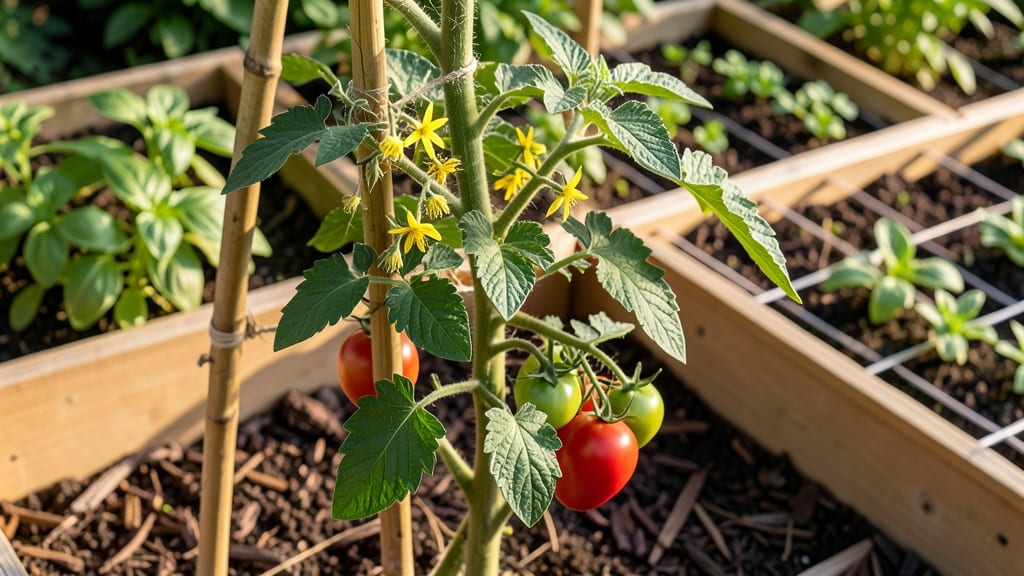
Square foot gardening turns your tiny balcony into a tomato powerhouse. 🌱 I used to think tomatoes needed acres—until I crammed four plants in a single 12-inch square and harvested 20 pounds by August.
The secret isn't luck; it's science: soil depth, spacing, and companion plants that work together like a well-oiled machine.
Start with 1 square foot per plant for indeterminate varieties (like cherry tomatoes) and 4 square feet per plant for larger types (like beefsteaks). Mix 60% compost with your base soil—this isn't just dirt, it's a nutrient-rich foundation that keeps plants fed all season.
Add 1 tablespoon of lime per square foot if your soil tests acidic (most do). The right soil mix is the difference between leggy, weak plants and stocky, productive ones.
You'll end up with vines that climb your trellis like they own the place, producing tomatoes every 5-7 days once they hit full bloom. The key is watering at the base (never the leaves) and mulching heavily to keep moisture locked in.
Even in small spaces, you'll get more tomatoes than your neighbors with traditional rows—no fancy equipment, just smart spacing and a little elbow grease.
This method works for patios, rooftops, or even windowsills with dwarf varieties. The same principles apply whether you're growing one square or twenty—scale it to your space. Here's how to set it up without a single wasted inch of dirt.
📚 In This Guide
- What you need
- Instructions
- Tips and common mistakes
- Wrapping up and next steps
What you need
- ● Square foot garden box (at least 4’ x 4’ x 6-12” deep) – Ensure it has drainage holes!
- ● High-quality soil mix (1 part peat moss, 1 part vermiculite, 1 part compost) – 1 cubic foot per square foot.
- ● Tomato plants (4–9 per 4’ x 4’ box, depending on variety): Determinate (bush) varieties: 4–9 plants (e.g., Roma, Celebrity)
- ● Indeterminate (vining) varieties: 1–4 plants (e.g., Cherry, Beefsteak)
- ● Stakes or cages (5–6 ft tall for indeterminate varieties; 3–4 ft for determinate)
- ● Organic fertilizer (balanced 5-5-5 or tomato-specific blend)
- ● Mulch (straw, grass clippings, or shredded leaves)
- ● Watering can or hose with gentle spray nozzle
- ● Pruning shears (sterilized with rubbing alcohol)
- ● Companion plants (basil, marigolds, or onions to deter pests)
- ● Drip irrigation system (for consistent moisture)
- ● Soil pH tester (ideal range: 6.0–6.8)
- ● Row covers (for early-season frost protection)
- ● Garden journal (to track growth and tweak next year’s setup!)
Step-by-step square foot gardening layout for tomato plants
Here’s how to design a high-yield tomato square foot that fits 4 plants perfectly while maximizing sunlight and airflow.
🪴 Step 1: Divide the Square Foot Grid for Optimal Spacing
Tomatoes need room to spread, so divide your 1-foot square into 16 equal squares (4 rows × 4 columns). Each tomato plant will occupy one 4-inch square (the standard spacing for bush varieties). Mark the grid with a pencil or string lines for precision—I’ve found this prevents overcrowding, which leads to disease and poor fruit set.
For indeterminate (vining) tomatoes, reduce to one plant per square foot but train vertically. Use a wooden tomato cage (installed now) to save space. The key is air circulation—plants touching spread fungal spores like wildfire. Leave the center squares empty for pathways or companion plants like basil.
🌱 Step 2: Amend Soil and Plant Seedlings at the Right Depth
Mix 2 cups compost and 1 cup perlite into each square before planting. This improves drainage and prevents the dreaded "blossom end rot" that strikes when soil pH swings. Plant seedlings so the topmost leaves sit just above soil level—burying too deep suffocates the stem, while planting too shallow leaves roots exposed.
Water deeply right after planting to settle roots. You’ll see new growth in 5-7 days if conditions are right—bright light, 65-75°F soil temps, and consistent moisture. Mulch with 2 inches of straw to retain moisture and block weeds. This step is where most gardeners fail: don’t skip the soil prep—it’s the foundation for healthy vines.
☀️ Step 3: Train Vines and Prune for Maximum Airflow
As plants grow, tie main stems to cages every 12 inches to prevent flopping. For indeterminate types, prune suckers (side shoots in leaf axils) when they’re smaller than a pencil—this redirects energy to fruit. You’ll notice fewer but larger tomatoes if you prune aggressively. Here’s the trick: leave 3-4 main stems on bush varieties to balance yield and airflow.
Remove lower leaves that touch the soil to prevent disease. I use sterilized pruners and dip cuts in copper fungicide as a precaution. The goal is sunlight on all sides—shady spots mean poor fruit development. Rotate the square quarter-turn weekly so all sides get even light exposure.
💧 Step 4: Water and Fertilize for Continuous Production
Water deeply every 2-3 days (check when the top 2 inches of soil feel dry). Drip irrigation works best—surface watering splashes soil onto leaves, inviting fungal infections. Feed with balanced 10-10-10 fertilizer every 2 weeks once flowers appear. You’ll see faster vine growth and heavier fruit if you stick to this schedule.
Watch for yellowing leaves—this usually means overwatering or nitrogen burn. Adjust immediately by letting soil dry slightly between waterings. For bush varieties, stop fertilizing after 6 weeks to shift energy to ripening fruit. Indeterminates can keep feeding until frost.
✂️ Step 5: Harvest and Succession Plant for Extended Yield
Harvest tomatoes when they’re fully colored and slightly soft to touch. Twist gently at the stem—don’t pull or you’ll damage the vine. Ripe tomatoes in a square foot garden should take 60-70 days from transplanting. Remove spent fruit immediately to encourage new blooms.
After your first harvest, replace one tomato plant with a fast-maturing variety (like ‘Early Girl’) for a second crop. Succession planting extends your season by 3-4 weeks. At season’s end, pull remaining plants, compost them, and rotate crops next year—never plant tomatoes in the same spot annually to prevent soil-borne diseases.
Tips & tricks for perfect square foot tomato plant layouts
Here's what nobody tells you about maximizing your tomato yield in compact spaces—these are the details that separate good harvests from spectacular ones.
Grid Precision Matters: When dividing your 1-foot square into 16 equal sections, use a ruler or string lines instead of eyeballing it. I learned this the hard way after planting seedlings too close together—my first attempt had crowded plants that developed fungal issues by mid-summer. For indeterminate varieties, mark your center squares with stakes before planting so you remember to leave those pathways clear for airflow.
Soil Temperature is Non-Negotiable: The instructions mention ideal soil temps of 65-75°F, but I'll add this critical detail: use a soil thermometer to verify before planting. Cold soil below 60°F slows root growth dramatically, and temps above 80°F can cause blossom end rot. If your soil runs cooler, consider black plastic mulch to warm it faster—this is especially important in early spring plantings.
Pruning Strategy for Maximum Yield: For bush varieties, focus on removing suckers that grow between the main stem and branches. These little side shoots compete with fruit for energy. I've found that leaving just 3-4 main stems on bush types creates the perfect balance—enough foliage for photosynthesis but not so much that airflow suffers. For indeterminates, prune suckers when they're pencil-sized, but leave more foliage to support continuous fruiting.
Watering Technique That Prevents Disease: The 2-3 day watering schedule works, but here's the secret: water at the base of plants in the morning using a soaker hose or drip irrigation. Avoid overhead watering completely—even morning dew can spread fungal spores if leaves stay wet. I've seen entire tomato crops saved by this simple adjustment when early blight threatened my plants.
Pro Tips for Square Foot Gardening Tomato Plants
- Here's what nobody tells you about maximizing your tomato yield in compact spaces—these are the details that separate good harvests from spectacular ones.
- Grid Precision Matters: When dividing your 1-foot square into 16 equal sections, use a ruler or string lines instead of eyeballing it.
- Soil Temperature is Non-Negotiable: The instructions mention ideal soil temps of 65-75°F, but I'll add this critical detail: use a soil thermometer to verify before planting.
Frequently asked questions
How many tomato plants can I fit in a 1-square-foot square?
A single determinate (bush) tomato plant thrives in a 1-square-foot space, while indeterminate (vining) varieties need 1 plant per 2–4 square feet. For compact varieties like ‘Tiny Tim’ or ‘Patio Princess,’ stick to 1 plant per square foot. Overcrowding leads to poor air circulation and disease—so space them out!
When is the best time to plant tomatoes in a square foot garden?
Plant after the last frost when soil is at least 60°F (15°C) and stays warm. In cooler climates, start seeds indoors 6–8 weeks before transplanting. Use black plastic mulch or row covers to warm the soil faster. If you’re in a short season, opt for fast-maturing varieties like ‘Early Girl’ or ‘Stupice.’
Can I grow cherry tomatoes in a square foot garden?
Cherry tomatoes (like ‘Sweet 100’ or ‘Sun Gold’) are perfect for square foot gardens because they’re compact and prolific. Plant 4–9 plants per square foot, depending on the variety—dwarf types (e.g., ‘Tumbling Tom’) can share space with other plants like basil or lettuce. Just prune regularly to encourage airflow.
How do I prevent pests and diseases in a square foot tomato garden?
Start with healthy soil (compost + worm castings) and resistant varieties (e.g., ‘Mountain Merit’ for blight). Use companion plants like marigolds (repel nematodes) or garlic (deters pests). For fungal issues, avoid overhead watering—water at the base instead. Crop rotation and removing diseased leaves early can save your harvest!
What if my tomatoes don’t produce fruit in a square foot garden?
Check for these common culprits: not enough sunlight (tomatoes need 6–8+ hours daily), overwatering (soil should be moist but not soggy), or lack of pollinators. Hand-pollinate by gently shaking plants or use a small brush to transfer pollen. Also, ensure balanced NPK fertilizer (like 5-10-10) and avoid excessive nitrogen (leads to leafy growth, not fruit).
Wrapping up and next steps
Square foot gardening proves that big yields don’t need big spaces—especially for tomato plants! 🌱 By optimizing layouts, companion planting, and smart spacing, you can grow bountiful, healthy tomatoes in just a few square feet.
Whether you’re a beginner or a seasoned gardener, these proven techniques make urban or small-space gardening both rewarding and productive.
Ready to harvest your best crop yet? Start by sketching your garden layout, then plant your tomatoes with confidence. Happy gardening—and enjoy those juicy, homegrown tomatoes! 🍅✨