
Pests
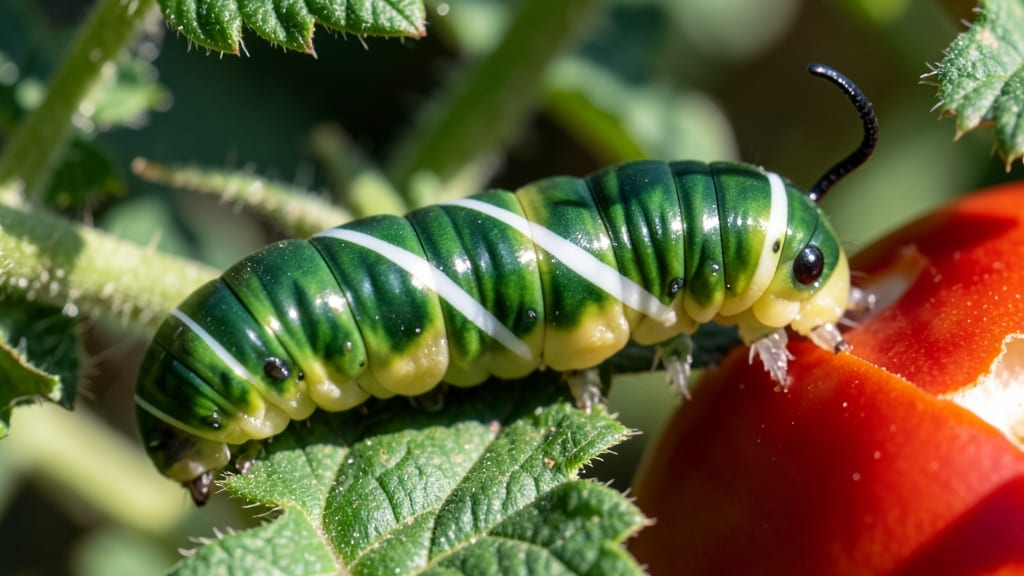
The horned tomato worm (Manduca sexta) is not poisonous to humans or pets, though its spines may cause mild skin irritation if handled roughly. Its primary defense mechanism is bluffing predators with its horn-like projection, not toxicity. Always wash hands after handling caterpillars to avoid irritation from natural body oils or debris.
The horned tomato worm's intimidating appearance—those sharp spines and the prominent "horn"—is all about deception. 🌿 These caterpillars don't produce venom or toxins; instead, they rely on visual intimidation to scare off predators like birds and lizards.
The spines aren't hollow like a stinging nettle's but can still cause minor itching if you brush against them, similar to how some plants trigger allergic reactions. Their primary defense is pure theater, making them fascinating to observe in gardens while posing no real threat.
If you're raising them as a food source for birds or simply want to relocate one, use gloves or a container with ventilation. Gently transfer the caterpillar to a new location rather than squeezing it, as this can release irritating body oils.
For kids, explain that while they look scary, these caterpillars are harmless—just like how a barking dog might look fierce but won't bite unless provoked.
💡 In This Article
- Why Horned Tomato Worms Feel Dangerous (But Aren’t)
- Safe Handling Tips for Gardeners and Kids
Why horned tomato worms feel dangerous (but aren’t)
The horned tomato worm's (Manduca sexta) most striking feature is its horn-like projection on its back, which is actually an extension of its last abdominal segment.
This structure isn't venomous but serves as a visual deterrent—when threatened, the caterpillar raises this "horn" and thrashes its body, making it appear much larger and more intimidating to predators like birds or lizards. 🌟 This behavior is called "startle display," a common defense in the insect world, similar to how the stinging puss moth caterpillar raises its spiky hairs to look more threatening than it is.
The caterpillar's spines are another key defense mechanism, but they're not designed to inject venom. Instead, these spines contain tiny barbs that can break off and stick to skin or fur, causing mild irritation—similar to how touching a cactus can leave a prickly sensation.
The spines are hollow and don't deliver toxins, but the physical contact can trigger an allergic reaction in sensitive individuals, much like how some people react to poison ivy. The irritation typically manifests as redness or itching within 10-30 minutes of contact.
What makes the horned tomato worm unique is how it combines these visual and tactile defenses without relying on chemical weapons.
Unlike the stinging puss moth caterpillar, which has venomous spines, or the hickory horned devil, which uses its spiky appearance to deter predators, the horned tomato worm's defense is purely behavioral.
When handled, the caterpillar may release small amounts of natural body oils that can leave a greasy residue on hands, but these oils aren't toxic—they're simply a byproduct of its exoskeleton.
Scientifically, this defense strategy is an example of aposematic coloration, where an organism uses bright colors or intimidating features to signal danger without actually being harmful. The horned tomato worm's green and black stripes, combined with its spiky appearance, create a visual warning that mimics more dangerous species.
This is why predators often avoid them—nature has taught them to associate these features with potential harm, even when none exists. 🔥
Comparing it to other caterpillars helps put its safety into perspective: while the stinging puss moth can deliver a painful sting, or the hickory horned devil has spines that can cause more severe irritation, the horned tomato worm's defenses are purely psychological.
Its spines are soft enough to break with gentle pressure, and its "horn" is harmless unless you squeeze the caterpillar too tightly, which can release those mild body oils. This makes it one of the safer caterpillars to encounter in gardens or natural settings.
For those curious about its lifecycle, the horned tomato worm's defenses are most pronounced in its larval stage, which lasts about 6 weeks. During this time, it focuses on eating and growing, using its intimidating appearance to avoid becoming a meal itself.
Once it pupates, the now-harmless pupa loses these defenses entirely, emerging as the beautiful tobacco hornworm moth, which poses no threat at all. This transformation highlights how the caterpillar's "dangerous" traits are purely temporary and tied to its survival strategy.