
Container Gardens
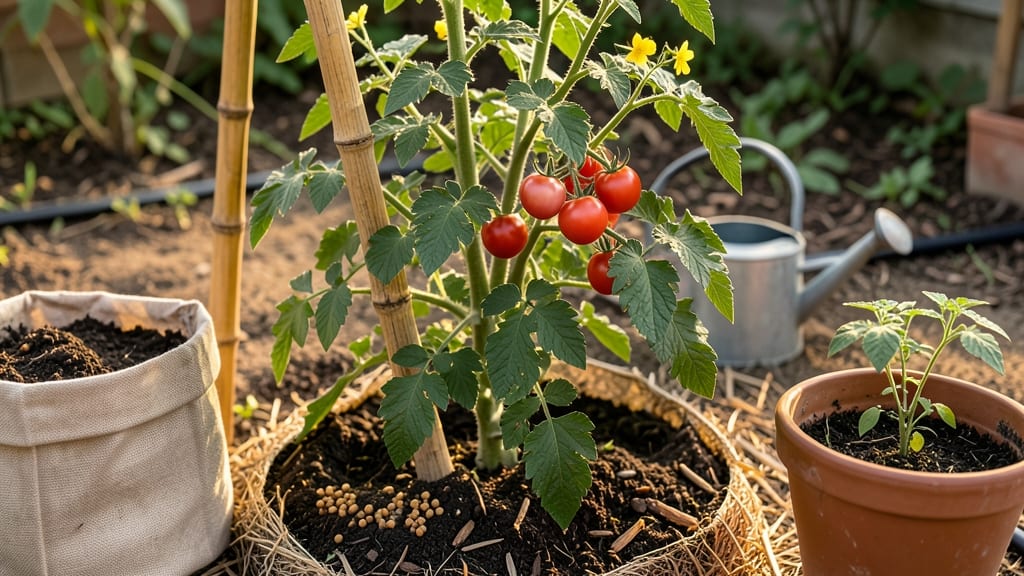
Caring for tomato plants in containers means you can grow juicy vine-ripened tomatoes on a balcony, patio, or even a sunny windowsill. 🌱 I learned the hard way that container tomatoes need special attention—different watering, bigger pots, and more frequent feeding than their in-ground cousins.
But once you master these few key adjustments, your plants will thrive just as well (or better) than garden-center transplants.
The biggest game-changer is pot size: at least 5 gallons for dwarf varieties, 10-15 gallons for full-sized plants. Drainage holes are non-negotiable—root rot is the silent killer of container tomatoes.
I use a mix of 60% potting soil, 30% compost, and 10% perlite to keep roots happy and water flowing right. Stake or cage your plants early; tomatoes grow fast, and flopping vines mean fewer fruits.
By mid-summer, you'll be harvesting plump, flavorful tomatoes that taste nothing like store-bought. The secret is watering at the base (not overhead) and fertilizing every 2-3 weeks with a balanced tomato feed.
Prune suckers regularly to focus energy on fruit production, and watch your plants reward you with bountiful harvests—even in the tightest spaces.
This method works for determinate (bush) and indeterminate (vining) varieties, though indeterminates need larger containers. Whether you're in a city apartment or a small suburban yard, container tomatoes deliver big rewards with minimal space. Let’s get those plants growing!
📚 In This Guide
- What you need
- Instructions
- Tips and common mistakes
- Wrapping up and next steps
What you need
- ● Containers: At least 1-2 containers per plant (5+ gallons each for determinate varieties, 7+ gallons for indeterminate). Use durable, lightweight materials like: Fabric grow bags (with drainage holes)
- ● Plastic or ceramic pots (with saucers)
- ● Wooden barrels or half-barrels (lined with plastic)
- ● Potting Mix: 10-20 lbs of high-quality, well-draining container mix (avoid garden soil—it compacts!). Look for blends labeled "tomato" or "container vegetable."
- ● Tomato Plants: 2-4 plants (depending on container size). Choose container-friendly varieties like 'Tiny Tim,' 'Patio,' or 'Balcony Red.'
- ● Drainage: Pebbles, broken pottery, or mesh (1-2 inches) to prevent root rot.
- ● Support: Cages, stakes, or trellises (1 per plant) to encourage vertical growth.
- ● Watering Can or Hose: With a gentle spray nozzle to avoid disturbing soil.
- ● Fertilizer: Balanced liquid fertilizer (e.g., 10-10-10) or slow-release granules (follow package rates).
- ● Mulch: Straw or shredded leaves (1-2 inches) to retain moisture.
- ● Pruning Shears: For removing suckers and dead leaves.
- ○ pH Test Kit (Optional): To check soil acidity (ideal: 6.0-6.8).
- ○ Shade Cloth (Optional): For hot climates (30-50% coverage).
Step-by-Step guide to caring for tomato plants in containers
Container tomatoes thrive with the right balance of space, support, and consistent care—here’s how to keep your vines productive all season.
🪴 Step 1: Choose the Right Container and Position
Select a container that’s at least 5 gallons per plant—larger pots hold more soil moisture and nutrients, which prevents stress during fruit development. I opt for fabric grow bags because they allow roots to breathe and reduce the risk of overwatering. Ensure the container has multiple drainage holes at the bottom to prevent soggy soil, which can lead to root rot.
Place your container in a location that receives 6-8 hours of direct sunlight daily. A south-facing window or balcony works well, but if you're using grow lights, position them 12-18 inches above the plants and keep them on for 14-16 hours per day. Tomatoes need warmth to set fruit, so avoid placing them in drafty spots or under air conditioning vents.
🌱 Step 2: Plant with Proper Spacing and Support
When transplanting, bury the stem up to one-third of its height—this encourages stronger root growth along the buried stem. Space multiple plants 18-24 inches apart to allow for airflow, which reduces disease risk. I always add a tomato cage or sturdy trellis at planting time to support the plant as it grows. Avoid flimsy stakes, as they’ll bend under the weight of heavy vines and fruit.
Use a balanced, slow-release fertilizer at planting to give your tomatoes a nutrient boost. Mix 1 tablespoon of 10-10-10 fertilizer into the bottom 2 inches of soil before adding your plant. This ensures roots have immediate access to nutrients without burning tender foliage. Water deeply after planting to settle the soil and eliminate air pockets around the roots.
💧 Step 3: Water Consistently and Monitor Soil Moisture
Tomatoes in containers dry out faster than in-ground plants, so water when the top 1-2 inches of soil feel dry to the touch. I use a moisture meter to check soil conditions—aim for 60-70% moisture in the root zone. Water deeply until it drains from the bottom, then empty the saucer to prevent the roots from sitting in standing water. Overwatering is the fastest way to kill container tomatoes, so always let the topsoil dry slightly between waterings.
Mulch the soil surface with 2-3 inches of straw or shredded leaves to retain moisture and regulate temperature. This also prevents soil-borne diseases from splashing onto leaves during watering. Avoid wetting the foliage when you water—direct the stream at the base of the plant to keep leaves dry and reduce the risk of fungal infections like early blight.
☀️ Step 4: Prune and Fertilize for Maximum Yield
Prune suckers—those small shoots that grow in the leaf axils—weekly to redirect the plant’s energy into fruit production. Remove any leaves that touch the soil or are lower than 12 inches from the ground, as these are prone to disease. I also pinch off the first few flowers that appear, allowing the plant to focus on establishing a strong root system before setting fruit. This leads to larger, healthier tomatoes later in the season.
Feed your plants every 2-3 weeks with a liquid tomato fertilizer (like fish emulsion or seaweed extract) diluted to half-strength. Look for a fertilizer with a higher phosphorus (P) content (e.g., 5-10-5) to encourage flowering and fruiting. Stop fertilizing 4-6 weeks before the first expected frost, as new growth won’t have time to harden off before winter.
✂️ Step 5: Harvest and Maintain Through the Season
Harvest tomatoes when they’re fully colored and slightly soft to the touch—this ensures peak flavor and prevents overripe fruit from splitting. Pick regularly to encourage more production; I harvest every 2-3 days during peak season. Use pruning shears to avoid damaging the vine, and store harvested tomatoes at room temperature until they ripen fully.
As the season progresses, watch for pests like hornworms or aphids—remove them by hand or spray with neem oil for an organic solution. If your plants show signs of stress, like yellowing leaves or stunted growth, they may need more sunlight, water, or nutrients. Adjust care accordingly, and don’t hesitate to repot into a larger container if roots are circling the edges.
Tips & tricks for thriving container tomatoes
Growing tomatoes in containers takes extra attention to detail—here's how to avoid common pitfalls and maximize your harvest.
Container Size Matters: While the instructions specify at least 5 gallons per plant, I've found that 7-10 gallons makes a world of difference for indeterminate varieties that grow 6 feet or taller. The extra space prevents roots from becoming root-bound, which leads to stunted growth and smaller fruit. If you're growing multiple plants, opt for individual containers rather than one large shared pot—this prevents competition for nutrients and water.
Sunlight Optimization: The 6-8 hours of direct sunlight is a great baseline, but I've learned to pay attention to the quality of that light. South-facing windows provide the most consistent light, but if you're using grow lights, position them 12-15 inches above the plants during the 14-16 hour day cycle. LED grow lights with full-spectrum bulbs are particularly effective—they mimic natural sunlight and can actually improve fruit color and flavor compared to standard bulbs. Rotate your plants quarter-turn weekly to ensure even growth.
Soil Preparation Secret: In Step 2, when mixing your 1 tablespoon of 10-10-10 fertilizer into the bottom 2 inches of soil, I recommend adding a handful of compost or worm castings to that same layer. This creates a nutrient-rich zone right where the roots will establish first. The compost also improves soil structure, helping container soil retain moisture without becoming waterlogged. For the top 6-8 inches of soil, use a high-quality potting mix with added perlite or vermiculite to improve drainage.
Pruning Strategy: When pruning suckers weekly in Step 4, focus on removing only the ones that are smaller than a pencil diameter. Larger suckers can actually become productive branches. Also, leave a few leaves below each fruit cluster—they help ripen the tomatoes faster by photosynthesizing energy directly to the fruit. And here's a pro move: save those pruned suckers! Root them in water for a few days, then transplant them as new plants for a second harvest later in the season.
Pro Tips for Caring For Tomato Plants In Containers
- Growing tomatoes in containers takes extra attention to detail—here's how to avoid common pitfalls and maximize your harvest.
- Container Size Matters: While the instructions specify at least 5 gallons per plant, I've found that 7-10 gallons makes a world of difference for indeterminate varieties that grow 6 feet or taller.
- Sunlight Optimization: The 6-8 hours of direct sunlight is a great baseline, but I've learned to pay attention to the quality of that light.
Frequently asked questions
Got questions about growing tomatoes in containers? You’re not alone—even experts have curiosities! Here are some of the most common ones, answered for your peace of mind (and juicy harvest).
What’s the best container size for tomato plants?
For determinate (bush) tomatoes, a 5-gallon container is ideal, while indeterminate (vining) varieties need at least 10–15 gallons to support their growth. Deeper is better—aim for 12–18 inches deep—to encourage strong root systems. Pro tip: Add drainage holes to prevent soggy roots!
When should I start fertilizing container-grown tomatoes?
Begin with a balanced fertilizer (10-10-10) when you transplant seedlings, then switch to a low-nitrogen, high-phosphorus (5-10-10) feed once flowers appear. Feed every 2–3 weeks during the growing season. Watch for signs: Yellow leaves? It’s time to boost nutrients!
Can I grow cherry tomatoes in smaller pots?
Cherry tomatoes thrive in 3–5 gallon containers because their compact size reduces space needs. Just ensure they get 6–8 hours of sunlight daily and prune suckers (those little shoots in the leaf axils) to maximize fruit production. Bonus: Their bushy habit makes them perfect for balconies!
How do I keep pests away from my container tomatoes?
Prevent pests with neem oil sprays or row covers for early protection. Common culprits include aphids, hornworms, and whiteflies. Quick fix: Handpick hornworms (they’re giant but harmless to remove!) and rinse plants with water to deter aphids. Healthy plants resist pests better—so water consistently and prune for airflow.
Will container tomatoes ripen faster than in-ground ones?
Not necessarily! Container tomatoes ripen based on sunlight, temperature, and variety—not container size. However, containers can warm up faster in hot weather, which may speed up ripening (or stress plants if overheated). Tip: Move pots to partial shade during heatwaves and mulch with straw to regulate soil temps.
What if my container tomatoes stop producing fruit?
Fruitless tomatoes often signal stress—check for underwatering, overcrowding, or nutrient deficiencies. Try this:
- Increase sunlight (they need 6+ hours daily).
- Prune suckers to redirect energy to fruiting.
- Add a calcium supplement (like crushed eggshells) if blossoms drop.
Wrapping up and next steps
Caring for tomato plants in containers is totally doable—even in small spaces! With the right containers, soil, sunlight, and support, you’ll be harvesting juicy, homegrown tomatoes in no time. 🌱 Don’t let limited space hold you back; get creative and enjoy the rewards of container gardening.
Ready to dive in? Start by picking your tomato variety and gathering your supplies—then watch your green thumb grow! 🌿 Check out our full guide to get started today.