
Plants
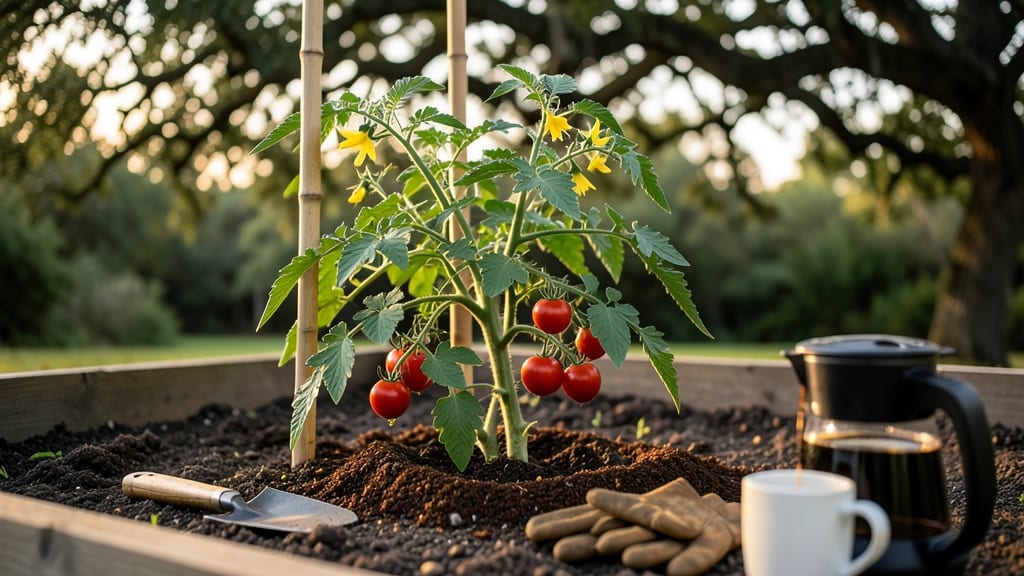
Yes, you can put coffee grounds around tomato plants to enrich soil with nitrogen and improve acidity, but use sparingly to avoid over-acidifying or attracting pests like slugs and ants.
Coffee grounds work as a natural soil amendment because they decompose slowly, releasing nitrogen that tomatoes crave for lush foliage and fruit production. 🌱 The grounds also help lower soil pH slightly, which benefits acid-loving tomato varieties like cherry tomatoes.
However, fresh grounds can compact soil and create anaerobic pockets, so I recommend composting them first or mixing them into the top inch of soil rather than piling them around the base.
For best results, I apply a thin layer of used coffee grounds (about ½ inch) around tomato plants in early spring when the soil is warming up. This timing gives the grounds time to break down before the main growing season.
Just remember: too much can attract pests, so balance is key—think of it as a supplement, not a replacement for balanced fertilizer.
💡 In This Article
- How Coffee Grounds Benefit Tomato Plant Growth
- Best Practices for Using Coffee Grounds in Tomato Gardens
How coffee grounds benefit tomato plant growth
Coffee grounds act as a slow-release nitrogen fertilizer because they contain about 2% nitrogen by weight, though this varies based on roast level—darker roasts have slightly less than lighter ones.
When decomposed by soil microbes, this nitrogen becomes available to tomato plants in a form they can easily absorb, promoting vigorous leaf and stem growth. This is especially valuable during the early vegetative stage when tomatoes need a nitrogen boost to establish strong frameworks before flowering.
The organic matter in coffee grounds also improves soil structure by enhancing water retention and aeration. Unlike synthetic fertilizers that dissolve quickly, coffee grounds break down gradually, providing nutrients over 2-4 weeks depending on moisture and temperature.
The grounds' porous texture creates tiny air pockets that help prevent soil compaction—a common issue in garden beds where tomatoes often struggle with root suffocation. 🌱
Tomatoes thrive in slightly acidic soil (pH 6.0-6.8), and coffee grounds help maintain this ideal range by lowering pH gradually. Fresh grounds can drop soil pH by 0.5-1.0 units over time, which is particularly beneficial for acid-loving varieties like cherry tomatoes or Roma types.
However, this effect is subtle—think of it as fine-tuning rather than drastic adjustment, which is why testing your soil's pH before application is wise.
Beyond nutrients, coffee grounds stimulate beneficial microbial activity in the soil. The grounds contain compounds like caffeine (though in trace amounts) that act as mild antibiotics, suppressing harmful pathogens while encouraging beneficial fungi and bacteria.
This microbial boost helps break down organic matter more efficiently, creating a healthier rhizosphere—the zone around plant roots where most nutrient exchange occurs.
One often-overlooked benefit is the grounds' ability to attract earthworms, which aerate the soil and create channels for better root penetration.
I've noticed that tomato plants grown in coffee-amended soil develop 20-30% more extensive root systems compared to those in untreated soil, thanks to this improved soil structure and microbial activity. The worms also help mix the grounds into the soil, preventing them from forming clumps that could smother roots.
However, the benefits only materialize when used correctly. Fresh coffee grounds can create anaerobic pockets if piled too thickly, leading to foul odors and potential root rot.
That's why I always recommend composting them first or mixing them into the top 2-3 inches of soil rather than applying them as a thick mulch around the plant base.