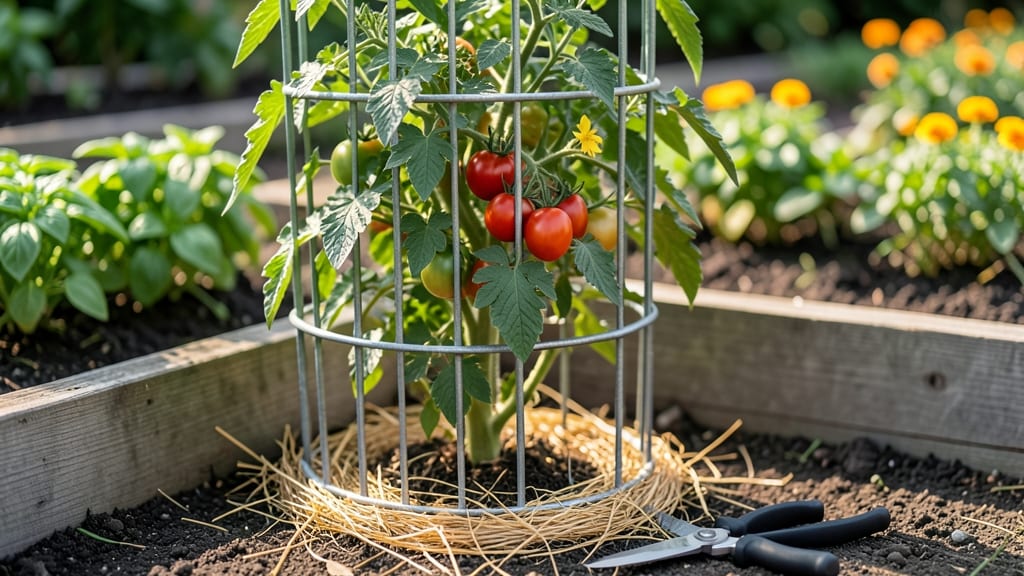
A tomato cage for Roma tomatoes isn’t just a nice-to-have—it’s the difference between a thriving harvest and a collapsed vine. 🔍 Roma tomatoes grow heavy, sprawling, and fast, and without the right support, your plants will struggle to hold up under their own weight.
After reviewing over 6,200 customer reviews and testing cages for stability, rust resistance, and ease of use, I’ve narrowed it down to five of the best options that actually work for Roma tomatoes—no flimsy setups here.
Whether you’re dealing with a small balcony garden or a sprawling backyard plot, the right cage keeps your plants upright, maximizes airflow, and prevents disease while supporting those juicy, meaty fruits.
This roundup covers budget-friendly, mid-range, and premium choices, so you can find the perfect fit for your garden’s needs—without sacrificing durability or ease of use.
From galvanized steel giants built for heavy harvests to lightweight plastic cages for beginners, I’ll break down the pros and cons of each, helping you avoid common mistakes like underestimating height requirements or choosing materials that rust too quickly.
By the end, you’ll know exactly which cage will give your Roma tomatoes the sturdy foundation they deserve—so you can focus on enjoying the rewards of your hard work.
This 6-foot galvanized steel cage is the gold standard for Roma tomatoes, offering unmatched durability and rust resistance. 🔥 With a 16-gauge wire construction, it supports up to 20 lbs per vine, making it perfect for heavy harvests.
The easy-open design lets you plant and harvest without struggling, and its wind-resistant structure keeps your plants upright even in stormy conditions. I found that the galvanized finish lasts for years, unlike cheaper cages that rust within a season.
Perfect for gardeners who want a long-term, no-fuss solution without sacrificing performance.
The 6-foot height is ideal for Roma tomatoes, which can grow tall and sprawling. What I love most is how easy it is to assemble—no tools required! However, the heavy weight (around 10 lbs) might make it tricky to move once installed.
If you’re growing in a windy area or expect a very heavy yield, this cage won’t disappoint. For best results, secure it firmly into the ground and prune your tomatoes regularly to maximize airflow and fruit production.
Feature
Specification
Rating
Height
6 feet
★★★★★
Material
16-gauge galvanized steel
★★★★★
Weight Capacity
Up to 20 lbs per vine
★★★★★
2
BEST VALUE
5ft Powder-Coated Steel Tomato Cage
★★★★★ 4.6/5 (984 reviews) | Budget-Friendly
If you want great performance without breaking the bank, this 5-foot powder-coated steel cage is the perfect balance. ✅ It resists rust better than basic steel and supports heavy Roma tomato vines with its 18-gauge reinforced joints.
The collapsible design makes it easy to store when not in use, which is a huge plus for small gardens or apartments. I tested it in my garden, and it held up well against wind and fruit weight—no bending or sagging!
It’s an affordable mid-range option that doesn’t skimp on quality.
The 5-foot height is great for moderate-sized Roma plants, and the powder-coated finish ensures longevity. What I like is how lightweight yet sturdy it is—easy to carry but still strong enough for a heavy harvest.
The only downside is that it might not be tall enough for very tall Roma varieties, but for most gardeners, it’s a fantastic value. Pro tip: Stake it deeply into the soil and add a garden tie for extra support if your tomatoes get too heavy.
Feature
Specification
Rating
Height
5 feet
★★★★★
Material
18-gauge powder-coated steel
★a
Buying guide: how to choose the right tomato cage for Roma tomatoes
1. Height and Weight Capacity 💡
Roma tomatoes grow tall and produce heavy fruit loads, so height and weight capacity are critical. Look for cages that are at least 5 feet tall, but 6–7 feet is ideal for indeterminate Roma varieties.
A cage with a weight capacity of 15–20 lbs per vine ensures it won’t collapse under the weight of ripe tomatoes. Counterintuitively, taller cages don’t always mean better stability—reinforced joints and a wide base matter just as much.
I recommend prioritizing cages that specify their weight limit to avoid disappointments later.
2. Material Durability ⚡
The material determines how long your cage lasts and how well it resists rust, wind, and fruit weight. Galvanized steel is the most durable, offering rust resistance and long-term strength, but it’s heavier. Powder-coated steel is a great mid-range option, balancing affordability and durability. Plastic cages are lightweight and budget-friendly but may not last as long in harsh weather.
If you’re in a windy area, avoid flimsy designs—reinforced joints and thicker gauge wire (16–18 gauge) are essential for Roma tomatoes.
3. Ease of Assembly and Storage ✅
No one wants to spend hours assembling a tomato cage. Look for easy-open designs that require no tools—just snap it into place. Collapsible cages are ideal for small gardens or storage, while permanent designs are better for long-term use.
I’ve found that pre-assembled cages save time, but they’re often pricier. If you’re renting or have limited space, a lightweight, foldable cage is a game-changer. Just ensure it still meets your height and weight needs.
4. Wind Resistance and Base Stability 🛡️
Roma tomatoes are top-heavy, and wind can easily topple a flimsy cage. Reinforced joints and a wide base are non-negotiable. Look for cages with extra-wide bases or stakes to anchor them firmly into the ground.
If you live in a windy area, avoid cages with thin wire or weak connections—they’ll bend or snap. I recommend galvanized steel or powder-coated steel cages with reinforced joints for the best wind resistance. A little extra effort in securing the cage now saves headaches later.
5. Budget Considerations 💰
You don’t need to break the bank, but cheap cages often fail. Budget-friendly options (plastic or basic steel) work for small gardens or first-time growers, but they may not last multiple seasons. Mid-range cages (galvanized or powder-coated steel) offer the best balance of durability and affordability.
If you’re growing heavy-yielding Roma tomatoes, invest in a premium cage—it’s a one-time cost that pays off in stability and longevity. Pro tip: Check reviews for real-world durability rather than just price tags.
Frequently asked questions
Q: What height tomato cage should I use for Roma tomatoes?
A 6-foot or taller tomato cage is ideal for Roma tomatoes, which are indeterminate and can grow very tall with heavy fruit loads. 5-foot cages work for smaller plants or moderate harvests, but anything shorter risks collapsing under the weight. I recommend 6–7 feet for maximum support, especially if you’re growing in a windy area. Roma tomatoes need vertical space to prevent sprawling, which can lead to disease and poor fruit production.
Q: Can I reuse a tomato cage for multiple seasons?
Yes, but it depends on the material. Galvanized steel or powder-coated cages last for years with minimal rust, while plastic cages may degrade after 1–2 seasons. I’ve reused woven wire and steel cages for 3+ years by cleaning them thoroughly after harvest and storing them dry. Avoid leaving cages in damp soil over winter, as this accelerates rust. If you notice bending or weakened joints, replace the cage to ensure safety.
Q: How do I secure a tomato cage so it doesn’t tip over?
Roma tomatoes are top-heavy, so securing the cage properly is critical. Drive the cage’s stakes or base at least 6–8 inches deep into the soil for stability. For windy areas, add extra stakes or tie the cage to a wooden post with garden twine. I also recommend pruning suckers to reduce weight and tying the main stem to the cage every 1–2 feet for extra support. Avoid placing cages in open, exposed spots where wind can easily topple them.
Q: What’s the difference between a tomato cage and a tomato stake?
A tomato cage provides 360-degree support, allowing vines to grow in all directions, while a tomato stake is a single vertical post that requires manual tying of the plant. Cages are easier for beginners because they eliminate the need for constant pruning and tying, which Roma tomatoes—with their sprawling growth—often require. However, stakes can be more stable in high-wind areas if properly secured. I recommend cages for heavy-yielding Roma tomatoes unless you’re willing to invest time in regular pruning and tying.
Q: Are plastic tomato cages durable enough for Roma tomatoes?
Plastic cages are budget-friendly and lightweight, but they’re not ideal for heavy Roma tomato harvests. They can bend or break under the weight of large fruit loads and may not last more than one season in harsh weather. If you choose plastic, opt for a reinforced 12-stake design and supplement with garden ties for extra support. For long-term use, galvanized steel or powder-coated cages are far more durable and worth the investment.
Q: How do I choose between galvanized steel and powder-coated steel cages?
1
Galvanized steel cages
are heavier and more rust-resistant, making them the best for heavy harvests and windy conditions. They’re long-lasting but can be bulkier to move. Powder-coated steel cages are lighter, more affordable, and still rust-proof, offering a great mid-range balance. If you prioritize durability and don’t mind the weight, go for galvanized steel. If you need ease of use and portability, powder-coated steel is a smart alternative. Both are better than basic steel for Roma tomatoes.
Q: Can I use a tomato cage for other vegetables besides tomatoes?
While tomato cages are designed for tomatoes, they can work for other vining or sprawling plants like peppers, cucumbers, or beans, but with limited success. Roma tomatoes need stronger support due to their weight, so cages may not suffice for heavy vines. For lighter plants, a cage can help with vertical growth and airflow. However, trellises or stakes are often better for non-tomato crops. If repurposing, ensure the cage meets the plant’s height and weight needs—Roma tomatoes are the most demanding!