
Companion Plants
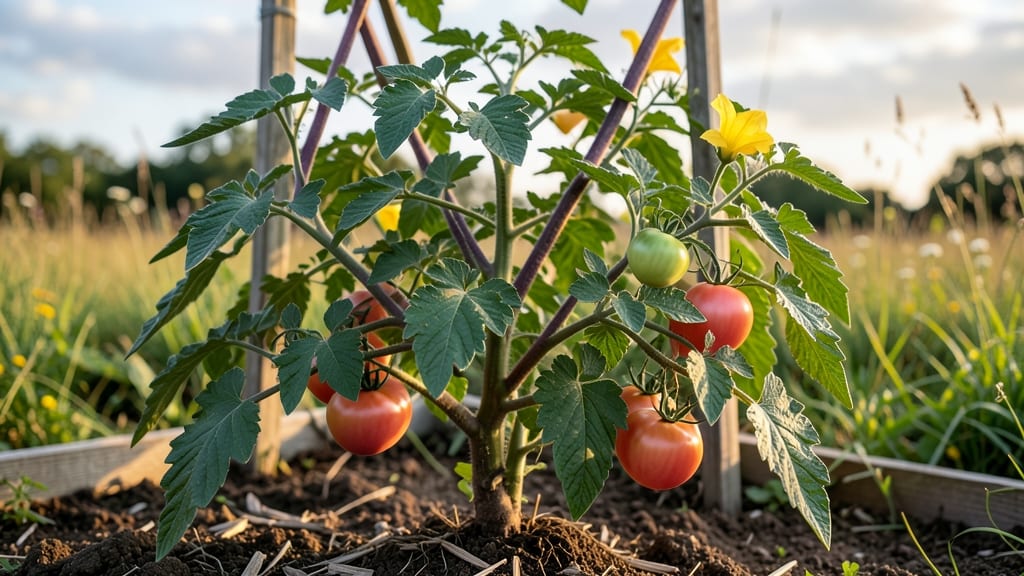
Those brandywine tomato plant leaves tell the real story of your harvest—yellowing, curling, or spotted foliage isn’t just cosmetic. 🌿 I’ve seen firsthand how a single pest or disease can turn a thriving vine into a sad, fruitless shadow if ignored.
The good news? Most issues have simple fixes once you know what to look for.
Those big, burgundy leaves are your plant’s powerhouse—photosynthesis factories that feed your tomatoes. When they’re struggling, it’s usually one of three things: pests munching away, fungal infections spreading, or a simple nutrient imbalance.
My first year growing Brandywines, I lost half my crop to early blight because I didn’t recognize the brown spots until it was too late.
With the right care, you’ll keep those leaves lush and productive all season. Start with proper spacing and airflow, then watch for early signs of trouble. A quick spray of neem oil or a companion planting of basil can save your plants before problems escalate.
Whether you’re dealing with aphids, blight, or just yellowing edges, this guide gives you the tools to intervene early. Your Brandywines will reward you with heirloom-sized tomatoes and fewer headaches—promise.
Hidden Triggers Behind Leaf Trouble
Even the hardy Brandywine tomato plants—known for their disease resistance and robust growth—can develop leaf issues when certain conditions tip the balance. Understanding the why behind these problems is the first step to saving your vines.
Below, we break down the most common culprits, backed by science, so you can diagnose—and fix—what’s ailing your plants.
Tomato leaves wilt, yellow, or crisp at the edges when their water needs aren’t met—whether they’re drowning or dehydrating. Brandywine tomatoes thrive in consistent moisture, and their deep roots demand stability. Here’s the science:
- Overwatering: Soggy soil cuts off oxygen to roots, leading to anaerobic conditions that trigger root rot (often caused by Phytophthora fungi). Leaves may turn yellow (chlorosis) or develop brown, mushy spots.
- Underwatering: When soil dries out, cells plasmolyze (shrink from water loss), causing wilting, crispy edges, and a v-shaped yellowing between leaf veins.
- Heat Stress: Temperatures above 90°F (32°C) for prolonged periods disrupt photosynthesis. Leaves may scorch (brown, papery edges) or develop sunscald (white/yellow patches).
💡 Pro Tip: Stick your finger 2 inches into the soil—if it’s dry, water deeply. If it’s soggy, hold off and improve drainage with compost or perlite. Mulch with straw or grass clippings to retain moisture and cool roots.
Pests don’t just nibble—they inject toxins, spread disease, and disrupt nutrient flow. Brandywine tomatoes are tough, but their leaves are prime real estate for these invaders:
| Pest | Leaf Damage Signs | Why It Happens |
|---|---|---|
| Japanese Beetles | Irregular holes, skeletonized leaves, black fecal pellets. | Adult beetles chew leaf tissue, while larvae (grubs) feed on roots. Their saliva contains toxic enzymes that trigger necrosis (dead tissue). |
| Spider Mites | Fine webbing, stippled/yellowing leaves, bronzing on undersides. | These microscopic arachnids pierce cells to suck sap, causing chlorophyll loss. Hot, dry conditions accelerate their reproduction (they thrive at <90°F). |
| Aphids | Curled, sticky leaves (honeydew), black sooty mold. | Aphids inject honeydew (their waste), which blocks sunlight and fosters sooty mold (a fungal hitchhiker). Their saliva also transmits viruses like Tomato Yellow Leaf Curl Virus. |
| Tomato Hornworms | Large, ragged holes; frass (green droppings) on leaves. | These caterpillars are voracious, consuming entire leaves overnight. Their regurgitated enzymes break down plant tissue, inviting secondary infections. |
🔥 Action Plan:
- 👨🍳 Handpick beetles/hornworms daily (drop them in soapy water).
- 💦 Blast mites with a forceful water spray (disrupts their webs).
- 🌿 Introduce predators: Ladybugs (aphids), parasitic wasps (hornworms), or neem oil (for mites).
- ✨ Companion plants: Basil, marigolds, or nasturtiums repel pests naturally.
Fungi and bacteria hitchhike on wounds, spores, or poor airflow, turning Brandywine leaves into a nutrient wasteland. These pathogens thrive in humid, stagnant conditions and often start with subtle signs:
- Early Blight (Alternaria solani)
- 🔍 Symptoms: Concentric target-like spots (brown with yellow halos) on lower leaves.
- 🔬 Why It Happens: Fungal spores overwinter in soil and splash onto leaves via water. High humidity (70%+) and nighttime temps above 75°F trigger outbreaks.
- Septoria Leaf Spot (Septoria lycopersici)
- 🔍 Symptoms: Small, grayish spots with dark borders; leaves may crinkle or drop prematurely.
- 🔬 Why It Happens: Spreads via water splashes (rain, overhead irrigation). Thrives in cool, wet weather (60–75°F).
- Bacterial Spot (Xanthomonas perforans)
- 🔍 Symptoms: Water-soaked lesions that turn brown/yellow with ragged edges.
- 🔬 Why It Happens: Bacteria enter through leaf wounds (pruning, hail) or insect damage. Spreads via contaminated tools or wind.
🌡️ Prevention & Treatment:
- 💧 Water at the base (never overhead) to avoid spore splashes.
- 🌬️ Improve airflow: Prune leaves to 24 inches apart and space plants 18–24 inches apart.
- 🧼 Sterilize tools with 70% rubbing alcohol between cuts.
- 🍄 Copper fungicide (for bacterial spot) or baking soda spray (1 tsp baking soda + 1
Fixing Foliage Fails in Tomato Vines
When your Brandywine tomato plant leaves start showing signs of stress—whether from pests, disease, or environmental factors—quick action can save your harvest. Below are targeted solutions for common issues, paired with easy prevention tips to keep your vines thriving. 🌱🍅
If insects like aphids, spider mites, or hornworms are munching on your leaves, act fast with these organic fixes:
🔥 Spray-On Solutions for Soft-Bodied Pests (Aphids, Mites)
- Neem Oil Blast 🍳: Mix 1 tbsp neem oil + 1 tsp mild soap + 1 quart water in a spray bottle. Shake well and apply to both leaf surfaces at dusk (avoid direct sun to prevent leaf burn). Reapply every 5–7 days until pests vanish. Pro Tip: 💡 Add a few drops of garlic oil for extra pest-repelling power!
- Insecticidal Soap Swipe 👨🍳: Use a store-bought or homemade soap spray (1 tsp castile soap per quart of water). Spray directly on pests—it suffocates them on contact. Test on a few leaves first to check for sensitivity.
🐛 Hornworms & Caterpillars? Handpick or Trap
- 🔪 Manual Removal: Wear gloves and pluck off large caterpillars (especially hornworms) by hand. Drop them into soapy water to eliminate them.
- 🌙 Nighttime Light Trap: Place a white sheet under a bright lamp near your plants at night. Moths (which lay eggs on leaves) are attracted to the light and get trapped—easy cleanup in the morning!
🛡️ Prevention: Build a Pest-Resistant Garden
- 🌿 Companion Planting: Interplant with basil, marigolds, or nasturtiums—these naturally repel pests and attract beneficial insects like ladybugs.
- 🌡️ Water Wisely: Avoid overhead watering (encourages fungal issues and attracts pests). Use drip irrigation or water at the base in the morning.
- ✨ Weekly Inspections: Check leaves undersides and stems every 3–4 days. Early detection = easier fixes!
Yellowing, spotted, or moldy leaves? Fungal diseases like early blight or powdery mildew thrive in damp conditions.
🌧️ Immediate Fixes for Fungal Spots
- 🍄 Baking Soda Spray (for powdery mildew): Mix 1 tsp baking soda + 1 quart water + a few drops of soap. Spray leaves thoroughly, focusing on undersides. Repeat every 7–10 days or after rain.
- 🌿 Copper Fungicide (for blight/spot diseases): Use an organic copper spray (like Bordeaux mixture) as directed. Apply in the early morning or evening to avoid leaf burn.
💨 Long-Term Prevention Strategies
- 🌬️ Improve Airflow: Space plants 18–24 inches apart and prune lower leaves to reduce humidity near the soil.
- 🌞 Sunlight & Spacing: Ensure 6+ hours of sunlight daily—fungi love shady, crowded conditions.
- 🌱 Crop Rotation: Avoid planting tomatoes (or nightshades) in the same spot next year to break disease cycles.
Wilting, curled, or crispy leaves often signal heat, water, or nutrient issues.
💦 Watering Woes? Fix It Fast
- 🌧️ Overwatering? Let soil dry 1–2 inches deep between waterings. Stick your finger in the soil—if it’s soggy, hold off!
- 🔥 Underwatering? Water deeply 1–2 times per week (more in extreme heat). Use mulch to retain moisture.
- 🌡️ Heat Stress? Provide shade cloth (30–50% coverage) during peak afternoon sun if temps exceed 90°F (32°C).
🌱 Nutrient Deficiencies? Feed Smart
| Symptom | Likely Cause | Quick Fix |
|---|---|---|
| Yellow lower leaves | Nitrogen deficiency | Side-dress with compost or fish emulsion |
| Purple stems/leaves | Phosphorus lack | Add bone meal to planting hole |
| Brown leaf edges | Potassium deficiency | Use wood ash or banana peel tea |
| Stunted growth | General weak soil | Feed with balanced organic fertilizer (5-5-5) |
🌿 Prevention: Soil Prep Matters
- 🔥 Test Your Soil: Use a DIY soil test kit (or send a sample to a local extension office) to check pH (ideal: 6.0–6.8).
- 🌱 Amend Before Planting: Mix in compost, worm castings, or aged manure for a nutrient boost.
- 🎯 Mulch Like a Pro: Use straw or grass clippings to lock in moisture and nutrients.
If leaves are beyond saving (heavily diseased, dead, or pest-ridden), prune aggressively but strategically:
- ✂️ Remove Only the Bad: Cut off yellow, spotted, or infested leaves at the stem with sterilized scissors (wipe with rubbing alcohol between cuts).
- 🌿 Don’t Over-Prune: Never remove more than 1/3 of the foliage—leaves provide energy for fruit production!
- 🌱 Redirect Energy: After pruning, give plants a light fertilizer (like seaweed extract) to bounce back faster.
With these fixes, your Brandywine tomato plant leaves should recover in 1–2 weeks—and your vines will reward you with juicy, homegrown tomatoes in no time. 🍅🔥 Stay vigilant, and happy gardening!
Frequently asked questions
Why do my Brandywine tomato leaves turn yellow first on the lower stems?
This classic sign usually means nitrogen deficiency or overwatering. Brandywine tomatoes are heavy feeders, so yellowing lower leaves often signal the plant is pulling nutrients from older leaves to support new growth. Check soil moisture too—soggy roots can't absorb nutrients properly. Try side-dressing with compost or fish emulsion for a quick nitrogen boost.
What do those brown spots with yellow halos mean on my tomato leaves?
Those concentric rings are classic early blight—a common fungal disease. The spores overwinter in soil and splash onto leaves during watering. Remove infected leaves immediately and avoid overhead watering. For prevention, space plants 18-24 inches apart and apply a copper fungicide every 10 days during wet seasons.
Can I still eat tomatoes if the leaves have pests or disease?
Yes, but with caution! Most pests (like aphids) and fungal diseases (like early blight) don't directly affect fruit safety. However, bacterial spot or severe chemical treatments can make tomatoes unpalatable. Focus on treating leaves to protect future harvests—your Brandywines will reward you with heirloom-quality tomatoes when leaves stay healthy.
How often should I prune my Brandywine tomato leaves?
Prune only when necessary—never remove more than 1/3 of the foliage at once. Remove yellow, diseased, or pest-infested leaves weekly during growing season. For Brandywines, focus on improving airflow by trimming lower leaves that touch wet soil. Always use sterilized scissors to prevent spreading disease.
What's the fastest way to revive wilted Brandywine tomato leaves?
First check soil moisture—wilting often means underwatering. Water deeply at the base (not leaves) and provide shade cloth if temps exceed 90°F. For quick recovery, give plants a seaweed extract spray (rich in growth hormones) and ensure proper spacing. Most Brandywines bounce back within 3-5 days with proper care.