
Pests and Diseases
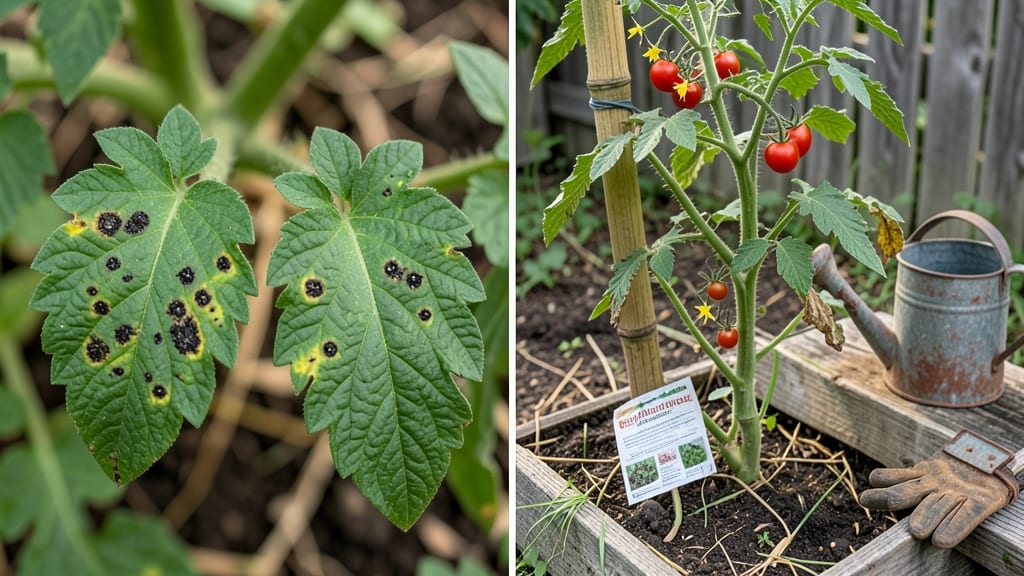
Black spots on tomato leaves can turn your thriving plants into a sad, spotted mess—unless you act fast. 🌱 I’ve battled this myself, and the difference between losing a plant and saving it often comes down to spotting the right disease early and knowing exactly how to treat it.
The spots might look similar, but early blight (with its classic concentric rings) and late blight (dark, greasy patches) need different fixes. Early blight starts at the bottom of leaves, while late blight spreads faster and can destroy plants in weeks.
The key is catching it before it spreads to fruit—because once it does, your harvest is at risk. With the right pruning, fungicide, and garden cleanup, you can stop the spread and keep your tomatoes productive.
I’ll walk you through the telltale signs, organic treatments, and preventive steps that actually work—no guesswork, just results. Here’s how to identify the problem, treat it effectively, and keep your garden healthy for next season. Let’s get those leaves looking green again!
Root Causes Of Leaf Discoloration
Black spots on tomato leaves aren’t just an aesthetic nuisance—they’re a cry for help from your plants. Understanding the why behind these blemishes is the first step to saving your harvest.
Below, we break down the most common culprits, from fungal invaders to environmental stressors, with science-backed explanations to help you diagnose the issue accurately.
Fungi are the #1 cause of black spots on tomato leaves, thriving in warm, humid conditions. These microscopic organisms don’t just ruin your plants—they can spread rapidly if left unchecked. Here’s how they strike:
Early Blight (Alternaria solani)
This fungal pathogen starts with small, target-shaped brown spots that develop concentric rings. Over time, the spots turn black and may crack in dry weather. Early blight typically appears on older leaves first and can lead to defoliation if severe.
- How it spreads: Spores splash onto leaves from soil or infected plant debris during watering or rain.
- Perfect conditions: Warm temps (70–85°F) and high humidity (especially at night).
- Key identifier: Yellow halos around spots and black "frost-like" centers.
Late Blight (Phytophthora infestans)
A more aggressive and destructive fungus, late blight causes greasy, dark green to black spots that spread quickly—often within days. Unlike early blight, it attacks young leaves, stems, and even fruit, making it a garden emergency.
- How it spreads: Spores travel via wind, water, or contaminated tools. It can even survive in soil or infected plant material.
- Perfect conditions: Cool (60–75°F), wet weather with poor airflow.
- Key identifier: Spots have a white, fuzzy mold on the undersides of leaves.
Septoria Leaf Spot (Septoria lycopersici)
This fungus creates tiny, circular black spots with gray centers, often surrounded by yellow borders. It’s less aggressive than early or late blight but can still weaken plants over time.
- How it spreads: Spores overwinter in infected debris and splash onto leaves during irrigation.
- Perfect conditions: Warm, humid weather with frequent leaf wetness.
- Key identifier: Spots may have tiny black dots (fungal fruiting bodies) in the center.
Not all black spots are caused by fungi—sometimes, your tomato plants are reacting to their surroundings. Here’s how environmental factors play a role:
Overwatering or Poor Drainage
Tomatoes hate soggy feet. When roots sit in waterlogged soil, they struggle to absorb nutrients, leading to blackened leaf edges or spots—a sign of root rot or nutrient deficiency. Overhead watering can also wash away protective spores, making plants more susceptible to fungal infections.
- Signs to watch for: Wilting despite wet soil, yellowing leaves, or a foul smell from the roots.
- Actionable fix: Water at the base (not overhead) and ensure pots/containers have drainage holes.
Sunburn or Heat Stress
Intense sunlight or sudden heatwaves can scorch tomato leaves, causing black or brown patches, especially on leaves exposed to direct sun. Young plants or those suddenly moved outdoors are most at risk.
- Signs to watch for: Spots appear on sun-exposed sides of leaves, often with crispy edges.
- Actionable fix: Provide afternoon shade (use shade cloth) or gradually acclimate plants to full sun.
Chemical Burn from Fertilizers or Pesticides
Too much of a good thing can backfire. Over-fertilizing—especially with high-nitrogen or salt-based fertilizers—can cause blackened leaf tips or spots. Similarly, harsh pesticides or herbicides can damage leaf tissue, creating vulnerable spots for fungi to exploit.
- Signs to watch for: Spots appear uniformly on leaves, often with no fungal growth.
- Actionable fix: Flush soil with water, avoid fertilizing during stress, and use organic or targeted pesticides.
While pests like aphids or spider mites don’t directly cause black spots, their feeding can weaken leaves, making them prime targets for fungal infections. Heavy infestations may also lead to sooty mold (a black, powdery fungus that grows on pest excretions).
Sap-Sucking Insects (Aphids, Whiteflies, Spider Mites)
These pests pierce leaves to feed, injecting toxins that cause yellowing, curling, or blackened spots over time. Their sticky honeydew attracts sooty mold, which coats leaves in a velvety black layer.
- Signs to watch for: Sticky residue on leaves, visible bugs, or a black film on undersides.
- Actionable fix: Blast off pests with water, use insecticidal soap, or introduce beneficial insects like ladybugs.
Fixing Black Leaf Spots Naturally
Now that you’ve identified the cause of those pesky black spots on your tomato leaves, it’s time to take action! The good news? Most of these issues can be resolved with simple, garden-friendly solutions.
Below, we’ve mapped out practical fixes for each common cause, along with prevention tips to keep your tomato plants thriving. Let’s get your plants back to their vibrant best!
Fungal infections are the most common culprits behind black spots, but they’re also the easiest to manage with consistent care.
🔥 Remove Infected Leaves Immediately
- How to do it: Snip off leaves with black spots (at least 6 inches below the spot) using sterilized pruners (wipe with rubbing alcohol between cuts).
- Why? Fungus spreads via spores, and removing infected foliage reduces contamination.
- Pro tip: 💡 Don’t compost infected leaves—toss them in the trash instead to prevent reinfection.
🌡️ Improve Air Circulation
- How to do it: Space plants 18–24 inches apart and prune suckers to allow airflow. Avoid overhead watering—use a drip irrigation system or water at the base.
- Why? Fungus thrives in damp, stagnant conditions. Good airflow keeps leaves dry faster.
🍳 Apply Fungicidal Sprays (Organic Options)
Choose one of these preventative sprays and apply every 7–10 days or after rain:
- Copper fungicide (e.g., Bonide Copper Fungicide) – Kills spores on contact.
- Neem oil spray (1 tsp neem oil + 1 tsp mild soap + 1 quart water) – Disrupts fungal growth.
- Baking soda spray (1 tbsp baking soda + 1 tsp oil + 1 gallon water) – Raises leaf pH to inhibit fungus.
- Pro tip: 🌡️ Spray in the early morning to avoid burning leaves in sunlight.
✨ Soil & Mulch Adjustments
- Avoid wet mulch near stems—use straw or shredded leaves instead of thick organic matter.
- Add compost to improve soil drainage (fungus loves soggy roots!).
Tiny pests can weaken tomato plants, making them susceptible to secondary fungal infections.
👨🍳 Blast Off Pests with Water
- How to do it: Spray plants with a strong stream of water (early morning works best) to knock off aphids and mites.
- Why? Many pests hate water pressure and will flee.
🔪 Introduce Beneficial Insects
- Ladybugs, lacewings, or predatory mites eat aphids and spider mites naturally. Buy them online or attract them with dill or fennel plants.
- Pro tip: 🎯 Release them in the evening when it’s cooler—they’re less stressed.
🍎 Use Insecticidal Soap or Oil
- Mix: 2 tbsp castile soap or horticultural oil + 1 quart water. Spray directly on pests (avoid flowers to protect pollinators).
- Reapply every 5–7 days until pests are gone.
Sometimes, black spots are a sign of environmental strain rather than disease.
💧 Check Your Watering Habits
- Problem: Overwatering or poor drainage causes root rot, which stresses plants and invites fungus.
- Fix:
- Water deeply 1–2 times per week (early morning).
- Ensure pots have drainage holes or raised beds have good soil structure.
- Pro tip: 🌡️ Stick your finger in the soil—if the top 1–2 inches are dry, it’s time to water.
📊 Boost Nutrients with Balanced Fertilizer
- Deficiency signs: Yellowing between veins + black spots = magnesium or potassium deficiency.
- Fix:
- Use a balanced fertilizer (10-10-10 or 5-5-5) every 3–4 weeks.
- Epsom salt spray (1 tbsp per gallon of water) for magnesium (spray leaves weekly).
- Banana peel tea (steep peels in water for a week) for potassium.
🌿 Provide Shade in Extreme Heat
- Problem: Scorching from intense sun can cause blackened leaf edges.
- Fix:
- Use shade cloth (30–50%) during peak afternoon sun (1–4 PM).
- Mulch heavily to keep roots cool.
Once your tomatoes are healthy again, keep them that way with these habits:
- Rotate crops – Don’t plant tomatoes (or nightshades like peppers) in the same spot yearly.
- Solarize soil – Cover beds with clear plastic for 4–6 weeks in summer to kill fungus spores.
- Plant resistant varieties – Look for ‘Mountain Merit,’ ‘Defiant PhR,’ or ‘Jet Star’ (blight-resistant hybrids).
- Clean up debris – Remove old plant matter fall and spring to starve fungus.
Final thought: 🌱 Consistency is key! Fungal diseases and pests won’t disappear overnight, but with regular checks, proper care, and quick action, your tomato plants will bounce back stronger than ever. Happy gardening!
Frequently asked questions
Why do my tomato leaves have black spots with yellow rings?
Those are classic signs of early blight, a common fungal disease. The yellow halos and concentric rings appear first on older leaves and spread upward. This fungus thrives in warm, humid conditions (70–85°F) and spreads via water splashing onto leaves. Remove infected leaves immediately and improve airflow between plants to prevent spread.
What’s the difference between early blight and late blight?
Early blight shows target-like brown spots with black centers on older leaves, while late blight creates greasy, dark green-to-black spots that appear on young leaves, stems, and fruit. Late blight spreads faster and often has a white, fuzzy mold on leaf undersides. Early blight is less aggressive but can still defoliate plants if untreated.
Can I save my tomatoes if the black spots have reached the fruit?
It depends on the disease. With early blight, harvest fruits as soon as they ripen—spots on fruit are usually cosmetic. For late blight, infected fruit must be removed immediately (don’t compost it!) as it can spread spores. Prevent future infections by sterilizing tools, rotating crops, and using resistant varieties like ‘Defiant PhR’.
Will baking soda really help stop black spots?
Yes! A baking soda spray (1 tbsp baking soda + 1 tsp oil + 1 gallon water) raises leaf pH and inhibits fungal growth. Spray every 7–10 days or after rain, focusing on leaf undersides. For best results, apply in the early morning to avoid leaf burn. Combine this with removing infected leaves and improving airflow for maximum effectiveness.
How can I tell if black spots are from fungus or sunburn?
Fungal spots usually have distinct edges (like rings or fuzzy mold) and appear on multiple leaves. Sunburn causes irregular, crispy patches on sun-exposed leaf edges, often with no fungal growth. Check for other signs: fungal spots spread upward, while sunburn stays localized. If in doubt, test with a copper fungicide spray