
Pests
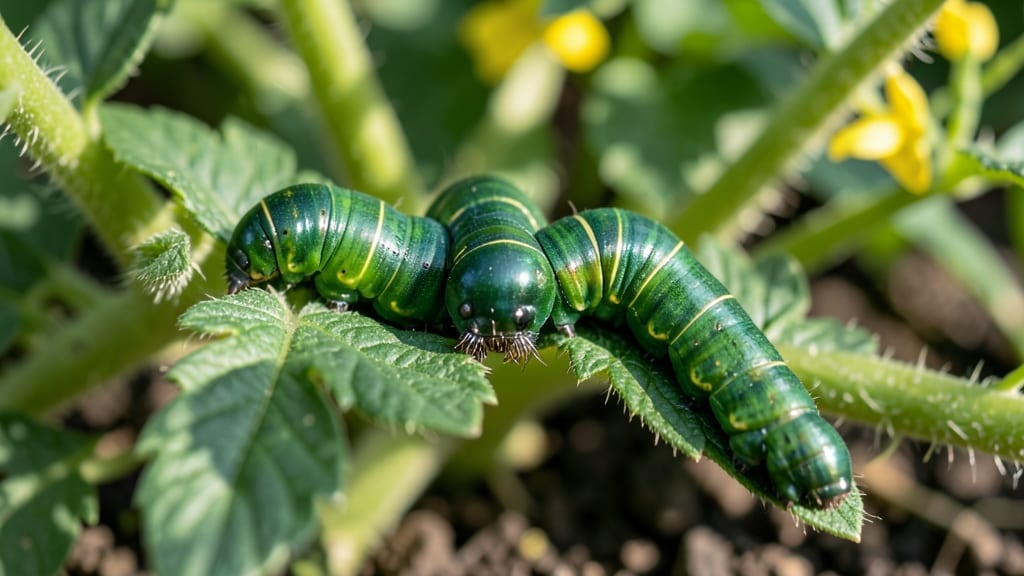
Tomato worms look like bright green caterpillars with bold yellow or white stripes running down their sides, growing up to 2 inches long. Their smooth, hairless bodies and black heads make them stand out against tomato leaves or nearby weeds.
These caterpillars are actually the larval stage of the tomato hornworm moth, and their striking appearance is nature's way of warning predators to stay away. 🌿 Unlike other garden pests like loopers or beet armyworms, tomato worms have a distinctive "horn" on their rear end when fully grown, which helps identify them quickly.
You'll often spot them munching on tomato leaves during late afternoon when they're most active, leaving behind ragged holes and black droppings that give away their presence.
What makes them particularly destructive is their rapid growth cycle—within just a few weeks, a tiny egg can hatch into a caterpillar that can devour an entire tomato plant. The key to early detection is checking both the tops and undersides of leaves, where they often hide during the day.
Their bright coloration isn't just for show; it contains toxins that deter many predators, making them surprisingly resilient pests to manage.
💡 In This Article
- Identifying Tomato Hornworm vs Other Garden Pests
- How to Spot Tomato Worm Damage on Plants
Identifying tomato hornworm vs other garden pests
The tomato hornworm's most striking feature is its vibrant green body, which measures 2-3 inches when fully grown—about the length of a standard AA battery. Unlike other caterpillars, it has 5 white diagonal stripes along each side, with a distinctive V-shaped marking on its head.
These markings aren't just decorative; they contain alkaloid toxins that make them unpalatable to birds and other predators, a survival strategy called aposematic coloration. 🌿
When comparing to similar pests, the tomato hornworm's black \"horn\" on its rear end (visible in later stages) sets it apart from beet armyworms, which have yellow and black stripes and a more segmented body.
Loopers, another common tomato pest, have a smooth, arched body and move in a distinctive looping motion, while hornworms move with a more fluid, caterpillar-like crawl. Their smooth, hairless skin also distinguishes them from fuzzy caterpillars like the cabbage looper.
The life cycle begins with tiny white eggs (about 1/16 inch) laid on leaves, which hatch into caterpillars within 3-5 days. Early-stage larvae are green with faint stripes, but they develop their signature markings as they grow.
After 4-6 weeks of feeding, they pupate in the soil, emerging as grayish-brown moths with a 3-inch wingspan. This rapid development means a single egg can become a plant-devouring caterpillar in just a few weeks.
What often confuses gardeners is that hornworms resemble tobacco hornworms, their close relatives, but tobacco hornworms have 7 diagonal stripes instead of 5. Another key difference is their preferred host plants: tomato hornworms target tomatoes, peppers, and eggplants, while tobacco hornworms favor tobacco, tomato, and potato plants.
The overlap in host plants means you might find both species in the same garden, making accurate identification crucial for effective control.
Understanding these distinctions helps you target treatments more effectively. For example, Bacillus thuringiensis (Bt), a natural bacteria-based pesticide, works well against hornworms but won't harm beneficial insects like ladybugs or lacewings.
Meanwhile, neem oil can disrupt their feeding patterns but requires more frequent applications. The key is acting early—once they reach 1 inch in length, they become much harder to control organically. 🔥
One lesser-known fact is that hornworms have a symbiotic relationship with parasitic wasps. Female wasps lay eggs inside hornworm larvae, and the wasp larvae eventually emerge from the caterpillar's body.
This natural predator-prey dynamic can help keep hornworm populations in check, but it's not reliable enough to depend on alone. Gardeners often need to combine manual removal, biological controls, and cultural practices like row covers for the best results.