Companion Plants
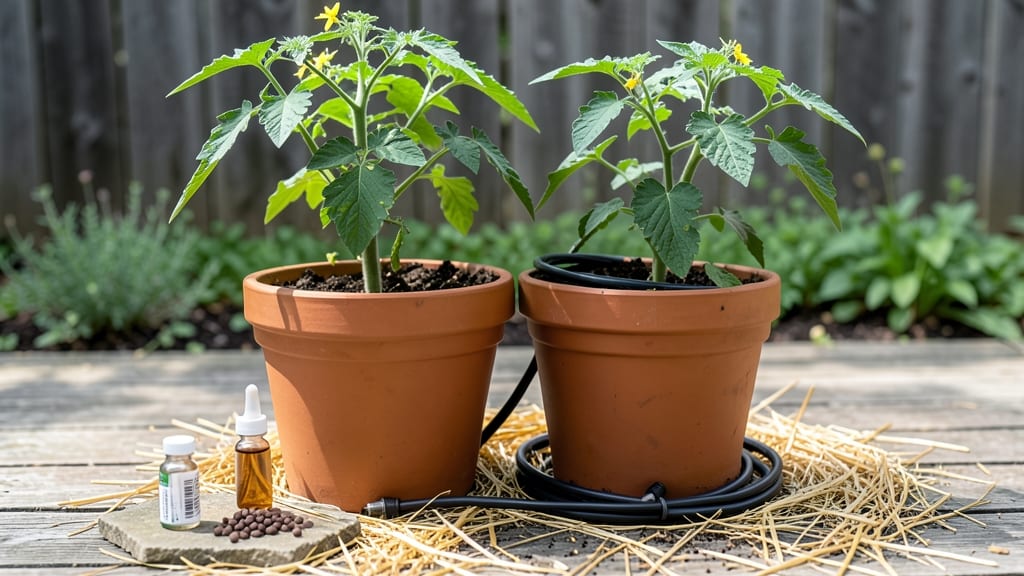
Two tomato plants in one pot isn't just possible—it's a space-saving game-changer for small gardens and containers. 🌱 Last summer, I doubled my harvest from a single 5-gallon pot by pairing a determinate 'Roma' with a dwarf 'Tiny Tim,' and the yields surprised even my skeptical neighbor.
The secret lies in choosing the right varieties and giving them just enough room to thrive without competing for sunlight or nutrients.
You'll need a minimum 5-gallon container (7+ gallons for larger varieties), well-draining soil mix, and sturdy support like tomato cages or stakes. Dwarf or determinate tomatoes work best—think 'Patio,' 'Tumbling Tom,' or 'Micro Tom'—while indeterminate varieties (like 'Sungold') need their own space.
Space plants 12-18 inches apart at the edges of the pot, and prune suckers to keep airflow strong.
Watering becomes critical—deep soaks every 2-3 days prevent root competition, and mulch keeps moisture consistent. With proper care, you'll harvest red, ripe tomatoes all season long, often more than from single plants in separate pots.
The key is balance: give them enough room to grow upward, not outward, and watch them feed each other through shared roots.
This method works best in containers, balconies, or small urban gardens where space is tight. Just avoid pairing two large indeterminate varieties—they'll fight for dominance. For maximum yield, try one bushy determinate with a trailing cherry tomato like 'Tumbling Tom.' The results? Twice the harvest, half the footprint.
📚 In This Guide
- What you need
- Instructions
- Tips and common mistakes
- Wrapping up and next steps
What you need
- ● Container: A large pot (at least 12–18 inches in diameter and 12–18 inches deep) with drainage holes. Self-watering pots or fabric grow bags work great!
- ● High-quality potting mix: 10–15 gallons of a well-draining, nutrient-rich mix (avoid garden soil—it compacts and suffocates roots!). Look for blends labeled for vegetables or tomatoes.
- ● Tomato seedlings or seeds: 2 healthy plants (choose determinate varieties, like 'Patio' or 'Tiny Tim,' for compact growth). If starting from seed, plan ahead—tomatoes need 6–8 weeks of indoor growing before transplanting!
- ● Compost or fertilizer: 1 cup of balanced organic fertilizer (10-10-10 or 5-5-5) or 1–2 cups of compost to enrich the soil.
- ● Support system: Cage or trellis: A 5–6 foot tall tomato cage or a sturdy bamboo stake (for indeterminate varieties, opt for a tall trellis to save space vertically).
- ● Tie-downs: Soft plant ties or old fabric strips to secure vines to the support.
- ● Drainage: Pebbles or broken pottery shards (about 1–2 inches) to prevent clogging.
- ● Watering can or hose: With a gentle spray nozzle to avoid disturbing the soil.
- ● Mulch: Straw or shredded leaves to retain moisture and suppress weeds.
- ● Companion plants: Basil, marigolds, or lettuce (plant around the edges of the pot to deter pests and boost growth!).
- ● Slow-release fertilizer: Granules mixed into the soil for steady nutrition.
- ● pH testing kit: To ensure your soil is slightly acidic (6.0–6.8)—tomatoes love it!
- ● Pruning shears: For trimming suckers (if growing indeterminate varieties).
Instructions for growing two tomato plants in one pot
Here's my proven method for pairing tomato varieties in a single container—just follow these steps for healthy plants and abundant harvests.
🪴 Step 1: Select the Right Pot and Drainage System
Choose a container that's at least 18 inches deep and 12 inches in diameter—this gives roots room to spread without competing. I use fabric grow bags because they allow excess moisture to evaporate through the sides, which prevents root rot in crowded pots. Make sure the pot has at least 4 drainage holes near the bottom.
Line the bottom with a 2-inch layer of gravel or broken pottery shards to create an air pocket that prevents waterlogging. This is critical because two plants in one pot can easily become soggy. If your pot lacks holes, drill them yourself—just don't go larger than ½ inch in diameter to keep soil from washing out.
🌱 Step 2: Prepare the Soil Mix for Dual Plants
Fill the pot with a blend of 60% high-quality potting mix and 40% compost. I avoid garden soil because it compacts too easily in containers, which suffocates roots. Add a handful of perlite or vermiculite to improve aeration—this is especially important when two plants share the same space.
Mix in a slow-release fertilizer designed for tomatoes, following the package rate for a 5-gallon container. I like to add a handful of worm castings too—this boosts microbial activity, which helps roots compete more effectively for nutrients. Moisten the mix until it feels like a wrung-out sponge: damp but not dripping.
☀️ Step 3: Plant Compatible Varieties with Proper Spacing
Select two tomato varieties that mature at similar rates—one determinate (bush type) and one indeterminate (vining type) works best. The determinate plant stays compact while the indeterminate grows upward, maximizing vertical space. Plant them 6-8 inches apart from each other, near the pot's edge but not touching the sides.
Dig holes just deep enough to bury the root balls completely, then backfill with soil. Press gently around the base to remove air pockets, but don't compact the mix. Water immediately after planting to help settle the soil and eliminate gaps. You'll see the soil surface settle about ½ inch—this is normal and ensures good root-to-soil contact.
💧 Step 4: Water and Fertilize for Shared Success
Water the pot thoroughly until water runs freely from the drainage holes, then let it drain completely. After that, water only when the top 2 inches of soil feel dry to the touch. Two plants in one pot dry out faster than single plants, so check daily during hot weather. I water in the morning to give foliage time to dry before evening.
Feed with a balanced liquid fertilizer every 2-3 weeks once flowers appear. I use half-strength solution to avoid burning roots in the confined space. Watch for signs of competition—if one plant's leaves yellow while the other thrives, you're over-fertilizing. The goal is steady growth, not rapid shoots.
✂️ Step 5: Prune and Support for Maximum Yield
Install two sturdy stakes or a tomato cage between the plants to support their different growth habits. The indeterminate variety will need regular tying to the stake, while the determinate plant can sprawl slightly without support. Prune suckers (the shoots that form in the leaf axils) to encourage fruit production rather than foliage growth.
Remove any leaves that touch the soil surface to prevent disease spread between plants. When fruits appear, thin clusters to 5-6 per truss—this ensures larger, healthier tomatoes. You'll know you're doing it right when the remaining fruits are the size of golf balls within 4-6 weeks of flowering.
Tips & tricks for growing two tomato plants in one pot
Here's what nobody tells you about making this container gardening hack work beautifully.
Container Selection: Fabric grow bags are my top recommendation because they allow excess moisture to evaporate through the sides, which prevents root rot in crowded pots. If you must use traditional pots, choose one with 4 drainage holes near the bottom—this is non-negotiable for two plants sharing space. The 18-inch depth and 12-inch diameter are critical for root development without competition.
Soil Science: The 60% potting mix to 40% compost ratio creates the perfect balance of aeration and nutrients for two plants. I've found that adding a handful of perlite or vermiculite makes all the difference in preventing soil compaction. This isn't just about drainage—it's about creating air pockets that roots desperately need when sharing a confined space.
Variety Pairing: The key to success lies in selecting one determinate (bush) variety and one indeterminate (vining) variety that mature at similar rates. The determinate plant stays compact while the indeterminate grows upward, creating a perfect vertical balance. This isn't just about aesthetics—it's about maximizing sunlight exposure and air circulation between both plants.
Watering Wisdom: Watering two plants in one pot requires a different approach than single plants. The 2-inch soil dryness test is your best friend—stick your finger in the top 2 inches of soil. If it feels dry, water thoroughly until it runs from the drainage holes. Morning watering is crucial because it gives foliage time to dry before evening, reducing disease risk between the two plants.
Pro Tips for Two Tomato Plants In One Pot
- Here's what nobody tells you about making this container gardening hack work beautifully.
- Container Selection: Fabric grow bags are my top recommendation because they allow excess moisture to evaporate throu...
- Soil Science: The 60% potting mix to 40% compost ratio creates the perfect balance of aeration and nutrients for two ...
Frequently asked questions
Got questions about growing two tomato plants in one pot? You’re not alone! Here are some of the most common concerns—and their straightforward answers—to help you succeed with this space-saving hack.
What types of tomato plants can I grow together in one pot?
Stick to determinate (bush) varieties or dwarf indeterminate (vining) types like 'Tiny Tim' or 'Patio Princess.' Avoid pairing two large indeterminate varieties—they’ll compete for space and light, leading to poor yields. Pro tip: Choose one plant with upright growth and another with trailing habits for balance!
How long does it take for two tomato plants in one pot to produce fruit?
With the right care, you can expect fruit in 60–85 days after transplanting, depending on the variety. Early-season types like 'Balcony Red' may bear tomatoes in as little as 50 days, while heirlooms might take longer. Speed up harvests by ensuring full sun (6+ hours/day) and consistent watering—no soggy soil!
How often should I water two tomato plants in a single container?
Water deeply every 2–3 days in hot weather (check soil moisture 1–2 inches down) or daily in extreme heat. A 5-gallon pot may dry out faster than larger containers, so monitor closely. Mulch the surface to retain moisture and avoid wetting leaves to prevent disease.
Will two tomato plants in one pot steal nutrients from each other?
Yes, but not if you prep the soil right! Use a high-quality potting mix (with compost or worm castings) and fertilize every 2–3 weeks with a balanced tomato feed (10-10-10 or 5-5-5). Split a slow-release pellet in the center to feed both plants equally. Prune suckers aggressively to reduce competition!
What if one plant is growing much faster than the other?
Uneven growth often means one plant is outcompeting the other for light or nutrients. Troubleshoot:
- Move the pot to a sunnier spot or rotate it daily.
- Prune the faster grower to redirect energy.
- Fertilize the lagging plant with a liquid feed (like fish emulsion).
- Consider thinning to one plant if both struggle.
Can I replace one tomato plant if it dies?
If one plant fails (due to disease, pests, or poor growth), remove it completely to prevent soil-borne issues. Replace it with a fast-growing variety like 'Micro Tom' or a basil plant (a great companion!). Just ensure the new plant has enough space—don’t overcrowd!
Wrapping up and next steps
Growing two tomato plants in one pot isn’t just clever—it’s a game-changer for small spaces! With the right companions (like basil or marigolds), you’ll boost yields, deter pests, and create a thriving mini-garden. Don’t let limited space hold you back—get creative and watch your harvest flourish!
Ready to dive in? Start by picking your tomato varieties and companion plants, then grab your supplies. Check out our guide for a full list of what you’ll need—and soon, you’ll be enjoying homegrown tomatoes straight from your cozy container garden! 🌱✨