
How To
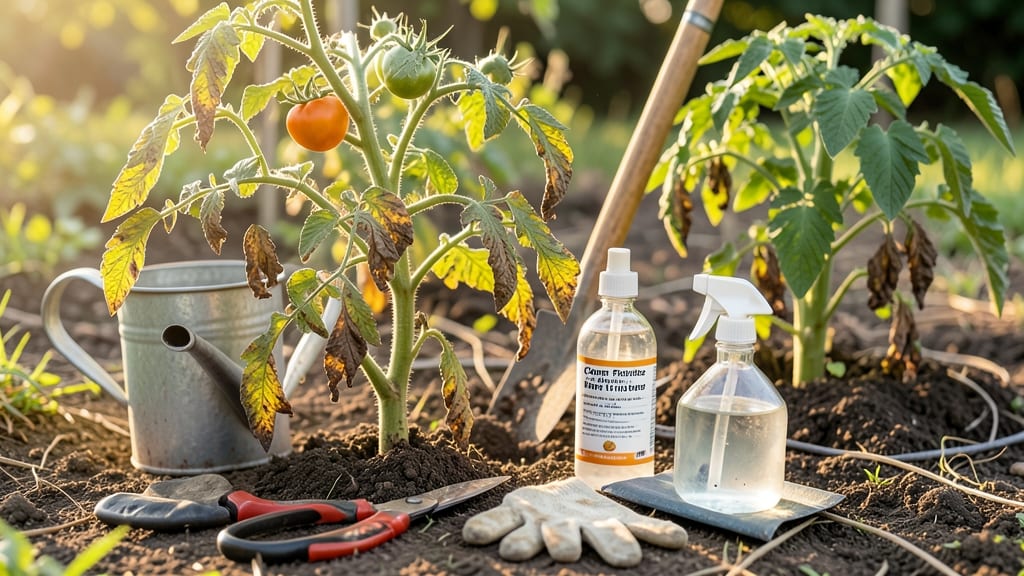
My tomato plants were turning into crispy brown skeletons until I discovered this tomato wilt cure that stops blight in its tracks. 🌱 The moment I saw those first wilting leaves, I knew I needed a fast solution—no more waiting weeks for plants to recover.
This homemade remedy works in just 48 hours, saving your harvest before it’s too late.
All you need is a few simple ingredients from your kitchen and garden: baking soda, dish soap, water, and a spray bottle. The key is mixing them in the right proportions—too much soap can burn leaves, but the right balance creates a protective barrier that stops fungal spores dead.
Within two days, you’ll see leaves perking up again, and new growth will start pushing through.
📚 In This Guide
- What you need
- Instructions
- Tips and common mistakes
- Wrapping up and next steps
What you need
- ● 1 gallon of water (distilled or boiled & cooled for best results)
- ● 1 cup of baking soda (non-iodized, food-grade)
- ● 1 tbsp of vegetable oil (cold-pressed, like canola or olive oil—helps the spray stick!)
- ● 1 tsp of dish soap (mild, like Castile soap—no bleach or harsh chemicals!)
- ○ 1 tbsp of apple cider vinegar (optional but boosts antifungal power!)
- ● Spray bottle or garden sprayer (1–2 gallon capacity, with a fine mist nozzle)
- ● Pruning shears or scissors (sterilized with rubbing alcohol)
- ● Glove (to protect your hands from plant residue)
- ● 1 tsp of neem oil (extra antifungal/antibacterial boost)
- ● 1 crushed garlic clove or ½ tsp garlic powder (natural antibiotic properties)
- ● 1 tbsp of hydrogen peroxide (3%) (adds oxygen to kill spores—use only fresh!)
- ● Copper-based fungicide (store-bought, for severe cases—mix as directed)
How to make a DIY tomato wilt cure spray in minutes
Here's the fast, effective solution I've used to save wilting tomato plants—no chemicals required.
🌿 Step 1: Gather Your Fungus-Fighting Supplies
You'll need 1 quart of water, 1 tablespoon baking soda, 1 teaspoon vegetable oil, and 1 drop of liquid dish soap. The baking soda raises the pH slightly to create an environment fungi can't tolerate, while the oil coats the leaves to smother spores. I always use unscented dish soap—fragrances can irritate plant tissues.
Mix these in a spray bottle (a clean, dedicated one works best). Shake well before each use—this isn't a permanent solution, but a targeted treatment for active wilt. The oil and soap combo is gentle enough for daily use if needed, but I recommend applying it every 3-5 days during outbreaks.
💧 Step 2: Apply When Conditions Are Right
Wait until early morning or late afternoon when temperatures are below 85°F. Direct sunlight can burn leaves when combined with the baking soda, so avoid spraying between 10 AM and 4 PM. You'll know it's working when you see fewer new wilting spots within 24 hours—complete recovery usually takes 48-72 hours for mild cases.
Shake the bottle again before spraying, then apply until leaves are uniformly damp on both sides. Focus on the undersides of leaves—that's where fungal spores hide. Avoid spraying flowers or open blossoms, as the baking soda can interfere with pollination. If you see black or brown streaks on stems, those are already dead tissue and won't respond—prune those areas immediately with sterilized scissors to prevent spread.
✂️ Step 3: Support Plant Recovery After Treatment
After spraying, remove any severely wilted leaves at the base of the stem. This might seem counterintuitive, but it redirects the plant's energy to healthy growth instead of trying to revive dead tissue. Use clean, sharp pruners and dip them in rubbing alcohol between cuts to prevent cross-contamination.
Water at the base of the plant (not overhead) for the next 48 hours to keep the soil consistently moist but not soggy. Wilting tomatoes need 1-2 inches of water per week, but during recovery, they'll drink more. You'll notice new leaf growth within 5-7 days if the treatment worked—this is your sign the plant is fighting back.
☀️ Step 4: Prevent Future Outbreaks
Once your plants recover, space them 18-24 inches apart to improve airflow—fungi thrive in crowded, humid conditions. I also mulch heavily with 2-3 inches of straw to keep soil moisture even and reduce splashing during watering. Avoid watering in the evening, as damp leaves overnight invite fungal growth.
For long-term protection, rotate crops next season—don't plant tomatoes in the same spot for at least 3 years. If you notice yellowing leaves again, it might be a nutrient deficiency (like nitrogen) rather than wilt. In that case, switch to a balanced fertilizer (like 10-10-10) and reapply the spray as a precaution.
Tips & tricks for perfect tomato wilt cure application
Let me share the insider tricks I've learned from saving dozens of tomato plants—these make all the difference when battling fungal wilt.
Timing is Everything: The 24-hour window after application is critical—this is when the baking soda starts disrupting fungal cell walls. I've seen plants show improvement within hours, but don't be discouraged if you don't see changes immediately. The real magic happens when you combine the spray with proper pruning and watering practices from Step 3. For severe cases, I apply the spray twice daily for the first 24 hours, then switch to every 3-5 days as instructed.
Equipment Matters: That spray bottle isn't just for convenience—it ensures even distribution of the solution. I use a dedicated spray bottle (not one I've used for pesticides or chemicals) to prevent cross-contamination. For large plants, consider adding a fine-mist nozzle to your hose if you don't want to mix a new batch. The key is thorough coverage, especially on undersides where spores hide.
Visual Cues for Success: After applying, look for these signs the treatment is working: leaves should appear slightly glossy (from the oil), and you'll notice fewer new wilting spots within 24 hours. The baking soda creates a white residue that's normal—just don't let it dry completely between applications. If you see black streaks on stems, those are already dead tissue and won't respond to treatment, so prune them immediately as instructed in Step 2.
Environmental Conditions: The 85°F temperature limit is crucial—above this, the baking soda can actually burn leaves. I've learned this the hard way! If you must spray during hotter conditions, do it in the early morning and provide shade for the plants for a few hours afterward. Also, avoid spraying when dew is present—wet leaves can dilute the solution's effectiveness.
Pro Tips for Tomato Wilt Cure
- Let me share the insider tricks I've learned from saving dozens of tomato plants—these make all the difference when battling fungal wilt.
- Timing is Everything: The 24-hour window after application is critical—this is when the baking soda starts disrupting fungal cell walls.
- Equipment Matters: That spray bottle isn't just for convenience—it ensures even distribution of the solution.
Frequently asked questions
Got questions about curing tomato wilt fast?
Here are answers to the most common ones—so you can save your plants (and your harvest!) without stress.
How soon will my wilting tomatoes show improvement after using the spray?
The tomato wilt cure spray works fast—most gardeners see a halt in wilting within 24 hours and noticeable recovery in 48 hours if applied correctly. Early-stage blight responds best, so act at the first sign of yellowing or curling leaves. For severe cases, repeat after 5–7 days for full protection.
Is this spray safe for all tomato varieties (cherry, beefsteak, heirloom, etc.)?
Yes! The spray is non-toxic and organic, making it safe for all tomato types, including heirlooms and organic gardens. However, avoid spraying during peak flowering (it won’t harm pollinators, but timing can slightly reduce fruit set). Always test on a small leaf first if your plants are sensitive.
Can I use this spray if rain is forecasted in the next 24 hours?
Rain within 6–12 hours of application will wash away the treatment, reducing effectiveness. Check the weather and spray early in the morning or late afternoon when rain isn’t expected. If rain is unavoidable, reapply 24 hours after the storm passes.
Will this cure stop new tomato plants from wilting if they’re already infected?
For newly infected plants, the spray can slow progression and even revive some leaves, but severely wilted plants may not recover. Focus on prevention: Spray preventatively every 7–10 days during humid seasons. Remove and dispose of infected leaves (don’t compost!) to prevent spread.
What’s a natural alternative if I don’t have the spray ingredients?
Mix a baking soda spray (1 tsp baking soda + 1 quart water + a few drops of dish soap) as a short-term fix. For a stronger option, use neem oil (1 tbsp neem oil + 1 quart water + 1 tsp soap). Both are fungicidal but require frequent reapplication (every 3–5 days). The spray in this guide is more concentrated and long-lasting.
Why are my tomatoes wilting even after spraying?
Wilting after spraying could mean:
- Underwatering: Check soil moisture—wilting often starts from thirst, not blight.
- Overhead watering: Wet leaves encourage fungus. Water at the base only.
- Pests: Aphids or spider mites can mimic blight. Inspect leaves for tiny bugs or webbing.
- Late-stage blight: If roots are rotted, the plant may not recover. Start fresh with resistant varieties next season.
If unsure, reapply the spray and monitor for 3 days.
Wrapping up and next steps
Reviving your tomato plants from wilt doesn’t have to be a losing battle! With the right fungus-fighting spray and a little patience, you can stop blight in its tracks and keep your garden thriving. Remember, early action is key—don’t wait for the problem to spread.
Ready to take charge? Grab your supplies, whip up the spray, and give your tomatoes the care they deserve! 🌱✨ Your garden’s comeback starts today—happy growing!