
Companion Plants
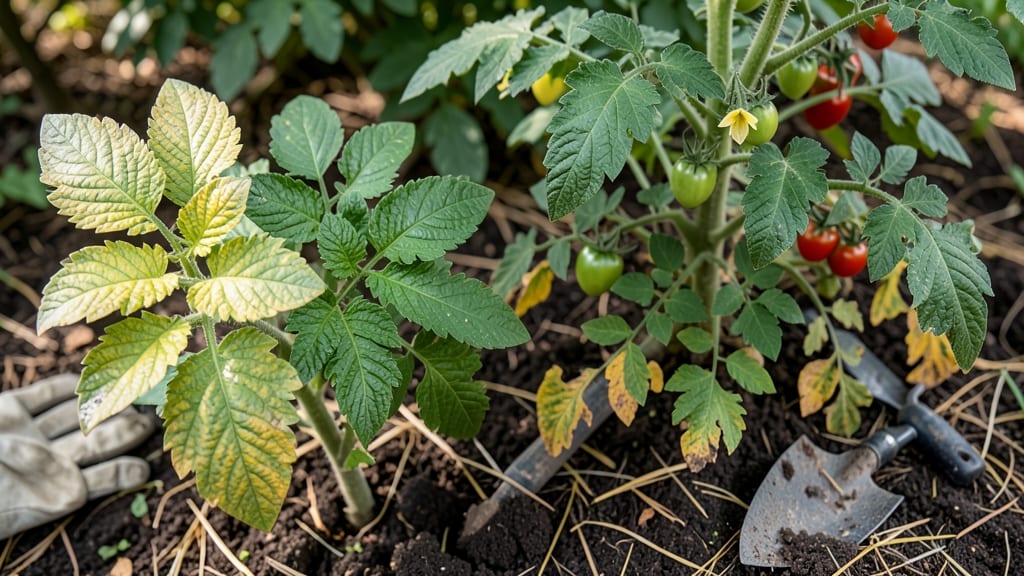
Your tomato plants looking yellow could be a cry for help from soggy roots. 🌱 I’ve seen this happen when plants get too much love in the watering department—roots suffocate, leaves turn pale, and suddenly your lush green plants resemble a sad salad.
The good news? With the right adjustments, you can often revive them in just 3 days before the damage spreads.
Overwatering is the most common culprit, but nutrient deficiencies—like too little nitrogen or magnesium—can also sneak up. Early blight or verticillium wilt might be lurking too, especially if the yellowing starts at the bottom.
The key is checking the soil moisture first: if it’s damp more than an inch below the surface, you’re overdoing it. Even pests like aphids or spider mites can stress plants enough to trigger yellowing, so give the undersides of leaves a quick once-over.
Start by cutting back on water and letting the top inch of soil dry out between waterings. If the soil feels compacted or smells sour, it’s time to loosen it up and improve drainage—maybe even add a handful of compost or perlite to help roots breathe.
For nutrient issues, a balanced fertilizer or Epsom salt (for magnesium) can work wonders. Within 3 days, you should see leaves perk up again if you catch it early.
Prevention is easier than fixing: water deeply but less often, mulch to retain moisture without drowning roots, and rotate crops to break disease cycles. The sooner you act, the better your chances of saving those tomatoes—and your sanity. Let’s get those plants back to vibrant green in no time.
Root Causes Behind Yellowing Tomato Leaves
Yellowing tomato plants often signal underlying stress, and understanding the root causes is key to reviving your garden. Below are the most common reasons your tomato foliage is turning yellow, explained in simple, actionable terms.
When tomato plants sit in soggy soil for too long, their roots suffocate from a lack of oxygen. This triggers anaerobic conditions, where harmful bacteria and fungi thrive, disrupting nutrient uptake. The leaves—especially the older ones—turn yellow first as the plant struggles to transport chlorophyll.
Signs to watch for:
- Wilting despite wet soil
- Mushy, discolored roots when checked
- Yellowing from the bottom up
Why it happens: Tomatoes need well-draining soil with a pH of 6.0–6.8. If water pools around the base (or your pots lack drainage holes), roots rot, and the plant can’t absorb essential nutrients like nitrogen or iron.
While overwatering gets the blame, drought stress is just as damaging. When soil dries out too quickly, roots shrink and struggle to pull up water, causing leaf scorch—where edges and veins turn yellow or brown.
High temperatures (above 85°F/30°C) also accelerate moisture loss, forcing the plant to conserve water by shedding chlorophyll.
Signs to watch for:
- Crispy, papery leaf edges
- Soil pulling away from pot sides
- Wilting that worsens in the afternoon
Why it happens: Tomatoes are 95% water by weight, and their shallow root systems dry out fast in hot, windy conditions. Without consistent moisture, cells collapse, and chlorophyll breaks down prematurely.
Yellowing leaves with dark spots or stunted growth often point to fungal infections. Early blight (Alternaria solani) and Fusarium wilt (Fusarium oxysporum) clog plant vessels, blocking water and nutrient flow. The fungus thrives in humid, poorly ventilated conditions, turning leaves yellow before spreading to stems.
Signs to watch for:
- Concentric dark rings on leaves (early blight)
- Yellowing that starts between veins (Fusarium)
- Wilting even when soil is moist
Why it happens: Fungi spread via contaminated soil, tools, or splashing water. Overhead irrigation, dense plantings, and warm nights create the perfect breeding ground. Weakened plants (from stress or poor nutrition) are especially vulnerable.
Yellowing leaves can be a nutritional SOS.
Each nutrient deficiency triggers distinct patterns: - Nitrogen deficiency: Older leaves turn pale yellow first (since the plant redirects nutrients to new growth). - Magnesium deficiency: Yellow interveinal patches (between veins) on older leaves. - Iron deficiency: Young leaves stay yellow while veins remain green (chlorosis).
Why it happens:
- Nitrogen: Leached away by overwatering or poor soil organic matter.
- Magnesium: Often tied to calcium imbalances (common in alkaline soils).
- Iron: Becomes unavailable in soils with high pH (>7.0).
Tiny pests like aphids and spider mites suck sap from leaves, causing stippling (tiny yellow dots) and weakening the plant. Their saliva disrupts chlorophyll production, leading to yellowing and curling. Severe infestations force the plant to divert energy to repair damage, stunting growth.
Signs to watch for:
- Sticky residue (honeydew) on leaves
- Fine webbing (spider mites)
- New growth appearing deformed
Why it happens: Pests thrive in dry, dusty conditions and spread rapidly in crowded plants. Stress from other issues (like drought) makes tomatoes more attractive to them.
Even after careful planting, root damage during transplanting can trigger yellowing. When roots are pruned or bruised, the plant diverts energy to regrowth, causing temporary chlorosis (loss of green pigment). This is common in container-grown tomatoes moved too frequently.
Signs to watch for:
- Yellowing within 1–2 weeks of transplanting
- Stunted new growth
- Leaves wilting briefly after repotting
Why it happens: Tomatoes have delicate root hairs that absorb water and nutrients. Disturbing them severs the plant’s ability to uptake moisture, leading to stress signals like yellowing.
Revive Your Tomatoes Fast
Yellowing tomato plants don’t have to be a gardener’s nightmare—with the right fixes, you can often restore them to vibrant health in just a few days. Below, we’ve mapped out targeted solutions for each cause of yellowing, along with prevention tips to keep your plants thriving.
Let’s get those leaves back to their lush green!
If your tomato plants are yellowing from the bottom up or the soil feels soggy, overwatering is likely the culprit. Root rot sets in quickly, suffocating roots and starving the plant of oxygen.
How to Fix It: ✅ 🔪 Trim the Damage – Use sterilized pruning shears to snip off yellow or mushy leaves at the base. This prevents the rot from spreading to healthy foliage.
✅ 🌧️ Adjust Your Watering – Let the top 1-2 inches of soil dry out between waterings. Stick your finger in the soil—if it’s damp past your first knuckle, wait before watering again.
✅ 🏗️ Improve Drainage – If your pots lack drainage holes, transfer your plant to a new container with holes. For in-ground plants, amend the soil with perlite or coarse sand to loosen compacted earth.
✅ 💧 Flush the Roots – Mix 1 part hydrogen peroxide (3%) with 3 parts water and gently water the plant to oxygenate the roots and kill fungus.
💡 Prevention Tip: Mulch with straw or wood chips to regulate soil moisture—never let water pool around the stem!
If leaves are yellow with crispy edges or wilting in the afternoon, your tomatoes may be sunburned or heat-stressed, especially in hot climates.
How to Fix It: ✅ 🌳 Provide Afternoon Shade – Use shade cloth (30-50%) or move potted plants to a spot with dappled sunlight during peak heat (12 PM – 4 PM).
✅ 💦 Water Deeply & Early – Water at dawn (not evening) to give roots time to absorb moisture before the sun evaporates it. Aim for 1-1.5 inches per week, depending on heat.
✅ 🍃 Mist Leaves (Temporarily) – On extreme heat days (above 90°F), lightly mist leaves with cool water in the early morning to reduce stress.
✅ 🌱 Boost Humidity – Place a tray of water near pots or use a pebble tray to increase airflow humidity without overwatering.
💡 Prevention Tip: Choose heat-tolerant varieties like ‘Solar Fire’ or ‘Heatmaster’ if you live in a hot zone!
Yellowing between veins (especially on older leaves) often signals a lack of nitrogen, magnesium, or iron. Tomatoes are heavy feeders, and poor soil can leave them starving.
How to Fix It: ✅ 🍂 Test Your Soil – Grab a DIY soil test kit (or send a sample to your local extension office) to check pH (6.0-6.8 ideal) and nutrient levels.
✅ 🌿 Add Organic Matter – Mix in compost, worm castings, or aged manure into the top 6 inches of soil. For potted plants, top-dress with compost every 2-3 weeks.
✅ 💊 Use a Balanced Fertilizer –
- For nitrogen deficiency (yellow lower leaves): Use a high-nitrogen fertilizer (like fish emulsion) every 2 weeks.
- For magnesium deficiency (yellow patches between veins): Apply Epsom salt (1 tbsp per gallon of water) as a foliar spray or soil drench.
✅ 🍅 Feed with Tomato-Specific Food – Switch to a tomato fertilizer (high in potassium & phosphorus) once flowers appear to support fruit production.
💡 Prevention Tip: Side-dress with compost mid-season to prevent nutrient depletion as plants grow!
Yellowing leaves with holes, spots, or webbing mean pests or disease are at work. Common culprits include aphids, spider mites, early blight, or bacterial spot.
How to Fix It: ✅ 🔍 Identify the Problem – Check the undersides of leaves for pests. Look for black spots (early blight), brown edges (bacterial spot), or sticky residue (aphids).
✅ 🦟 Treat Pests Naturally –
- Aphids/Spider Mites: Spray with neem oil (1 tsp per quart of water + a drop of dish soap) or blast off with water.
- Whiteflies: Use yellow sticky traps near plants.
✅ 🍄 Fight Fungal Diseases –
- Remove infected leaves immediately and sterilize pruners with rubbing alcohol.
- Apply copper fungicide (like Bordeaux mixture) or baking soda spray (1 tsp baking soda + 1 quart water + a drop of soap).
✅ 🌿 Improve Airflow – Prune crowded foliage and space plants 18-24 inches apart to reduce humidity (which fuels fungi).
💡 Prevention Tip: Rotate crops yearly and avoid overhead watering to prevent fungal spores from splashing onto leaves!
If your tomatoes turned yellow right after repotting or moving, they’re likely suffering from transplant shock.
How to Fix It: ✅ 🌱 Keep Them Still – Avoid moving the plant for at least 1 week to let roots establish.
✅ 💧 Water Gently – Soak the soil (not the leaves) to reduce stress. Use room-temperature water to avoid shocking roots further.
✅ 🌿 Shield from Stress – Provide light shade for a few days and avoid fertilizing until new growth appears.
💡 Prevention Tip: Hardening off seedlings (acclimating them to outdoor conditions) before transplanting cuts shock risk by 70%!
Final Pro Tip: 🎯 Act fast! The sooner you address yellowing, the better the recovery. Check your plants daily during heatwaves or after rain to catch issues early. With these fixes, your tomatoes should bounce back—and you’ll be back to harvesting juicy, red beauties in no time! 🍅✨
Frequently asked questions
Why do the oldest leaves turn yellow first?
Tomatoes prioritize nutrients for new growth, so older leaves often yellow first when the plant is stressed. This is normal during nutrient deficiencies (like nitrogen or magnesium) or overwatering. Think of it as the plant "sacrificing" less critical parts to survive.
Can I save a tomato plant if half the leaves are yellow?
Yes, but act fast! If yellowing is from overwatering, adjust your schedule immediately and improve drainage. For nutrient issues, fertilize with compost or Epsom salt. Remove severely damaged leaves to redirect energy. With proper care, plants often recover within 3-7 days.
Is yellowing always a bad sign?
Not necessarily! Some yellowing happens naturally as leaves age (called senescence). However, if new leaves are also turning yellow or you see spots, wilting, or stunted growth, it signals a problem. Check the soil moisture and leaf undersides first to diagnose.
Why do my potted tomatoes yellow faster than in-ground ones?
Container plants dry out quicker and have limited root space, making them more sensitive to overwatering or nutrient depletion. Pots also heat up faster, increasing stress. Use well-draining soil, water only when the top 1-2 inches are dry, and fertilize regularly.
How do I tell if yellowing is from pests vs. disease?
Pests (like aphids or spider mites) cause stippling (tiny yellow dots) and often leave sticky residue (honeydew) or webbing. Diseases (like early blight) show as dark spots or yellowing between veins. Check leaf undersides and stems for clues.