
Light Requirements
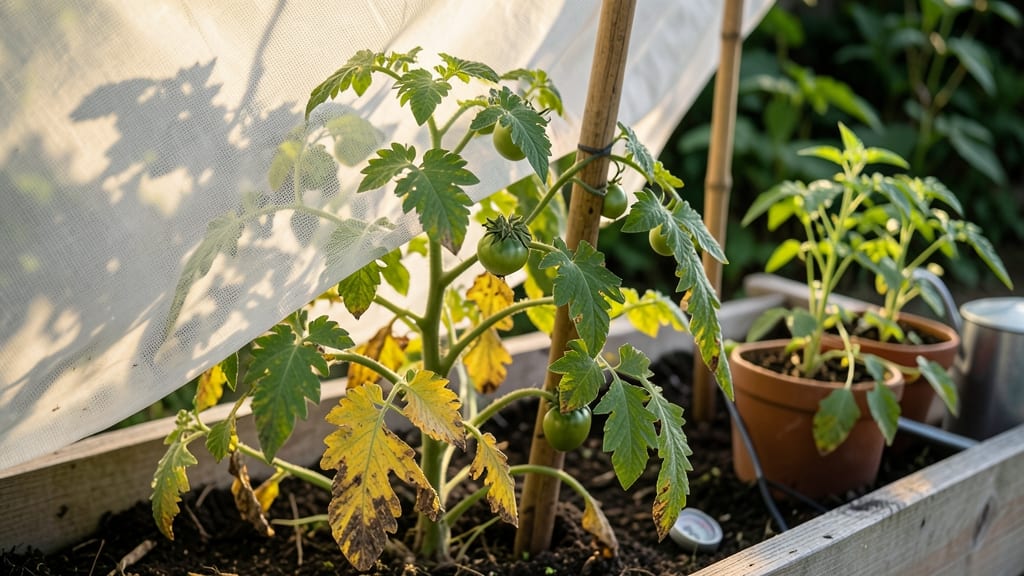
Your tomato plant’s crispy, bleached leaves aren’t just ugly—they’re screaming for shade. 🌞 Too much sun causes sunburn and heat stress, turning lush foliage into brittle paper overnight. The good news? This is fixable with quick adjustments that save your harvest.
Start by moving the plant to partial shade (6–8 hours of sun max) or use shade cloth (30–50%) to filter harsh rays. Mulch with straw or grass clippings to keep roots cool, and water deeply in the morning to help leaves recover faster.
Prune any severely damaged foliage to redirect energy to healthy growth. Within 5–7 days, you’ll see new, vibrant leaves emerging as the plant recovers. The key is balance—tomatoes still need sunlight, but not the midday furnace that scalds them. Keep an eye on humidity too; dry air worsens stress.
For hot climates, consider drip irrigation and afternoon shade during peak summer months. This isn’t just damage control—it’s a lesson in growing tomatoes where they thrive, not just survive. Let’s get those plants back in the game!
Sunburn’s Silent Culprits
When your tomato plant starts looking like it’s been roasted on a summer grill, the blame often falls on excessive sunlight. But why does this happen? The issue isn’t just about "too much sun"—it’s about how that sun interacts with your plant’s biology, environment, and even your gardening habits.
Let’s break down the real reasons your tomatoes are crying out for shade.
Tomatoes thrive in full sun, but there’s a sweet spot—typically 6–8 hours of direct sunlight per day. When exposed to intense, unfiltered sun for longer periods (especially in hot climates or during peak afternoon hours), the leaves absorb more energy than they can use for photosynthesis.
Here’s what goes wrong:
- Chlorophyll breakdown: The green pigment in leaves, which converts sunlight into energy, degrades under extreme heat. This causes bleaching (white or yellow patches) and necrosis (dead tissue).
- Water stress: Even well-watered plants can’t transpire fast enough to cool their leaves. The excess heat denatures proteins in the cells, leading to crispy, brittle edges.
- Oxidative damage: Sunlight generates reactive oxygen species (ROS), which act like microscopic fires inside cells. Without protection (like antioxidants), these molecules destroy cell membranes, causing sunburn.
Pro tip: 🌡️ Leaf temperature is the key metric—if it exceeds 95°F (35°C), your tomatoes are in danger. Use a leaf thermometer to monitor!
Tomato seedlings grown under low-light conditions (like indoors or under shade cloth) go into "sun shock" when suddenly transplanted into full, harsh sunlight. Their leaves lack the protective carotenoids and flavonoids that mature plants develop to shield against UV rays.
This is especially common with:
- Young plants: Seedlings under grow lights or in greenhouses often have delicate, thin leaves that can’t handle direct sun.
- Transplanted tomatoes: Moving plants from a shady spot to full sun without hardening off (gradually exposing them to sunlight) triggers sunburn.
- Late-season heat waves: Plants that spent spring in cooler climates may not have developed heat tolerance by summer.
Actionable fix: 🌱 Harden off seedlings 7–10 days before transplanting by gradually increasing sunlight exposure (start with 2 hours/day, then add 1–2 hours every 2 days).
Sunburn isn’t just about light—it’s a team effort with heat and dehydration. When soil moisture drops, plants close their stomata (pores) to conserve water, but this also traps heat inside leaves, amplifying damage. Here’s how it plays out:
| Symptom | Cause | Why It Matters |
|---|---|---|
| Dry, papery leaf edges | Inconsistent watering (e.g., deep watering every 3 days vs. daily shallow watering) | Cells lose turgor pressure, making them vulnerable to heat stress. |
| Wilting followed by crispy spots | Soil drought + high temps (e.g., 90°F+ days) | Plants can’t transpire efficiently, so leaves overheat like a car left in the sun. |
| Blistered or sunken patches | Salt buildup from evaporated water + sun exposure | Salts disrupt cell function, making leaves more susceptible to sun damage. |
Pro tip: 💡 Water deeply in the morning (1–1.5 inches per week) to ensure roots absorb moisture before the sun peaks. Mulch with straw or wood chips to retain soil moisture and reduce temperature swings.
Your tomato’s surroundings can magnify sun damage even if the sunlight itself isn’t extreme. Consider these often-overlooked contributors:
- Reflective surfaces: Light-colored walls, pavement, or even white plastic mulch can bounce UV rays like a mirror, doubling the intensity on leaves. Solution: Plant near north-facing walls or use shade cloth on the sunny side.
- Poor soil drainage: Waterlogged or compacted soil traps heat near the roots, stressing the plant. Solution: Amend soil with compost and ensure raised beds or containers have drainage holes.
- High humidity + sun: While humidity helps plants retain moisture, stagnant air (common in greenhouses or dense foliage) traps heat against leaves. Solution: Improve airflow with pruning or a small fan.
- Altitude and latitude: Plants at higher elevations or in tropical climates receive more intense UV radiation. Solution: Use UV-protective netting or choose heat-tolerant varieties like ‘Solar Fire’ or ‘Heatmaster’.
Key takeaway: ✨ Your tomato’s microclimate matters as much as the sun itself. Scout your garden for hidden heat traps!
Fixing Sunburned Tomato Plants
When your tomato plants are struggling under too much sun, quick action can save them—and your harvest! Here’s how to diagnose the issue and apply the right fixes, whether you’re dealing with sun scorch, heat stress, or wilting.
If your tomato leaves look bleached, crispy, or curled, they’re likely suffering from sunburn. Here’s how to cool them down fast:
🔥 Immediate Shade Solutions
- Use shade cloth (30-50% coverage) over the plant for a few hours a day, especially during peak sun (10 AM–4 PM).
- Reposition plants under a dappled-light tree (like a young fruit tree or large shrub) for partial shade.
- Install temporary shade with a white umbrella, tarp, or even a bedsheet draped loosely over stakes.
🌿 Long-Term Shade Adjustments
- Plant near taller crops (like corn or sunflowers) to naturally block harsh afternoon rays.
- Choose heat-tolerant varieties (e.g., ‘Solar Fire,’ ‘Heatmaster,’ or ‘Cherokee Purple’) if you live in a hot climate.
- Mulch heavily (2–3 inches of straw or wood chips) to keep roots cool and retain moisture.
💡 Pro Tip: If your tomatoes are in containers, move them to a shadier spot (like a patio with afternoon shade) until they recover.
If leaves are drooping, yellowing, or developing brown edges, your plant may be overheating and dehydrating. Act fast:
🍳 Watering Like a Pro
- Water deeply in the morning (1–1.5 gallons per plant, depending on size) to soak the root zone (6–12 inches down).
- Avoid overhead watering (especially in the heat)—use drip irrigation or soaker hoses to prevent evaporation.
- Check soil moisture with your finger: If the top inch is dry, water again.
👨🍳 Cooling Tricks for Extreme Heat
- Mist leaves lightly in the early morning (but avoid evening misting—it can encourage disease).
- Wrap the pot in wet burlap (for container plants) to slow moisture loss.
- Use reflective mulch (like white plastic or aluminum foil) around the base to bounce back some sunlight.
✨ Bonus: Epsom salt spray (1 tbsp per gallon of water) can help stressed plants recover by boosting magnesium.
Once your tomatoes bounce back, keep them happy with these long-term fixes:
| Problem | Solution | Prevention Tip |
|---|---|---|
| Afternoon sunburn | Move plants to morning sun only | Train vines upward with trellises for better airflow. |
| Dry, cracking soil | Mulch + drip irrigation | Use moisture-retentive soil (add compost or coconut coir). |
| Stunted growth | Prune lower leaves for airflow | Harvest regularly to reduce stress on the plant. |
| Blossom drop | Shade cloth during heatwaves | Avoid fertilizing in extreme heat—focus on water first. |
🎯 Final Check: If your tomatoes are still struggling, consider relocating them to a greenhouse, cold frame, or under a pergola for better climate control.
With these fixes, your tomato plants should perk up in days—and you’ll be back to enjoying juicy, sun-kissed (but not sun-scorched) tomatoes in no time! 🍅🔥
Frequently asked questions
How do I know if my tomato plant has too much sun?
Look for bleached white or yellow patches on leaves, crispy edges, or a papery texture—these are classic signs of sunburn. If leaves also feel hot to the touch (above 95°F) or show brown, dead spots, your plant is definitely getting too much direct sunlight.
Can I save a tomato plant that’s already sunburned?
Yes! First, prune the damaged leaves to redirect energy to healthy growth. Then, provide partial shade (like a 30% shade cloth) and water deeply in the morning to help recovery. With proper care, new leaves should emerge within 5–7 days.
What’s the best shade cloth percentage for tomatoes?
Use 30–50% shade cloth during peak sun (10 AM–4 PM) to filter harsh rays while still allowing light for photosynthesis. For container plants, even a white umbrella or bedsheet can work temporarily—just ensure airflow stays good.
Will moving my tomato plant to shade stop new fruits from forming?
Not necessarily! Tomatoes still produce fruit in partial shade, though yields may drop slightly. Focus on morning sun (3–4 hours) + afternoon shade—this balances growth and fruit development. If flowers drop, try hand-pollinating with a small brush.
Can I use household items to protect my tomatoes from too much sun?
Try draping a white sheet, burlap sack, or even a straw hat over the plant for temporary shade. For containers, wrap the pot in wet burlap or aluminum foil to reflect heat. Just ensure airflow isn’t blocked completely!