
Companion Plants
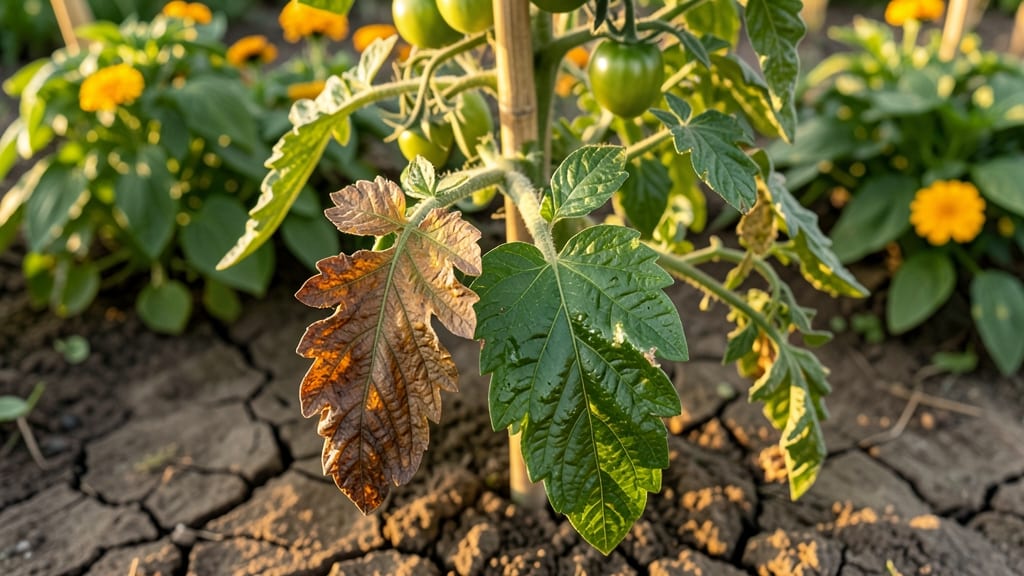
Tomato plant leaves turning brown at edges? That crunchy salt crust is stealing your harvest. 🌱 I’ve seen this ruin entire plants—until I learned the three-step flush that restores crisp, green leaves in days. The fix isn’t complicated, but skipping it means lost tomatoes and frustrated afternoons.
Salt buildup happens when fertilizers or tap water leave mineral deposits in the soil. My first year, I blamed pests until I noticed the white crust on the pot’s surface. The solution starts with flushing the soil: water generously until it runs clear from the drainage holes.
Repeat twice weekly for a week to purge excess salts. By day 3, you’ll see new growth pushing through, and those brown edges will soften into vibrant green. The key is consistency—don’t let salts accumulate again by using rainwater or distilled water for future watering.
Your plants will thank you with bigger, sweeter tomatoes all season. This works for container gardens, raised beds, or in-ground plants. The only tool you need is patience—and a hose. Let’s get those leaves looking fresh again.
Root Causes of Leaf Damage
When your tomato plant’s leaves develop brown edges, it’s often a cry for help from the roots—or the environment around them. Understanding the why behind this stress is the first step to saving your harvest.
Below, we break down the most common culprits, backed by science, so you can diagnose and act fast.
Tomato plants thrive on consistency, but too much water—especially in containers or heavy clay soil—can drown their roots. When soil stays soggy, oxygen gets locked out, and roots suffocate. This triggers nutrient uptake failure, causing leaves to scorch at the edges as cells struggle to absorb water efficiently.
Key signs:
- Yellowing leaves (chlorosis) between brown edges
- Mushy, foul-smelling soil
- Root rot (black, mushy roots when inspected)
Why it happens:
Excess water leaches essential minerals (like calcium and magnesium) from the soil, while poor drainage creates anaerobic conditions. Roots can’t absorb water properly, leading to physiological drought—even when the soil is wet. In containers, this is especially critical because roots have limited space to escape saturation.
If you’re using tap water, fertilizers, or composted manure, your soil might be silently accumulating salts. Over time, these salts disrupt the plant’s ability to absorb water, causing leaf edges to crisp and brown—a condition called salt burn.
Key signs:
- White crust on soil surface
- Brown edges with a leathery texture
- Stunted growth despite regular watering
Why it happens:
Salts (like sodium, chloride, or calcium carbonate) increase the osmotic pressure in the soil. This forces roots to work harder to pull in water, often failing to deliver enough moisture to leaf cells.
High salt levels also block nutrient absorption, leading to calcium deficiency—a common trigger for brown edges in tomatoes.
💡 Pro Tip: Test your water’s salt content (aim for <150 ppm sodium). If your soil feels gritty or you’ve been fertilizing heavily, it’s time for a soil flush.
Tomatoes are warm-weather lovers, but heatwaves, cold snaps, or relentless wind can shock their leaves into browning. High temperatures increase transpiration rates (water loss), while cold or wind desiccates leaf edges faster than roots can replenish moisture.
Key signs:
- Brown edges on younger leaves first
- Leaves feel papery or brittle
- Damage appears on exposed sides of the plant
Why it happens:
When air temperatures exceed 90°F (32°C), stomata (leaf pores) open wider to release heat, but they can’t keep up with water loss. Meanwhile, wind accelerates evaporation, creating a physical drought even if soil moisture is adequate.
Cold stress (<50°F/10°C) slows root activity, so leaves can’t absorb enough water to compensate.
🌡️ Quick Fix: Provide afternoon shade in extreme heat and use mulch to retain soil moisture. For wind, consider a windbreak (like a mesh screen) to reduce stress.
Brown edges aren’t always about water—they can also signal nutrient deficiencies or toxicities. Tomatoes need a delicate balance of calcium, magnesium, and nitrogen, but too much fertilizer (especially high in salt) or a lack of key minerals throws their system off.
Key signs:
Nutrient Issue
Leaf Symptoms
Cause
Calcium Deficiency
Brown edges with dead spots; younger leaves affected first
Poor soil drainage, low pH (<6.0), or over-fertilizing with nitrogen
Magnesium Deficiency
Brown edges with yellowing between veins (older leaves)
Overwatering, high potassium levels, or acidic soil
Salt Toxicity
Uniform browning; leathery texture; stunted growth
Over-fertilizing, especially with synthetic salts (e.g., Miracle-Gro)
Why it happens:
Calcium is immobile in plants, meaning new growth suffers first when levels drop. Magnesium, found in chlorophyll, causes interveinal browning when depleted. Meanwhile, excess salts (from fertilizers) bind to soil particles, making nutrients like calcium and magnesium unavailable to roots.
💡 Fix It: For calcium, apply crushed eggshells or lime (to raise pH). For magnesium, use Epsom salt (1 tbsp/gallon of water) as a foliar spray. Always flush soil after fertilizing to prevent salt buildup.
Now that you know the why, the next step is action. Jump to our 3-step fix to restore your tomato plant’s health—before the damage spreads to the fruit!
Fixing Brown Edges Fast
Now that you know the root causes behind those unsightly brown edges on your tomato leaves—whether it’s salt buildup, underwatering, pests, or disease—it’s time to take action! The good news?
Most fixes are quick, affordable, and require minimal effort. Below, we’ll break down targeted solutions for each issue, plus prevention tips to keep your plants thriving long-term.
If your tomato leaves are crisping at the edges due to excess salt (from tap water, fertilizers, or poor drainage), here’s how to flush it out:
💦 Step 1: Water Deeply & Often
- 🍳 Run a slow, deep watering session (15–20 minutes) to push salts deeper into the soil.
- 👨🍳 Repeat every 2–3 days for a week to leach out accumulated salts.
- ⏰ Avoid overhead watering—direct water at the base of the plant to prevent leaf burn.
🌡️ Step 2: Use Filtered or Rainwater
- 💡 If your tap water is hard (high in minerals), switch to rainwater, distilled water, or reverse-osmosis filtered water.
- ✨ Collect rainwater in barrels for future use—it’s free and salt-free!
🎯 Step 3: Amend the Soil
- Mix in organic matter like compost, coconut coir, or peat moss to improve drainage and dilute salts.
- Avoid chemical fertilizers temporarily—opt for fish emulsion or seaweed extract (diluted) instead.
💡 Pro Tip: If salt buildup is severe, consider repotting your tomato in fresh, well-draining soil.
Brown, crispy edges from drought stress or fertilizer burn need immediate hydration and a gentle reset.
🍅 Step 1: Hydrate Properly
- 💦 Water deeply (1–2 inches per week, depending on climate) and consistently—tomatoes hate dry spells!
- 🌡️ Check moisture by sticking your finger 1–2 inches into the soil; if it’s dry, water again.
- ✨ Mulch with straw or grass clippings to retain moisture and regulate soil temp.
🧴 Step 2: Flush Out Excess Fertilizer
- 💧 Give the plant a good soak with plain water to rinse away residual salts.
- 🎯 Wait 1–2 weeks before reapplying fertilizer to avoid further burn.
💡 Pro Tip:
If leaves are severely damaged, trim them back to encourage new, healthy growth.
If spider mites, aphids, or fungal infections are causing brown edges, act fast with these natural remedies:
🔪 Treat Pests Immediately
- 🍳 Neem oil spray (1 tsp neem oil + 1 tsp mild soap + 1 quart water) – spray early morning/evening to avoid burning leaves.
- 👨🍳 Insecticidal soap (store-bought or homemade) for aphids & whiteflies.
- 🌿 Introduce beneficial insects like ladybugs or lacewings to eat pests naturally.
🍄 Fight Fungal Issues
- 💦 Prune affected leaves and disinfect pruners with rubbing alcohol.
- 🌡️ Improve airflow by spacing plants 18–24 inches apart and staking tomatoes to prevent humidity buildup.
- ✨ Baking soda spray (1 tsp baking soda + 1 quart water + few drops of soap) for early-stage fungal spots.
💡 Pro Tip: Rotate crops next season to prevent soil-borne diseases from recurring.
Once your tomatoes are back to healthy green, keep them that way with these easy maintenance habits:
✅ Water wisely – Early morning is best to reduce evaporation and fungal risk. ✅ Test your water – If tap water is harsh, use rainwater or filtered water. ✅ Monitor fertilizer use – Follow package instructions and dilute to half-strength if unsure. ✅ Inspect regularly – Check undersides of leaves for pests 2–3 times a week. ✅ Rotate plants – Avoid planting tomatoes in the same spot yearly to prevent disease buildup.
By following these simple, science-backed fixes, your tomato plants should bounce back in no time—and you’ll be on your way to a bountiful, crisp-free harvest! 🍅🌿
Frequently asked questions
Can I save my tomato plant if the brown edges have spread to most leaves?
If over 50% of leaves are affected, act fast! Prune the damaged leaves to redirect energy to healthy growth. Focus on fixing the root cause (like salt buildup or pests) and provide consistent care. In severe cases, you may need to repot into fresh soil or start fresh with a cutting if the plant is still young.
How do I tell if my tomato plant has salt buildup vs. just dry edges?
Check for a white crust on soil or pot surfaces—this confirms salt buildup. Dry edges usually show up first on older leaves and may feel crispy but not leathery. Salt damage often affects younger leaves too and causes stunted growth. Test your water: if it leaves mineral deposits, that’s your culprit!
Will brown edges affect my tomato fruit quality?
Yes, but not always permanently. Early intervention prevents fruit from developing blossom-end rot (caused by calcium deficiency). If leaves recover, fruit quality improves. However, severe damage may reduce yield or cause smaller, misshapen tomatoes. Always prioritize leaf health to protect your harvest!
Can I use coffee grounds to fix brown edges?
Coffee grounds can help lower soil pH (ideal for calcium uptake), but they won’t directly fix brown edges. Use them as a slow-release fertilizer mixed into soil (½ cup per plant). For immediate fixes, focus on flushing salts and adjusting watering—coffee grounds are better for prevention than cure.
How often should I check my tomato plants for early signs?
Inspect leaves 2–3 times weekly, focusing on new growth and undersides where pests hide. Early detection means faster fixes! Pay extra attention after heavy watering, fertilizing, or extreme weather. A quick 60-second check during your morning routine prevents small issues from becoming big problems!