
Companion Plants
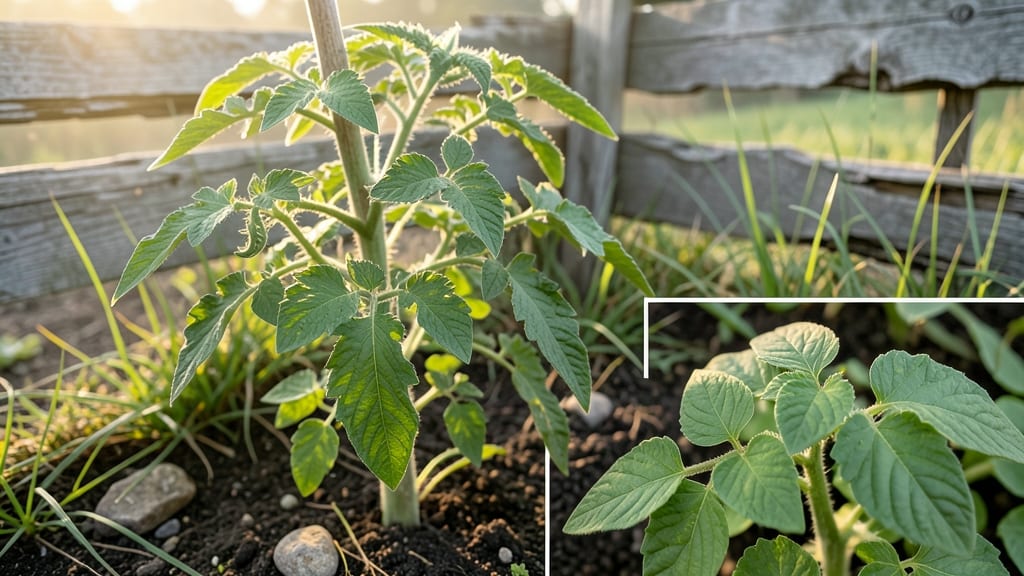
Seeing the tomato plant branches curling can turn a thriving vine into a gardener's worst nightmare—until you know the real causes. 🌱 I've spent years untangling why this happens (spoiler: it's rarely what you first think), and the fixes are simpler than you'd expect.
The most common culprits are tiny pests like spider mites hiding on the undersides of leaves, or environmental stress from inconsistent watering or extreme heat. Nutrient deficiencies—especially potassium or nitrogen—can also twist those once-straight stems.
The good news? Each problem has a targeted solution, from homemade sprays to soil adjustments that work in 3-5 days.
By the end of this, your plants will be back to their strong, upright selves—producing healthier fruit and fewer surprises. We'll cover how to spot the difference between pest damage and nutrient issues, plus preventive tricks that keep vines straight all season.
Whether you're dealing with a single plant or a full garden, these fixes adapt to containers, raised beds, or in-ground plots. Let's get those tomatoes growing right again!
Hidden Causes Behind Curling Tomato Leaves
When your tomato plant’s branches start curling, it’s often a silent SOS from your plant—one that’s easy to miss until it’s too late. 🌱🚨 The culprits behind this distress signal aren’t always obvious, but understanding the root (or leaf!) causes can help you act fast.
Below, we break down the most common reasons why your tomato vines might be curling, along with the science behind them.
Some of the most common pests feed on tomato plant sap, weaken the leaves, and cause curling as a defense mechanism. Here’s how they do it:
- Spider Mites: These microscopic pests suck sap from the undersides of leaves, causing them to curl upward and turn yellow or brown. They thrive in hot, dry conditions, and their webbing is a dead giveaway. Actionable clue: Check leaves with a magnifying glass—you’ll spot tiny red or yellow specks.
- Aphids: These soft-bodied insects cluster on new growth, feeding on tender leaves and stems. Their saliva contains toxins that distort and curl leaves. Actionable clue: Look for sticky residue (honeydew) on leaves or curled tips with tiny green/black bugs.
- Whiteflies: These pests flutter away when disturbed and feed on the undersides of leaves, leaving a silvery sheen. Their feeding weakens the plant, causing leaves to curl and yellow. Actionable clue: Shake the plant over a white sheet—flying insects confirm the infestation.
Why it happens: Pests disrupt the plant’s vascular system, blocking nutrient and water flow. The curling is the plant’s way of conserving moisture and energy while under attack. Without intervention, pests can spread diseases like Fusarium wilt or early blight, compounding the damage.
Tomatoes are sensitive to temperature swings, and both heat and cold can trigger curling. Here’s how:
- Heat Stress: Temperatures above 90°F (32°C) can cause leaves to curl upward to reduce water loss through transpiration. This is especially common in varieties like Roma or Cherry tomatoes, which are less heat-tolerant. Actionable clue: Leaves may also appear wilted or have a "scorched" look on the edges.
- Cold Stress: Frost or temperatures below 50°F (10°C) can cause leaves to curl inward or downward as a protective response. Young plants are particularly vulnerable. Actionable clue: Check for blackened or mushy spots on leaves, a sign of frost damage.
- Wind Burn: Strong winds dry out leaves quickly, leading to curling and browning. This is common in indeterminate varieties with large, delicate leaves. Actionable clue: Look for curled edges or "burned" spots on exposed leaves.
Why it happens: Extreme temperatures disrupt the plant’s cellular processes, including photosynthesis and nutrient uptake. Curling is a survival mechanism to minimize damage until conditions improve. Pro tip: Use shade cloth in summer or row covers in spring to buffer temperature swings.
Water is the lifeblood of tomato plants, and imbalances can cause leaves to curl as a distress signal. Here’s how:
| Issue | Symptoms | Why It Happens |
|---|---|---|
| Underwatering | Leaves curl downward, feel crispy, and may drop off. Soil pulls away from pot edges. | Without enough water, cells lose turgor pressure (the "plumpness" that keeps leaves upright). The plant conserves moisture by curling leaves to reduce surface area. |
| Overwatering | Leaves curl upward or appear yellow with brown edges. Roots may rot, smelling sour. | Excess water displaces oxygen in the soil, suffocating roots. The plant can’t absorb nutrients, leading to curling as a sign of distress. |
| Inconsistent Watering | Leaves curl randomly, with some areas wilting while others look healthy. | Fluctuating moisture levels confuse the plant’s root system, causing erratic responses like curling. |
Why it happens: Water stress triggers the plant’s abscisic acid (ABA) hormone, which signals stomata (pores on leaves) to close. This conserves water but also reduces gas exchange, leading to curling. Pro tip: Water deeply 1–2 times per week (depending on climate) and mulch to retain moisture.
Tomatoes are heavy feeders, and a lack of key nutrients can cause leaves to curl as they struggle to function. Here’s what to watch for:
- Potassium Deficiency: Leaves curl and develop brown edges or "scorch marks." This is common in sandy soils or if you’ve overused nitrogen-heavy fertilizers. Actionable clue: Older leaves show symptoms first.
- Calcium Deficiency: New leaves curl upward, and the tips may die back (a condition called blossom end rot in fruits). Actionable clue: Check for small, brown spots on young leaves.
- Magnesium Deficiency: Leaves curl and develop yellow patches between veins (a condition called interveinal chlorosis). Actionable clue: Older leaves are usually affected first.
Why it happens: Nutrients are essential for cell wall integrity and enzyme function. Without enough potassium, for example, the plant can’t regulate water balance, leading to curling. Calcium is critical for cell division, so a deficiency stunts growth and causes deformities. Pro tip: Test your soil and amend with compost, kelp meal, or Epsom salt (for magnesium) as needed.
Now that you know the science behind the curl, you’re one step closer to diagnosing—and fixing—the problem. Next up: Actionable solutions to restore your tomato plant’s health without pesticides! 🚀
Fixing Curled Tomato Vines Naturally
Curling tomato branches can be frustrating, but with the right approach, you can restore your plants to vigorous health—without resorting to harsh chemicals. Below are targeted solutions for each common cause, along with prevention tips to keep your vines thriving. Let’s get those tomatoes back on track!
Fix It:
- 🔥 Assess the Soil Moisture Stick your finger 1–2 inches deep into the soil. If it feels soggy (like a damp sponge), your plants are overwatered. Tomato roots need well-draining soil—water should flow through easily, not pool around the base.
- 🍳 Adjust Your Watering Routine
- Water deeply but infrequently (1–2 times per week, depending on climate).
- Morning is best—avoid evening watering to prevent fungal diseases.
- Use a moisture meter or the "drip test": If water drips out the bottom of the pot or garden bed within 30 minutes, drainage is good.
- ⏰ Let the Soil Dry Slightly Wait until the top inch of soil feels dry before watering again. Yellowing leaves or wilting despite wet soil? That’s a red flag for overwatering.
💡 Prevention Tip: Amend heavy clay soil with compost or perlite to improve aeration. Raised beds or containers with drainage holes are also lifesavers!
Fix It:
- 👨🍳 Inspect & Isolate
- Shake plants gently over a white tray—pests like aphids will fall off.
- Quarantine affected plants if possible to prevent spread.
- 🥘 Blast Them Away - Spray with soapy water (1 tsp mild dish soap + 1 quart water) directly on pests (avoid leaves to prevent damage). - Neem oil spray (1 tsp neem oil + 1 quart water + drop of dish soap) is a powerful organic repellent.
Spray early morning or late evening to avoid harming bees.
- 🔪 Introduce Beneficial Insects
- Ladybugs and lacewings devour aphids. Buy them online or attract them with dill, fennel, or marigolds as companion plants.
💡 Prevention Tip:
- Sticky traps near plants catch flying pests early.
- Reflective mulch (aluminum foil) confuses whiteflies and spider mites.
Fix It:
- 🌡️ Provide Shade Relief
- Use shade cloth (30–50%) during peak sun (11 AM–3 PM).
- Dappled shade (like under a tree) works too—just avoid full sun exposure.
- 💧 Increase Watering Frequency
- Mulch with straw or grass clippings to retain moisture and cool roots.
- Mist leaves lightly in extreme heat (early morning only).
- 🎯 Adjust Plant Placement
- Move potted tomatoes to a slightly shadier spot for a few days.
- East-facing gardens get morning sun without afternoon intensity.
💡 Prevention Tip:
- Choose heat-tolerant varieties like ‘Solar Fire’ or ‘Heatmaster’ for hot climates.
- Drip irrigation keeps soil consistently moist without wetting leaves (which can cause sunburn).
Fix It:
- 📊 Diagnose the Problem
- Yellowing leaves? Likely nitrogen deficiency (common in fast-growing tomatoes).
- Brown edges or weak stems? Could be potassium (K) or magnesium (Mg) deficiency.
- 💪 Fertilize Correctly
- For nitrogen: Use compost tea, fish emulsion, or a balanced 10-10-10 fertilizer (follow package rates).
- For potassium/magnesium: Try Epsom salt (magnesium sulfate)—dissolve 1 tbsp per gallon of water and spray on leaves weekly for 2–3 weeks.
- Avoid over-fertilizing—too much salt can burn roots!
- 🥗 Boost Soil Health
- Mix aged compost or worm castings into the soil before planting.
- Banana peels (buried near roots) add potassium over time.
💡 Prevention Tip:
- Test your soil with a DIY kit (available at garden centers) before planting.
- Side-dress with compost mid-season to replenish nutrients.
Fix It:
- 🛡️ Protect from Wind
- Stake or cage tomatoes immediately to prevent flopping in gusts.
- Windbreaks (burlap screens or tall plants like corn) shield delicate vines.
- 🔪 Prune Damaged Branches
- Use clean pruners to trim only the curled, broken sections—never more than 1/3 of the plant.
- Disinfect tools with rubbing alcohol to avoid spreading disease.
- 🌿 Support Growth
- Trellis or tomato towers keep vines upright and reduce stress.
- Gently tie stems to stakes with soft plant ties (avoid wire, which can cut into stems).
💡 Prevention Tip:
- Plant tomatoes in sheltered spots (near fences or buildings).
- Harvest regularly—overloaded branches are more prone to snapping.
If you’re unsure what’s wrong, try this emergency fix:
- Trim back curled branches by 1/3 to reduce stress.
- Feed with a balanced fertilizer (like 5-5-5) and water deeply.
- Mulch heavily to stabilize soil moisture and temperature.
Most tomato plants bounce back fast with the right care—so don’t panic! 🍅💪
Frequently asked questions
Why do my tomato plant branches curl upward instead of downward?
Upward curling usually signals heat stress, pest infestation (like spider mites), or potassium deficiency. Check the undersides of leaves for tiny webs (mites) or brown edges (nutrient issues). If it's hot, provide afternoon shade and increase watering slightly.
Can I still save my tomato plant if the branches are already curled?
Start by identifying the cause (water issues? pests? heat?). Trim back severely curled branches by 1/3 to reduce stress. Then apply targeted fixes: soapy water spray for pests, Epsom salt for magnesium deficiency, or shade cloth for heat. Most plants recover within 3-5 days with proper care.
How do I tell if my tomato plant's curling is from pests or nutrient problems?
Look closely: pests leave sticky residue (aphids) or webbing (mites), while nutrient issues show yellowing between veins (magnesium) or brown edges (potassium). Check leaf undersides first—pests hide there! If you see tiny bugs, it's pests; if leaves look weak but clean, it's likely nutrients.
Will pruning curled branches help my tomato plant recover?
Yes! Pruning removes damaged growth, allowing the plant to focus energy on healthy branches. Cut back only 1/3 of the curled section using clean pruners. This reduces stress and encourages new, straight growth. Just avoid pruning during extreme heat or cold when the plant is already struggling.
How often should I check my tomato plants for curling?
Inspect your plants 2-3 times per week during growing season, focusing on new growth and leaf undersides. Early detection is key—especially for pests like spider mites that spread quickly. Morning checks work best when pests are most visible and sluggish from cool temps.