
Blooming
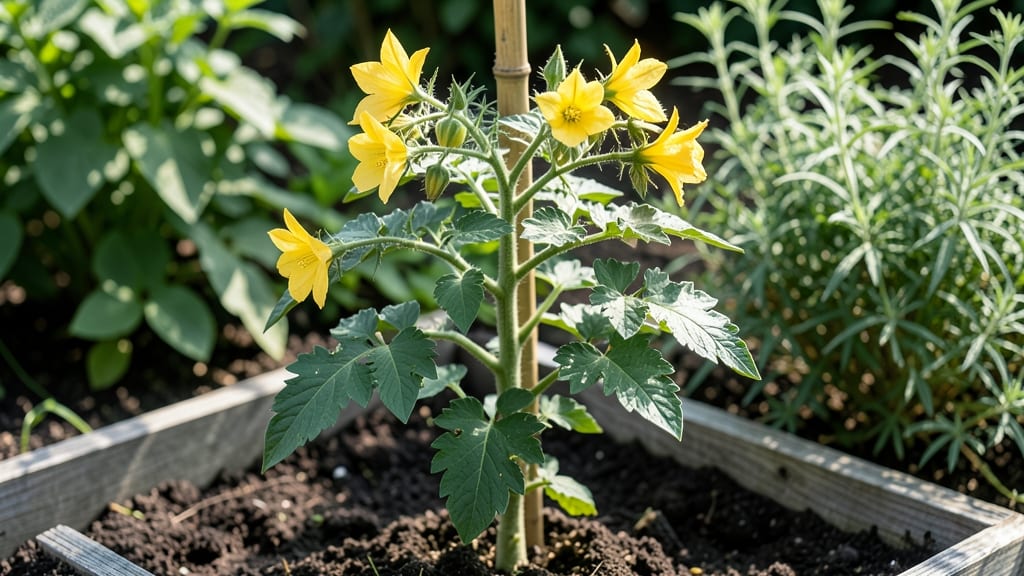
When a tomato plant blooms early, it signals potential for faster fruit production but may also risk frost damage or poor development if growing conditions aren’t ideal. Adjust care by protecting plants from cold, ensuring consistent watering, and providing balanced fertilizer to support early flowering.
Early blooming in tomato plants often happens when they experience warm temperatures combined with long daylight hours, tricking the plant into thinking it's time to produce fruit. 🌱 This can be great for gardeners eager for harvests, but it also means the flowers may appear before the plant is fully hardened off or when nighttime temperatures can still dip dangerously low.
I've seen this happen most dramatically with heirloom varieties, which sometimes bloom weeks ahead of schedule—especially if they're planted in containers that warm up faster than in-ground beds.
To help your early bloomers thrive, focus on creating a stable environment. Use frost cloths or row covers at night to shield delicate blossoms from chilly temperatures, and make sure your plants get at least 6-8 hours of sunlight daily.
Overwatering at this stage can also cause blossom-end rot, so I recommend watering deeply but only when the top inch of soil feels dry. A balanced fertilizer with equal parts nitrogen, phosphorus, and potassium will give your plant the energy it needs to support both its flowers and developing fruit.
💡 In This Article
- Why Tomato Plants Bloom Early and How It Affects Fruit
- Adjusting Care for Early-Blooming Tomato Plants
Why tomato plants bloom early and how it affects fruit
Early blooming in tomato plants is primarily triggered by a combination of warm temperatures and extended daylight hours. Tomatoes are sensitive to photoperiodism—their response to light exposure—and when they receive 12-16 hours of daylight paired with soil temperatures above 55°F, they start producing flowers rapidly.
This phenomenon is especially common in heirloom varieties, which often bloom 2-4 weeks earlier than hybrid types due to their genetic predisposition to respond quickly to favorable conditions. The plant perceives these cues as a signal to shift energy from leaf growth to reproductive development.
The impact on fruit production can be dramatic. Early blooms mean faster harvests, but they also introduce risks like frost damage—temperatures below 50°F can kill blossoms before they set fruit—or poor pollination if bees aren't active yet.
I've observed that early bloomers often produce smaller, less flavorful tomatoes because the plant hasn't fully developed its root system to support heavy fruit loads.
Additionally, the rapid transition from vegetative to reproductive growth can lead to blossom-end rot, a calcium deficiency disorder caused by inconsistent watering or fluctuating soil moisture levels.
Genetics play a crucial role too. Determinate varieties, which grow to a fixed height, tend to bloom all at once and produce fruit quickly, while indeterminate types bloom continuously throughout the season. The latter often handle early blooming better because they can spread out their fruit production over time.
However, even indeterminate plants may struggle if the early flowers aren't properly supported with adequate nutrients and stable growing conditions. 🌿 The key is balancing the plant's energy—too much focus on flowers can starve the roots and leaves, leading to weak stems and reduced overall yield.
Another critical factor is the plant's vernalization stage—the process where cool temperatures trigger flowering. Some tomato varieties require a period of cooler weather to "break dormancy" before they'll bloom reliably.
If you skip this stage by planting too early in warm soil, the plant may produce flowers that don't develop properly or drop off. This is why many gardeners in warmer climates use shade cloth during the hottest parts of summer to slow down growth until conditions stabilize.
Consider the example of a Brandywine heirloom tomato, which often blooms early due to its genetic makeup. When grown in a container with fast-warming soil, it may produce flowers within 4-6 weeks of planting, but the resulting fruit can be small and uneven if not given proper care.
The lesson here is that early blooming isn't inherently bad—it's about managing the plant's environment to ensure those flowers have the best chance of developing into healthy, flavorful tomatoes.
To mitigate these challenges, focus on creating a stable microclimate. Use mulch to regulate soil temperature, provide consistent moisture, and consider using a plant heat mat if your growing area tends to cool quickly at night.
These adjustments can make a significant difference in whether your early blooms turn into a bountiful harvest or a disappointing flop. 🌱