
Pests and Diseases
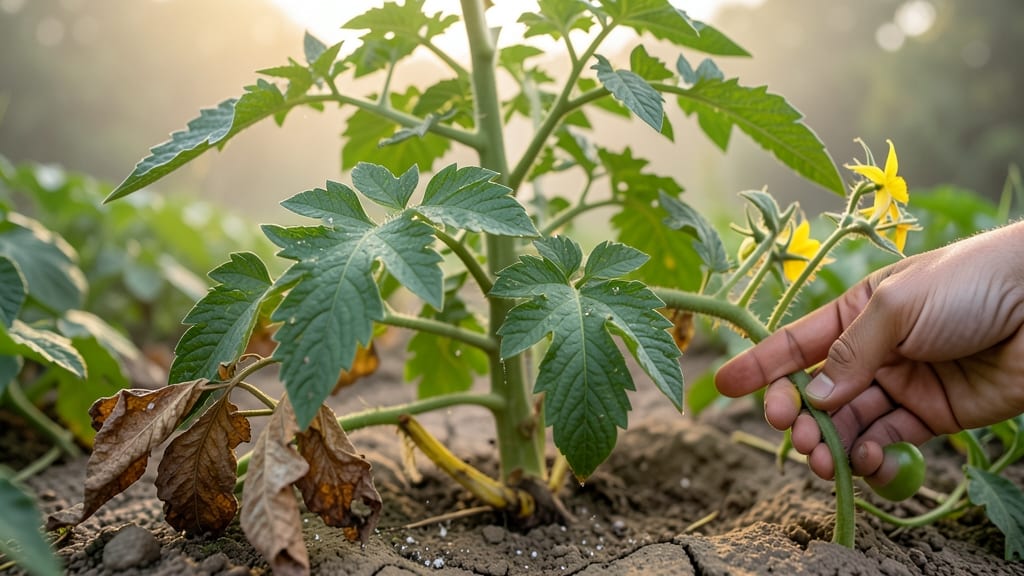
Your tomato plants are sending an SOS—the brown, crispy leaves are turning brown and drying up under your fingers. 🌱 The good news? This is usually fixable, and I’ve revived plenty of plants with the right moves.
Whether it’s early blight, sunburn, or overwatering, we’ll diagnose and turn things around fast. First, check the damage: fungal spots (like coffee grounds) mean disease, while sunburn shows up as dry, papery edges. Overwatering leaves soil soggy and roots struggling.
Grab your pruners and start cutting out the worst leaves—this improves airflow and stops the spread. Within 3-5 days, you’ll see new growth if you adjust watering (deep soaks, not daily drips) and add a copper fungicide for fungal issues.
Mulch helps too—it keeps roots cool and moist without drowning them. Prevent future crises by spacing plants properly (18-24 inches apart) and watering at the base, not the leaves. If the problem keeps spreading, call in a local extension office—they’ll confirm if it’s time for stronger action.
Root Causes Behind Wilted Foliage
Tomato leaves turning brown and crispy aren’t just a cry for water—they’re often a multifaceted distress signal from your plant. Understanding the why behind the wilting is the first step to saving your harvest.
Below, we break down the key culprits causing your tomato leaves to brown and dry out, complete with the science (and actionable clues) behind each.
Tomatoes thrive in moderate climates (60–85°F), but when temperatures swing too high or too low, their leaves react like a human in a sauna or freezer.
- Heat Stress (🔥):
- Above 90°F (32°C), tomato leaves lose moisture faster than roots can absorb it, leading to scorching (brown, papery edges).
- Why? Heat increases transpiration (water loss through leaves) while closing stomata (pores) to conserve water—trapping heat inside and causing oxidative damage to cells.
- Actionable Clues: Wilting starts on sun-exposed leaves first, often with a crispy, brittle texture.
- Cold Stress (❄️): - Below 50°F (10°C), tomato metabolism slows, and cell membranes rupture from ice crystal formation. - Why? Cold disrupts photosynthesis enzymes, starving leaves of energy.
Brown patches may appear water-soaked before drying. - Actionable Clues: Damage often appears on older leaves first, especially after frost or sudden cold snaps.
Pro Tip: 🌡️ Use shade cloth (30–50%) in peak sun or row covers at night to buffer extremes.
Tomatoes are sensitive to moisture imbalances, and both drought stress and overwatering trigger browning.
- Underwatering (🏜️):
- When soil dries out, roots can’t supply enough water, causing plasmolysis (cells shrinking and dying).
- Why? Leaves curl inward first, then edges brown and crisp as they lose turgor pressure.
- Actionable Clues: Soil pulls away from pot edges, and leaves feel lightweight and papery.
- Overwatering (🌊):
- Root rot (from Phytophthora or Fusarium) blocks water uptake, even if soil is soggy.
- Why? Waterlogged roots suffocate, leading to anaerobic conditions that produce ethanol and toxic gases, killing cells.
- Actionable Clues: Leaves yellow first (chlorosis), then turn brown and mushy as roots decay.
Pro Tip: 💡 Check soil moisture 1–2 inches deep—if it’s dry, water deeply; if it’s soggy, hold off and improve drainage with perlite or raised beds.
Not all browning is environmental—pests and diseases can mimic drought stress but leave telltale signs.
- Spider Mites (🕷️):
- These tiny arachnids suck sap, causing stippling (tiny brown dots) that expand into crispy, dead patches.
- Why? Their saliva disrupts chlorophyll production, leading to necrosis (cell death).
- Actionable Clues: Look for fine webbing on undersides of leaves.
- Early Blight (Alternaria solani) (🍄):
- A
- Why? The fungus clogs stomata, preventing gas exchange and causing leaf scorch.
- Actionable Clues: Target-shaped lesions with yellow halos (early sign).
- These
Pro Tip: 🔥 Neem oil (for pests) or copper fungicide (for blight) can stop the spread before it’s irreversible.
Brown, dry leaves can also signal malnutrition, especially if veins stay green (a key diagnostic clue).
- Potassium Deficiency (💥):
- Why? Potassium stabilizes cell membranes; without it, leaves burn easily and wilt faster.
- Actionable Clues: Edges crisp like paper, while centers stay green.
- Causes
Pro Tip: 🌡️ Epsom salt (1 tbsp/gallon) can boost magnesium, while banana peel tea adds potassium naturally.
Sometimes, invisible forces are to blame.
- Wind Burn (💨):
- Why? Rapid water loss crystallizes cell contents, leading to desiccation.
- Actionable Clues: Damage on windward sides of leaves.
- From
Pro Tip: 💡 Flush soil with rainwater to leach excess salts, and mulch to protect roots from evaporation.
Key Takeaway: 🎯 Most browning starts with one of these 5 culprits—but the location and pattern of damage (edges vs. veins, top vs. bottom leaves) holds the diagnosis. Next, we’ll tackle how to reverse the damage in 3 simple steps!
Quick Fixes for Reviving Wilted Tomatoes
Now that you know the culprits behind those sad, crispy tomato leaves, let’s roll up our sleeves and get your plants back to their vibrant, productive selves! Here’s a step-by-step guide to diagnosing and treating the issue, tailored to each common cause.
1️⃣ Prune the Problem Areas
🔪 Step 1: Grab a pair of clean, sharp pruners (or scissors) and snip off any leaves showing brown spots, yellowing, or blackened edges.
Focus on removing at least 2 inches below the affected area to stop the spread. 💡 Pro Tip: Don’t compost these leaves—toss them in the trash or burn them to prevent reinfection.
2️⃣ Apply Fungicide (Organic or Chemical)
🍄 Step 2: Spray your tomatoes with a copper-based fungicide (like Bordeaux mixture) or a neem oil solution (1 tbsp neem oil + 1 tsp mild soap per quart of water).
For severe cases, a chemical fungicide (e.g., chlorothalonil) works fast but use it as a last resort. 🌡️ Pro Tip: Apply fungicide in the early morning or late evening to avoid burning leaves in direct sunlight. Reapply every 7–10 days or after rain.
3️⃣ Improve Air Circulation & Reduce Moisture 💨 Step 3
Thin out crowded plants and space them 18–24 inches apart to allow airflow.
If your garden is prone to humidity, consider drip irrigation instead of overhead watering to keep foliage dry. ✨ Prevention: Mulch with straw or wood chips to reduce soil splashing (a major fungal spreader).
1️⃣ Blast Off Pests with Water 💦 Step 1
Give your plants a strong spray of water (from a hose nozzle) to knock off spider mites, aphids, or whiteflies.
Do this every 2–3 days for a week to break their life cycle. 👨🍳 Pro Tip: Use a soapy water spray (1 tsp mild dish soap per gallon of water) for stubborn pests. Test on a small leaf first to avoid damage.
2️⃣ Introduce Beneficial Insects
🐞 Step 2: Release ladybugs, lacewings, or predatory mites (available at garden centers) to eat pests naturally. For spider mites, neem oil (mixed as above) disrupts their feeding and reproduction.
3️⃣ Quarantine & Monitor
🚫 Step 3: Isolate heavily infested plants until pests are gone. Check undersides of leaves daily—pests love hiding there!
✨ Prevention: Yellow sticky traps can catch flying pests like whiteflies before they multiply.
1️⃣ Check the Soil First 🏺 Step 1
Stick your finger 2 inches into the soil. If it’s dry, water deeply (1–2 inches per week).
If it’s soggy, hold off on watering and let it dry slightly. 💡 Pro Tip: Use a moisture meter for accuracy, especially in pots where soil dries out fast.
2️⃣ Adjust Your Watering Routine 🌧️ Step 2:
- For underwatering: Water slowly at the base (not the leaves) to avoid runoff. Use drip irrigation or soaker hoses for consistency.
- For overwatering: Improve drainage by adding perlite or sand to heavy clay soil.
Elevate pots with feet or bricks to prevent waterlogging.
3️⃣ Mulch to Retain Moisture
🌿 Step 3: Apply a 2–3 inch layer of mulch (straw, grass clippings, or shredded leaves) to keep soil moisture even and cool roots.
✨ Prevention: Water early in the morning so leaves dry quickly, reducing fungal risks.
1️⃣ Provide Shade (If Too Hot)
☀️ Step 1: Use shade cloth (30–50%) or move potted tomatoes to a partially shaded spot during peak afternoon heat (12 PM–4 PM). 💡 Pro Tip: Whitewash tomato cages with latex paint + water to reflect sunlight and cool plants.
2️⃣ Protect from Frost or Chill
❄️ Step 2: Cover plants with frost blankets or row covers if temperatures drop below 50°F (10°C). For potted tomatoes, move them to a garage or sheltered area overnight.
3️⃣ Adjust Watering for Extreme Temps
💧 Step 3:
- Hot weather: Water more frequently (early morning only).
- Cold snaps: Reduce watering slightly to prevent root rot in chilly soil.
✨ Prevention: Choose heat-tolerant varieties (like ‘Solar Fire’ or ‘Heatmaster’) if you live in a hot climate.
- Rotate crops yearly to prevent soil-borne diseases.
- Test soil pH (aim for 6.0–6.8)—amend with lime or sulfur if needed.
- Fertilize lightly with a balanced tomato fertilizer (10-10-10) every 3–4 weeks after flowering.
- Monitor regularly—catch issues early before they spread!
With these fixes, your tomato plants should bounce back in no time—and you’ll be back to harvesting juicy, sun-ripened tomatoes in weeks! 🍅🌟
Frequently asked questions
Why are my tomato leaves turning brown and crispy only on the edges?
This is often a sign of underwatering or potassium deficiency. When soil dries out too much, roots can't supply enough water, causing leaf edges to brown and crisp. Check soil moisture 1-2 inches deep—if dry, water deeply at the base. For potassium, try a banana peel tea or balanced fertilizer like 10-10-10.
I see brown spots with yellow halos on my tomato leaves—what could it be?
Those are classic signs of early blight, a common fungal disease. The concentric rings with yellow borders appear first on lower leaves. Prune infected leaves immediately and apply copper fungicide or neem oil every 7-10 days. Improve airflow by spacing plants 18-24 inches apart and avoid overhead watering.
Can I still harvest tomatoes if the leaves are turning brown?
Yes! Mature tomatoes already on the vine are safe to pick, even if leaves are affected. Focus on harvesting green tomatoes first—they'll ripen indoors. However, if more than 50% of leaves are damaged, the plant may struggle to support new fruit growth. Prune aggressively and treat the underlying cause to revive the plant.
What's the difference between heat stress and fungal disease browning?
Heat stress causes uniform browning on sun-exposed leaves with crispy, papery texture, while fungal diseases show spotted or ringed patterns that spread upward. For heat stress, provide afternoon shade; for fungi, use fungicides. Check leaf undersides for fungal growth or webbing (pests) to confirm the cause.
Will my tomato plant recover if I cut off all the brown leaves?
Yes, but recovery depends on the root health. Pruning removes food sources for pests/diseases and improves airflow, but if roots are rotted (from overwatering) or starved (from underwatering), new growth may be limited. Focus on fixing the root cause first—adjust watering, improve soil drainage, and fertilize lightly before expecting full recovery.