
Vegetables
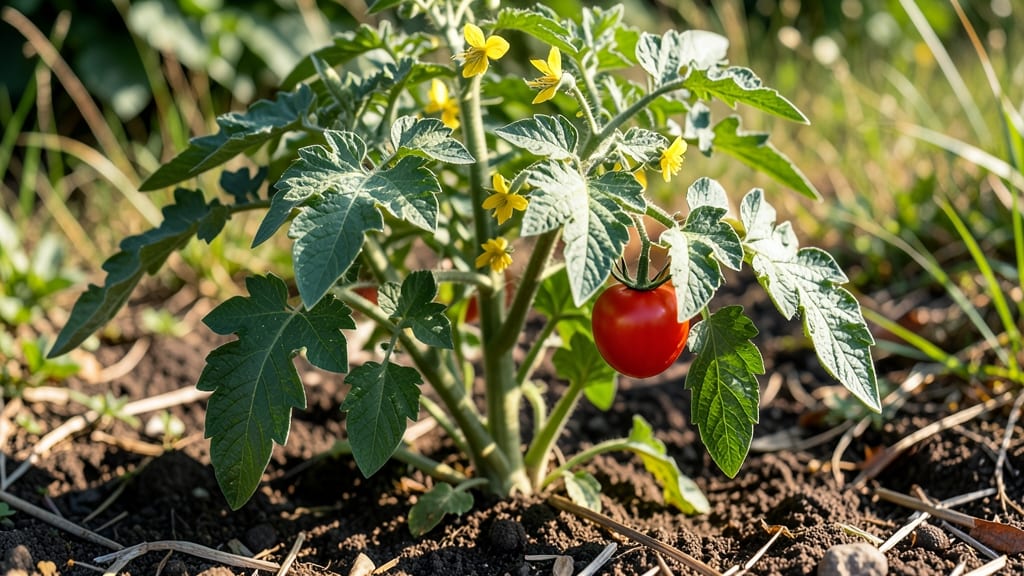
Identifying tomato leaf types saves you from buying the wrong plant—or growing something that flops in your climate. 🌱 The three main categories—potato leaf, regular leaf, and curly leaf—each affect how your tomatoes grow, resist disease, and even taste.
My first year growing tomatoes, I ignored this and ended up with a bush that barely produced fruit because its leaf shape didn’t match my zone’s humidity.
Potato leaf tomatoes (like 'Brandywine' or 'Cherokee Purple') have deeply lobed, almost fern-like leaves that thrive in cooler climates.
Regular leaf types (such as 'Roma' or 'Beefsteak') have smooth, oval leaves and handle heat better, while curly leaf varieties (like 'Solar Fire') have jagged, wavy edges that help them shed water quickly—great for rainy summers. The shape isn’t just decorative; it’s a clue about how the plant will perform.
You’ll notice a difference in growth habits too: potato leaf types grow taller and need staking, while regular leaf varieties stay bushier. Curly leaf tomatoes often produce smaller fruits but in higher numbers.
Once you learn to spot these differences, you’ll pick plants that match your garden’s conditions—and avoid the disappointment of a plant that struggles just because its leaves didn’t fit the environment.
Start by comparing leaves at the nursery or in seed catalog photos. If you’re unsure, ask for a leaf sample or grow a few test plants to see which type thrives best in your space.
The right leaf shape means fewer pests, better fruit set, and a harvest that actually lives up to the promise.
📚 In This Guide
- What you need
- Instructions
- Tips and common mistakes
- Wrapping up and next steps
What you need
- ● Tomato plants – At least 3-5 healthy plants with distinct leaf types (e.g., Indeterminate, Determinate, or Potato Leaf varieties). Look for mature leaves for clear classification.
- ● Pruning shears or sharp scissors – Sterilized to avoid disease transfer (rubbing alcohol works great!).
- ● Magnifying glass or hand lens – A 10x magnification lens helps spot fine details like leaf serrations or vein patterns.
- ● Notebook or digital device – For recording observations (use a leaf identification chart or app like PictureThis or PlantNet).
- ● Ruler or measuring tape – To document leaf size (measure length and width in inches or centimeters).
- ● Clear plastic bags or zip-top bags – For preserving leaf samples (add a damp paper towel to keep them fresh).
- ● Camera with macro mode – Capture high-res images of leaf undersides, stems, and growth patterns.
- ● pH test kit – Check soil conditions if leaf issues (like yellowing) suggest nutrient deficiencies.
- ● Leaf press (DIY or store-bought) – Flatten leaves between absorbent paper and heavy books for long-term storage.
- ● Grow lights or sunlight journal – Track how light exposure affects leaf development (especially for indoor plants).
- ● Gloves (nitrile or cotton) – Protect hands from sap or thorns (e.g., Potato Leaf varieties).
- ● Basic botany knowledge – Familiarize yourself with terms like lobed, serrated, pinnate, and palmate leaf structures.
- ● Access to tomato varieties – Visit a nursery or order seeds online (e.g., Sungold for indeterminate, Roma for determinate).
- ● Patience for observation – Leaf types evolve as plants mature; plan for 4-6 weeks of monitoring.
How to identify tomato leaf types for better plant care
Knowing your tomato plant's leaf types helps you spot problems early and nurture stronger growth.
🌿 Step 1: Recognize Cotyledons (The First True Leaves)
The very first leaves that appear after germination are called cotyledons. These round, thick leaves look nothing like mature tomato foliage—they're smooth-edged and often slightly fuzzy. Cotyledons serve as the plant's first food source, storing energy from the seed until the true leaves form.
Watch for these leaves to appear within 7-14 days of germination. They'll unfurl first, followed by the plant's first set of true leaves. Don't confuse cotyledons with seedling damage—they're perfectly normal and essential for the plant's development.
🌱 Step 2: Identify True Leaves (The Plant's Growth Engine)
Once your tomato plant develops its second set of leaves, those are the true leaves—the ones that look like miniature versions of mature tomato foliage. True leaves have serrated edges and a more complex vein structure than cotyledons. These leaves are where photosynthesis really kicks in, powering your plant's growth.
Count the number of true leaves before transplanting. You'll want to wait until your seedlings have 4-6 true leaves before moving them outdoors. This ensures they're strong enough to handle the transition. If you see leaves that are pale or yellowing at this stage, it's often a sign of nutrient deficiency or overwatering.
☀️ Step 3: Learn to Spot Compound Leaves (The Mature Foliage)
As your tomato plant matures, you'll notice its leaves become more complex—these are compound leaves, made up of multiple leaflets attached to a central stem. Each leaflet has its own serrated edge, creating a feathery appearance. Compound leaves are the most efficient at capturing sunlight and producing energy for fruit development.
Pay attention to the arrangement of these leaflets. Healthy compound leaves grow in an alternating pattern along the stem, with each leaflet spaced evenly. If you notice leaflets curling inward or yellowing, it could indicate a pest problem like spider mites or an environmental stress like inconsistent watering.
✂️ Step 4: Understand the Difference Between Simple and Compound Leaves
While most mature tomato plants have compound leaves, some varieties—like the Indeterminate types—produce both simple and compound leaves as they grow. Simple leaves appear earlier in the plant's development and have a single, undivided blade. As the plant matures, these give way to the more efficient compound leaves.
This transition is a natural part of your tomato plant's growth cycle. Don't be tempted to prune the simple leaves prematurely—they're still contributing to the plant's overall health. Instead, focus on removing only diseased or damaged foliage to keep your plant thriving.
🌱 Step 5: Use Leaf Types to Diagnose Plant Health
Each stage of leaf development tells a story about your plant's health. For example, if you see cotyledons but no true leaves after 3 weeks, your seedling might not be getting enough light or nutrients. If mature leaves suddenly start reverting to a simpler form, it could signal stress from overcrowding or poor soil conditions.
Here's the thing—learning to read your tomato plant's leaves is like learning a secret language. The more you observe, the better you'll understand what your plant needs. Keep a small notebook by your garden and jot down any changes in leaf types alongside your care routine. Over time, you'll start to see patterns that help you anticipate and prevent problems before they arise.
Tips & tricks for mastering tomato leaf identification
These practical insights will help you decode your tomato plant's growth stages like a pro.
Growth Timeline: Remember that cotyledons should appear within 7-14 days of germination, but don't rush the process. If you're growing indoors under grow lights, you might see them slightly earlier (around 7 days), while outdoor seedlings in cooler weather could take up to 14 days. The key is patience—these first leaves are your plant's foundation.
Leaf Counting Tip: When counting true leaves before transplanting, focus on the 4-6 true leaves range mentioned in Step 2. I always count from the bottom up, starting with the first true leaf that appears after the cotyledons. This ensures you're not accidentally counting the seed leaves themselves, which can lead to transplanting too early.
Health Indicator: Pay special attention to the color and texture of these leaves—pale or yellowing true leaves often signal nutrient deficiencies, while curled or spotted compound leaves typically indicate pest issues. I keep a small magnifying glass handy to examine leaf undersides for early signs of spider mites or aphids, which often start there before becoming visible.
Mature Leaf Care: For compound leaves, focus on maintaining that even spacing between leaflets. I've found that gently brushing off dust from compound leaves every few weeks helps maintain their efficiency at capturing sunlight. Also, avoid over-pruning—even simple leaves contribute to photosynthesis until they're fully mature and replaced by compound leaves.
Pro Tips for Tomato Leaf Types
- These practical insights will help you decode your tomato plant's growth stages like a pro.
- Growth Timeline: Remember that cotyledons should appear within 7-14 days of germination, but don't rush the process.
- Leaf Counting Tip: When counting true leaves before transplanting, focus on the 4-6 true leaves range mentioned in Step 2.
Frequently asked questions
Got questions about tomato leaf types? You’re not alone! Here are some common queries—and straightforward answers—to help you navigate your garden like a pro.
What are the 3 main types of tomato leaves, and how do I identify them?
The three primary types are potato leaves (deeply lobed, like a potato plant), tomato leaves (rough, hairy, and deeply serrated), and hybrid or heirloom variations (smooth, glossy, or uniquely shaped). Check the leaf edges and texture—potato leaves are jagged, while true tomato leaves feel slightly fuzzy!
When is the best time to prune tomato leaves based on their type?
Prune potato leaves (if they’re diseased) anytime, but focus on tomato leaves during early growth to boost fruit production. Avoid heavy pruning late in the season—it stresses the plant. For hybrid varieties, follow the plant’s natural shape unless pests or disease strike. Pro tip: Morning pruning lets wounds heal faster!
My tomato plant has weird leaves—could it be a different type, or is it sick?
If leaves are yellowing, curling, or spotted, it’s likely disease (like early blight or spider mites), not a leaf type. True potato leaves or hybrid varieties won’t suddenly change—watch for pests or fungal signs. Isolate affected plants and treat with neem oil or copper spray if needed.
Can I grow tomatoes with potato-like leaves in the same garden as regular tomatoes?
Yes! Just keep them separated by at least 3 feet to prevent cross-pollination (which can create odd hybrids). Potato leaves are common in Solanum lycopersicum relatives, but they won’t harm regular tomatoes. Rotate crops yearly to avoid soil-borne diseases.
Are tomato leaves with smooth edges better for disease resistance?
Not necessarily! Smooth, glossy leaves (common in heirlooms) can be more prone to fungal issues because they trap moisture. Rough, hairy leaves (like on ‘Solar Fire’) often repel pests better. Focus on leaf health (pruning airflow, avoiding overhead watering) over leaf shape for resistance.
Wrapping up and next steps
Understanding the three key tomato leaf types—potato leaf, regular leaf, and rugose—can transform your gardening game! Each brings unique strengths, from disease resistance to flavor depth, so choose wisely based on your climate and goals. 🌱
Now that you’re armed with this knowledge, roll up your sleeves and experiment! Start by selecting a leaf type that fits your garden’s needs, then observe how your plants thrive. Happy growing—your future harvests will thank you! 🍅✨