
Pests
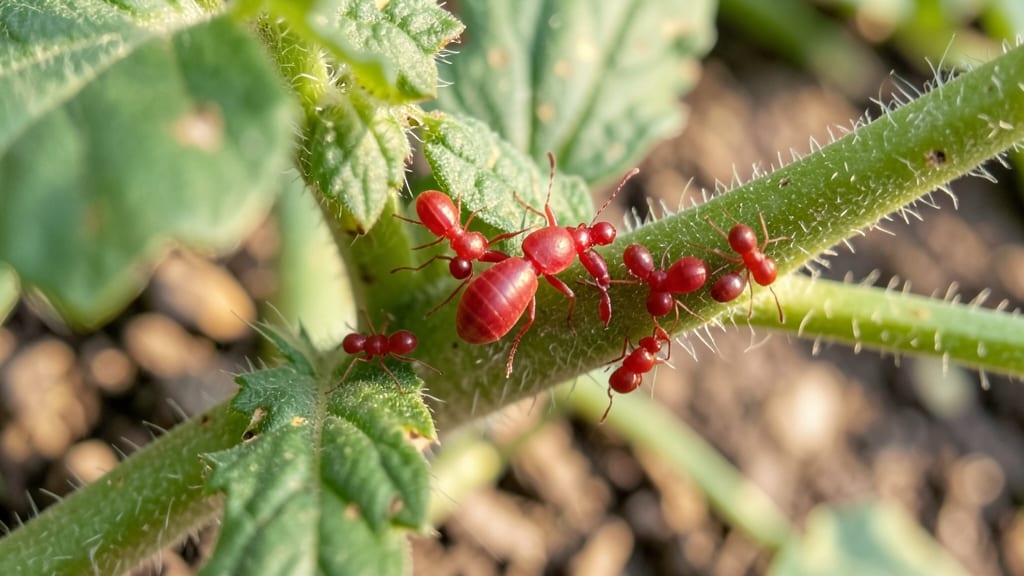
Those tiny red bugs on your tomato plants? They're likely minute pirate bugs—harmless predators that actually help your garden. 🌱 I've seen gardeners panic and reach for sprays, only to discover these bugs are eating more pests than they are.
The key is knowing when to leave them alone and when to encourage their presence. These bugs go through multiple life stages, from egg to nymph to adult, and they thrive in warm, sunny conditions—just like your tomatoes.
While they might nibble lightly on leaves, their appetite for aphids, mites, and other pests makes them a valuable ally in your garden ecosystem. The damage they cause is usually minimal unless their population explodes.
If you notice more harm than good, a simple spray of neem oil or insecticidal soap can help control them without harming beneficial insects. Focus on the undersides of leaves where they hide, and repeat every 3-5 days until they're under control.
Prevention starts with healthy plants—water consistently, remove debris, and attract more predator insects with companion plants like dill or fennel. Your tomatoes will thank you for the balance!
Common Culprits Behind Tomato Plant Invaders
If you’ve spotted tiny red bugs crawling on your tomato plants, you’re likely dealing with one of three common pests: chigger mites, red spider mites, or thrips.
Each of these pests thrives under slightly different conditions, but they all share one thing in common—they’re drawn to stressed or neglected tomato plants. Let’s break down the science behind why they show up and how their behavior fuels their infestations.
Red spider mites and chigger mites are arachnids (not insects!) that love dry, hot conditions. Here’s why:
- Water loss stress: Tomato plants lose moisture quickly in dry air, making their leaves tough and crispy—perfect for mites to burrow into. These pests feed on plant sap by piercing cells, and stressed leaves offer easier access.
- Slow growth = more vulnerability: When tomatoes don’t get enough water, their growth slows. Slower-growing plants produce less chlorophyll, weakening their defenses. Mites detect this via volatile organic compounds (VOCs) released by struggling plants.
- Webbing as a survival tactic: Red spider mites spin fine silk webs to trap moisture and protect their eggs. In low humidity (<30%), these webs become critical for their survival, turning your tomato leaves into their micro-habitats.
Pro Tip: 💡 Use a hygrometer to monitor humidity. Aim for 40-60% humidity around your plants—mist leaves lightly in the morning to deter mites.
Thrips, another tiny red pest, are insects that thrive when tomato plants are already battling other issues. Their attraction stems from:
- Fungal spores as a food source: Thrips don’t just feed on sap—they consume fungal spores that grow on stressed tomato leaves. If your plants have powdery mildew or early blight, thrips will flock to those spots first.
- Sticky honeydew residue: Other pests (like aphids) leave behind honeydew, a sugary substance thrips adore. This creates a feedback loop: more honeydew = more thrips = more damage.
- Weakened plant signals: Infected or nutrient-deficient tomatoes emit chemical distress signals (e.g., jasmonic acid), which thrips detect as an invitation to lay eggs.
Pro Tip: ✨ Prune infected leaves immediately and dispose of them in sealed bags. Avoid over-fertilizing with nitrogen—it promotes soft, thrip-loved new growth.
All three pests target tomatoes with compromised root systems. Here’s how soil conditions play a role:
| Poor Soil Factor | How It Helps Pests |
|---|---|
| Compacted soil | Reduces root oxygen, forcing plants to divert energy to survival instead of pest resistance. |
| Low organic matter | Lacks beneficial microbes that suppress pest populations naturally. |
| Imbalanced pH (too acidic/alkaline) | Disrupts nutrient uptake, making plants easier targets for mites and thrips. |
Pro Tip: 🌡️ Test your soil’s pH and amend it to 6.0–7.0 using compost or lime. Add worm castings to boost microbial activity—these natural predators of mites and thrips thrive in healthy soil.
Understanding the root causes (pun intended) of these infestations is the first step to stopping them. Next, we’ll cover how to identify which pest you’re dealing with and organic removal methods tailored to each culprit.
Quick Fixes for Garden Pests
Now that you’ve identified those pesky tiny red invaders—likely minute pirate bugs, russet mites, or thrips—it’s time to act fast. The good news? Most of these critters can be managed without harsh chemicals, using simple, organic methods.
Below, we’ll break down the best solutions based on the culprit, along with prevention tips to keep your tomato plants thriving.
1. Minute Pirate Bugs (Ants’ Tiny Red Allies)
These bugs often hitch a ride on ants, so disrupt their party with these steps:
- 🍳 Trap & Remove Ants First Ants protect pirate bugs, so eliminate their allies with:
- Diatomaceous earth (DE) – Sprinkle a thin layer around the base of plants (ants avoid it).
- Borax or soapy water baits – Mix 1 tbsp borax + 1 cup sugar + 1 cup water, or use a soapy water spray near ant trails.
- 👨🍳 Handpick & Squish (Yes, Really!) Pirate bugs are slow-moving—check leaves daily and crush them between your fingers (gross but effective).
- 🥘 Introduce Beneficial Insects Ladybugs and lacewings love pirate bugs. Buy them online or attract them with neem oil sprays (they hate the smell).
- 🔪 Prune & Dispose Infested Leaves Cut off heavily damaged foliage and compost away from your garden (don’t reuse it!).
💡 Pro Tip: If ants are a recurring issue, plant mint or citrus nearby—ants dislike these scents!
2. Russet Mites (Tiny Red Spiders Causing Stippling)
These microscopic pests suck plant juices, leaving silvery damage. Fight back with:
- 🌡️ Increase Humidity Russet mites thrive in dry heat. Use a misting bottle or shade cloth to keep leaves damp.
- 🎯 Spray with Neem Oil (Best Organic Defense) Mix 1 tsp neem oil + 1 tsp mild soap + 1 quart water, then spray undersides of leaves (where mites hide). Repeat every 5-7 days.
- 🔥 Blast Them Off with Water A strong spray from the hose (early morning) can knock them off. Do this 2-3 times a week.
- 🍎 Use Reflective Mulch Cover the soil with aluminum foil or silver plastic mulch—it confuses mites and reduces egg-laying.
✨ Prevention Hack: Avoid over-fertilizing—too much nitrogen attracts mites!
3. Thrips (Slender Red Bugs That Distort Leaves)
Thrips are fast and sneaky, but you can outsmart them:
- 🔪 Yellow Sticky Traps Place yellow cards coated in petroleum jelly near plants to catch adult thrips.
- 🍳 Soap Spray (Fast Knockdown) Mix 1 tbsp castile soap + 1 quart water, spray directly on bugs (they’ll drop off). Repeat every 3-4 days.
- 🥘 Companion Planting Thrips hate basil, marigolds, and onions. Plant these around your tomatoes as a natural barrier.
- 🌿 Encourage Predatory Wasps Tiny parasitic wasps eat thrips eggs. Avoid pesticides to keep them in your garden.
💡 Pro Tip: Remove flower buds if thrips are bad—they love new growth!
Now that you’ve kicked them out, lock the door with these habits:
✅ 🌱 Rotate Crops – Don’t plant tomatoes in the same spot yearly (bugs remember!). ✅ 💦 Water Deeply & Early – Wet leaves encourage fungal diseases (which bugs avoid). ✅ 🍃 Mulch with Straw or Grass Clippings – Blocks weeds where bugs hide. ✅ 🔍 Inspect New Plants – Quarantine store-bought seedlings for 2 weeks before planting. ✅ 🌿 Use Row Covers – Floating fabric keeps bugs out while letting light and water through.
Final Thought: Most tiny red bugs are easy to control if you act fast and stay consistent. Try one method at a time, monitor your plants, and adjust as needed—your tomatoes will thank you with juicy, pest-free harvests! 🍅✨
Frequently asked questions
Are tiny red bugs on tomato plants always harmful?
Not necessarily! Many tiny red bugs like minute pirate bugs are actually beneficial—they eat aphids, mites, and other pests. Look for signs of damage: if leaves just have tiny holes (not webbing or yellowing), these bugs are likely helping your garden. Only intervene if you see excessive leaf damage or plant stress.
How can I tell if my tomato plants have mites vs. thrips?
Check for these clues: mites leave fine webbing on leaf undersides and cause stippled yellowing, while thrips create silver streaks on leaves and distort new growth. Use a magnifying glass—mites are rounder and redder, while thrips are slender with fringed bodies. Both thrive in dry conditions.
Will neem oil kill beneficial insects along with the pests?
When used correctly, neem oil targets pests without harming most beneficial insects. Always mix it with 1 tsp mild soap per quart and apply in the early morning when bees are less active. Avoid spraying flowers directly, and reapply every 5-7 days for continuous protection.
Can I use homemade sprays like garlic or chili pepper to control these bugs?
Yes! Blend 1 garlic bulb + 1 tbsp cayenne pepper + 1 quart water, strain, and spray on affected areas. These sprays work best for thrips and soft-bodied pests but may need frequent reapplication. Test on a small leaf first—some plants are sensitive to strong spices. For mites, garlic spray works better than chili.
How long does it take to see results from organic treatments?
Most organic methods show improvement within 3-7 days if applied consistently. Neem oil and soap sprays work fastest (24-48 hours), while introducing predator insects may take 2-3 weeks to establish. Monitor daily and reapply treatments as needed—patience is key for long-term control.