Companion Plants
Tomato plants need 6–8+ hours of direct sun daily 🍅 to produce their best fruit, but too much heat can actually backfire on you.
Picture this: You’ve planted your tomatoes in the sunniest spot in the yard, only to watch the leaves crisp or the blossoms drop before they set fruit. That’s not a bad plant—it’s a sunburned one. The key isn’t just any sunlight; it’s the right balance of light and protection.
Most gardeners assume more sun means more tomatoes, but the truth is, tomatoes crave bright light but can’t handle the midday furnace of a scorching afternoon. Without shade or water, they’ll struggle to set fruit, even if they’re soaking up rays.
The solution? Smart placement, strategic shade, and knowing when to step in with a little help.
In this guide, I’ll show you exactly how to give your tomatoes the sunlight they crave without turning them into crispy critters.
You’ll learn the ideal sunlight window, how to spot signs of too much (or too little) sun, and simple tricks to keep your plants thriving—from pruning to shade cloth hacks.

How much direct sun do tomato plants actually need for optimal growth?
Tomatoes are sun-worshippers, but not all sunlight is created equal. While 6 to 8+ hours of direct sun is ideal, the intensity matters just as much as duration. Too little light leads to weak plants, while too much can scorch leaves and reduce fruit quality.
Understanding your climate’s sun patterns helps you position your plants for success—whether you’re in a hot desert or a cooler northern region.
The golden rule for tomatoes is full sun exposure, but this doesn’t mean baking them under midday heat. Instead, aim for morning sun with afternoon shade in extreme climates.
This balance prevents heat stress while still fueling photosynthesis—the process that turns sunlight into energy for those sweet, juicy tomatoes you crave.
Light intensity affects fruit production more than you might think. Tomatoes need bright, direct sunlight to develop flavor and color. Weak light leads to pale, tasteless fruits, while excessive heat can cause sunscald—visible as white or brown patches on exposed skin. The key is finding that sweet spot where your plants get plenty of light without overheating.
| Sunlight Requirement | Ideal Duration | Effects of Deficiency | Effects of Excess |
|---|---|---|---|
| Full Sun | 6–8+ hours/day | Leggy growth, poor flowering, small fruits | Leaf scorch, sunscald, reduced yield |
| Partial Shade | 3–6 hours/day | Stunted growth, fewer fruits | Minimal (if morning sun only) |
| Deep Shade | <3 hours/day | No fruit production, weak stems | N/A (not viable for tomatoes) |
| Seasonal Adjustments | Varies by climate | Use shade cloth in summer | Extend light with grow lights |
Seasonal adjustments are critical, especially if you’re gardening in hot climates like Arizona or cooler regions like the Pacific Northwest. In summer, plants may need afternoon shade to prevent wilting, while in winter, supplemental grow lights can extend daylight hours.
Pay attention to your local peak sunlight hours—typically between 10 AM and 4 PM—to maximize growth without stress.
Not all tomato varieties have the same sunlight needs. Determinate varieties (like Roma or Celebrity) tolerate slightly less sun than indeterminate types (like Cherry or Beefsteak), which thrive with 8+ hours of light.
If you’re growing heirlooms or hybrids, check their labels for specific recommendations. For example, cherry tomatoes often perform better with more light, while larger slicing varieties may need afternoon relief from intense heat.
Light intensity also impacts fruit ripening. Tomatoes need consistent sunlight to develop lycopene (the compound that gives them their red color and sweetness). Without enough light, fruits may stay green or turn pale yellow.
In my garden, I’ve noticed that morning sunlight is particularly effective because it’s cooler and less intense, allowing plants to absorb energy without overheating.
If you’re growing tomatoes in containers or urban gardens, positioning matters even more. Place pots on south-facing balconies or near sunny windows to ensure they get enough light.
Rotate containers weekly so all sides receive even exposure. In shaded areas, consider reflective surfaces like white walls or mirrors to bounce extra light onto your plants.
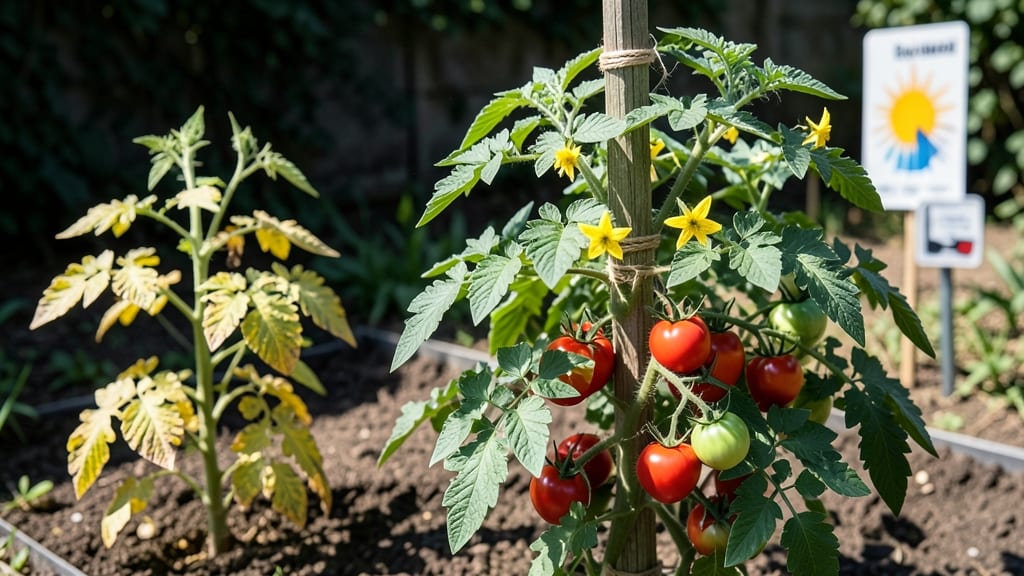
Watch for visual cues to gauge your plants’ sunlight needs. Yellowing leaves or stretched stems signal insufficient light, while crispy leaf edges or white patches indicate too much sun.
Adjusting your plants’ location or using shade cloth (30–50%) can help correct these issues. For example, a 30% shade cloth reduces light by 30% while still allowing photosynthesis.
Remember, tomatoes are photoperiod-neutral, meaning they don’t rely on specific day lengths to flower or fruit. However, they do need consistent light exposure to produce well. If your plants start flowering but drop blossoms, it could be due to temperature fluctuations or inconsistent sunlight.
Keep them in a stable, sunny spot to encourage fruit set and development.
For the best results, combine optimal sunlight with proper watering and soil health. Well-draining soil rich in organic matter helps roots absorb nutrients efficiently, even in full sun. Mulch around the base of your plants to retain moisture and keep roots cool.
With the right balance of light, water, and care, your tomato plants will reward you with a bountiful, flavorful harvest all season long. ☀️🍅
Signs your tomato plants are getting too much or too little sun (and how to fix it)
Tomato plants need 6-8 hours of direct sun daily to thrive, but too much or too little sunlight can derail your harvest. Yellowing leaves, stunted growth, or blossom end rot often signal sunlight issues. Let’s diagnose the problem and fix it before your plants suffer.
First, check your plants for leaf scorch—crispy, brown edges mean excessive sunlight, especially in hot climates. On the flip side, pale, leggy stems and sparse leaves indicate insufficient light. Both extremes can lead to poor fruit production or even plant death.
While tomatoes love full sun, intense afternoon heat (especially in zones 8+) can burn leaves and reduce fruit set. Many gardeners overcorrect by placing plants in scorching midday sun, thinking they need maximum exposure.
Instead, aim for morning sun + afternoon shade in hot climates, or use shade cloth (30-50%) during peak hours.
If your tomato plants show blossom end rot (black, sunken spots on fruit), it’s often linked to uneven sunlight combined with inconsistent watering. This condition thrives in fluctuating soil moisture, which sunlight stress can worsen. Fix it by mulching heavily and watering deeply at the base every 2-3 days.
For underlit plants, relocate them to a sunnier spot or use a reflective surface (like white plastic sheeting) to bounce extra light onto leaves.
If moving isn’t an option, consider grow lights for 12-14 hours daily during cloudy stretches. Dwarf varieties like 'Tiny Tim' tolerate partial shade better than tall types.
Pruning can also help balance sunlight. Remove lower leaves to improve air circulation and direct more light to the fruit zone. Avoid heavy pruning in hot climates, as it increases stress. Instead, focus on opening the canopy to prevent shady, disease-prone spots.
Finally, monitor your plants’ growth rate. Healthy tomatoes grow 1-2 inches per week in ideal conditions. If growth stalls, reassess sunlight, water, and soil nutrients. A balanced fertilizer (5-10-10) can boost recovery if deficiencies are present.