
Pests and Diseases
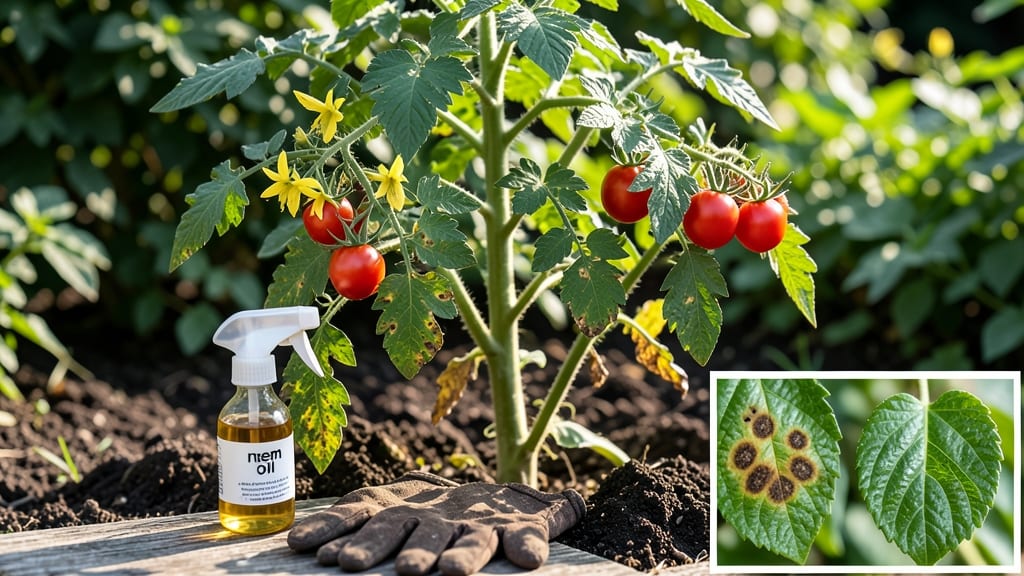
When your tomato leaves start showing those ugly brown spots, neem oil can be your 24-hour lifesaver. 🌱 I’ve used it to rescue my tomato plants from blight more times than I can count, and it works when chemical sprays fail.
The key is knowing how to apply it right—the wrong way won’t stop the spread. This isn’t just about spraying neem oil and hoping for the best.
You need the right concentration (1 tablespoon per quart of water), the proper timing (early morning or evening), and consistent applications every 5-7 days until the spots disappear. I’ve seen blight stop dead in its tracks within a single day when done correctly.
What you’ll end up with is healthy green foliage and tomatoes that keep producing instead of wilting. The plants stay strong, the soil stays organic, and you avoid the chemical residue that can linger on your fruit.
It’s the difference between a disappointed harvest and a bounty you can proudly share. Works for both backyard gardens and container-grown tomatoes. Here’s exactly how to make it work—no guesswork, just results.
Why it happens
Tomato blight—whether early, late, or septoria—isn’t just a random attack on your plants. It thrives because of specific conditions that create the perfect storm for fungal spores to take hold. Let’s break down the science behind why your tomatoes develop those telltale brown spots, blackened stems, or leaf lesions.
Blight fungi, like Phytophthora infestans (late blight) or Alternaria solani (early blight), need water to spread. Overhead watering or prolonged leaf wetness (more than 4–6 hours) creates a damp environment where spores germinate and infect plant tissue.
- Why it happens: Water droplets linger on leaves, stems, or fruit, acting as a bridge for fungal spores to penetrate plant cells. Poor airflow in dense foliage traps humidity, accelerating spore growth.
- Actionable science: Blight spores release enzymes called cellulases and pectinases that break down plant cell walls—once moisture is present, infection spreads in 24–48 hours.
- Red flags:
- Yellowing leaves that curl upward (early blight)
- Dark, greasy-looking spots on fruit (late blight)
- Blackened stems at the soil line (severe infection)
💡 Pro Tip: Water at the base of plants in the morning (not evening) to allow foliage to dry by midday. Prune for airflow—aim for 6–12 inches of space between plants.
Blight fungi have temperature preferences. Most thrive in:
| Fungus Type | Optimal Temp Range (°F) | Humidity Trigger |
|---|---|---|
| Phytophthora infestans (Late Blight) | 55–77°F (13–25°C) | >75% humidity for 10+ hours |
| Alternaria solani (Early Blight) | 68–86°F (20–30°C) | >60% humidity + warm nights |
| Septoria lycopersici (Septoria Leaf Spot) | 60–75°F (15–24°C) | Consistent rain or overhead watering |
Why it happens: Cool, damp mornings followed by warm afternoons create the perfect diurnal temperature swing that fungal spores exploit. Spores release zoospores (motile reproductive cells) in water, which swim to plant surfaces to infect.
🌡️ Pro Tip: Use a hygrometer to monitor humidity. If it’s above 70% for hours, prune lower leaves (they’re the first to rot) and consider a fan for airflow.
Healthy tomatoes resist blight better. Stressors like:
- Nutrient deficiencies (especially potassium or phosphorus)
- Overcrowding (competition for sunlight/nutrients)
- Physical damage (hail, insects, or rough handling)
- Sudden temperature shifts (e.g., frost followed by heat)
Why it happens: Stress reduces cuticle thickness (the plant’s waxy protective layer), making it easier for fungal haustoria (root-like structures) to penetrate cells. Weak plants also produce less phenolics, natural antifungal compounds.
💡 Pro Tip: Test soil for pH (6.0–6.8) and amend with compost or potassium-rich fertilizer (like wood ash). Space plants 18–24 inches apart to avoid competition.
Blight spores can survive for years in soil or on garden tools. Even a single infected leaf left in the compost pile can reintroduce the fungus.
- Why it happens: Spores overwinter in plant debris or infested soil. When you replant tomatoes in the same spot (or use unsterilized tools), you’re essentially seeding the infection.
- Actionable science: Some spores produce chlamydospores, thick-walled structures that resist drying and chemicals, making them hard to eradicate.
✨ Pro Tip: Rotate crops (avoid planting tomatoes, potatoes, or peppers in the same spot for 3–4 years). Sterilize tools with 70% isopropyl alcohol or a 10% bleach solution between uses.
How to Treat and Prevent Tomato Leaf Spots
Now that you know the causes behind those unsightly tomato blight spots—whether it’s fungal infections like early blight, late blight, or bacterial speck—it’s time to take action!
The good news? Neem oil is your secret weapon, but combining it with smart gardening practices will give your tomatoes the best shot at staying healthy. Below, we’ll break down cause-specific solutions and preventive tips to keep your plants thriving.
Early blight (Alternaria solani) starts with yellow lower leaves and progresses to dark, concentric spots. Here’s how to fight back:
🔥 Immediate Treatment: Neem Oil Spray (The Game-Changer)
- Mix Your Spray 🌿
- Combine 1 tsp neem oil + 1 tsp mild liquid soap (like Castile soap) in 1 quart of water.
- Add 1 tsp baking soda to boost antifungal power.
- Stir well and pour into a spray bottle.
- Apply at the Right Time ⏰
- Spray early in the morning or late evening (avoid direct sunlight—it can burn leaves).
- Focus on undersides of leaves (where spores hide) and stems.
- Reapply every 7–10 days or after rain.
- Remove Infected Foliage 🗑️
- Prune and dispose of diseased leaves (don’t compost them—burn or trash them).
- Avoid wetting leaves when watering (use drip irrigation instead).
💡 Prevention Tips for Early Blight
- Rotate crops: Don’t plant tomatoes in the same spot yearly (wait 3 years before replanting).
- Improve airflow: Space plants 18–24 inches apart and prune suckers to reduce humidity.
- Mulch heavily: Use straw or grass clippings (2–3 inches deep) to prevent soil splashing onto leaves.
- Strengthen plants: Feed with balanced organic fertilizer (like 5-5-5) to boost resistance.
Late blight (Phytophthora infestans) is aggressive and contagious—it can destroy a tomato plant in days. If you see greasy, dark spots with white mold, this is an emergency!
🍳 Emergency Treatment: Neem Oil + Copper Fungicide Combo
- First Spray: Neem Oil + Copper 🛡️
- Mix 1 tbsp neem oil + 1 tbsp copper fungicide (like copper sulfate or tribasic copper sulfate) in 1 gallon of water.
- Add 1 tsp soap as a sticker.
- Spray thoroughly, including the soil around the base (fungus lives there too!).
- Second Line of Defense: Remove and Isolate 🚫
- Destroy all infected plants (don’t save them—the spores will spread).
- Disinfect tools with rubbing alcohol between uses.
- Avoid overhead watering—use a soaker hose instead.
- Prevent Re-Infection 🌡️
- Water only in the morning so leaves dry quickly.
- Space plants farther apart (late blight thrives in crowded, humid conditions).
- Use row covers if late blight is common in your area.
🎯 Long-Term Prevention
- Choose resistant varieties: Look for ‘Mountain Merit’ or ‘Defiant PhR’ (Phytophthora-resistant).
- Rotate crops aggressively: Late blight survives in soil—don’t plant nightshades (tomatoes, potatoes, peppers) in the same bed for 5+ years.
- Solarize soil (if possible): Cover soil with clear plastic for 4–6 weeks in summer to kill fungus.
Bacterial spot (Xanthomonas perforans) causes tiny, water-soaked spots that enlarge and ooze. Unlike fungi, bacteria can’t be cured—prevention is critical.
👨🍳 Treatment: Neem Oil + Baking Soda Barrier
- Spray Neem Oil + Baking Soda 🧼
- Mix 1 tbsp neem oil + 1 tbsp baking soda + 1 tsp soap in 1 gallon of water.
- Spray every 5–7 days (baking soda raises leaf pH, making it harder for bacteria to thrive).
- Prune and Sterilize ⚔️
- Remove all infected leaves and sterilize pruners with bleach (1 part bleach to 10 parts water).
- Avoid wounding plants—bacteria enter through cuts.
✨ Prevention Tips
- Water at the base only—never overhead (bacteria spread via water droplets).
- Use drip irrigation or soaker hoses to keep foliage dry.
- Rotate crops and avoid planting tomatoes after peppers/eggplants (they share diseases).
- Sanitize everything: Disinfect trellises, stakes, and tools between seasons.
No matter the blight, these universal tips will keep your plants strong:
- Feed with compost tea every 2 weeks for natural immunity.
- Avoid over-fertilizing with nitrogen—it makes plants soft and susceptible.
- Harvest early if blight appears—green tomatoes can ripen indoors.
- Store cured seeds from healthy plants to prevent reinfection next season.
Final Thought: Neem oil is your first line of defense, but prevention (proper spacing, watering, and crop rotation) is what truly saves your harvest. Act fast at the first sign of spots, and your tomatoes will thank you with juicy, blemish-free fruit! 🍅✨
Frequently asked questions
How soon will I see results after applying neem oil for tomato blight?
You may notice improvement within 24-48 hours if you catch the blight early, but complete recovery can take 1-2 weeks of consistent applications. The key is spraying every 5-7 days and removing infected leaves immediately. For severe cases like late blight, combine neem oil with copper fungicide for faster results.
Can I use neem oil on tomato plants that are already bearing fruit?
Yes, neem oil is safe for tomato plants with fruit, but avoid spraying directly on ripe tomatoes to prevent any potential bitter taste. Focus applications on leaves and stems, and harvest tomatoes within 24 hours of spraying if possible. The oil breaks down quickly and won't harm developing fruit.
What's the best time of day to apply neem oil spray?
Apply neem oil spray early in the morning or late evening when temperatures are below 85°F and there's no direct sunlight. This prevents leaf burn and allows the solution to fully absorb before evaporation. Avoid spraying when dew is present, as it can dilute the effectiveness.
Will neem oil work on blight that's already caused blackened stems?
Neem oil can help stop the spread but won't revive already damaged stems. For plants with blackened stems, focus on preventing further infection by removing all affected foliage, improving airflow, and applying neem oil + copper fungicide. Consider replacing severely infected plants to prevent soil contamination.
How long should I wait before harvesting tomatoes after using neem oil?
You can safely harvest tomatoes within 24 hours of your last neem oil application. The oil breaks down quickly and won't leave harmful residues. For extra caution, wash tomatoes thoroughly before eating, though this is rarely necessary. The main concern is avoiding overspray on ripe fruit during application.