
Companion Plants
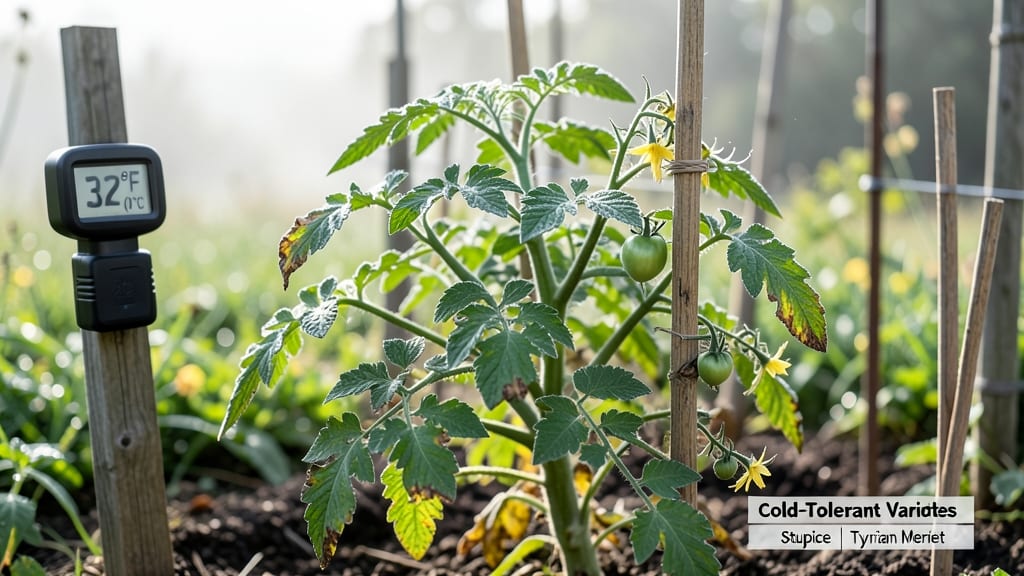
The lowest temperature tomato plants can tolerate is 32°F (0°C) for brief periods, but growth slows dramatically below 50°F (10°C) and frost damage becomes likely. Young plants are especially vulnerable compared to mature specimens.
The difference between survival and irreversible damage comes down to both temperature AND duration. 🌱 At 32°F (0°C), tomato cells begin forming ice crystals that rupture membranes, though brief exposure may not kill the plant.
The real danger zone starts below 50°F (10°C), where metabolic processes shut down, stunting growth and leaving plants susceptible to secondary stress like fungal infections.
I've seen gardeners in Zone 7 extend seasons by using cold frames—this works because it creates a 5-10°F warmer microclimate that keeps nighttime temps above the critical threshold.
What's fascinating is how different plant parts react: roots can handle cooler soil temps better than shoots, which is why mulching with straw or leaves becomes crucial. The nighttime is when most damage occurs because tomato plants rely on daytime warmth to recover.
For example, a daytime high of 75°F (24°C) followed by a 40°F (4°C) night will stress plants more than consistent 50°F (10°C) temps.
💡 In This Article
- How Cold Affects Tomato Plant Physiology
- Protecting Tomato Plants from Frost and Freezing
How cold affects tomato plant physiology
When tomato plants encounter freezing temperatures, the real damage happens at the cellular level. Ice crystals form within plant cells when temps drop below 32°F (0°C), physically rupturing cell membranes and disrupting vital functions.
This process is called "cold acclimation failure" - unlike hardy plants that produce protective sugars and proteins, tomatoes lack these adaptations.
The damage is most severe in young seedlings because their cells contain more water, making them more prone to ice crystal formation. 🌱 Mature plants have thicker cell walls that offer some protection, but even they can't survive prolonged exposure.
The roots handle cold better than the shoots because soil insulates them more effectively. However, when soil temps drop below 45°F (7°C), root growth slows dramatically, cutting off the plant's water and nutrient supply.
This is why mulching with 4-6 inches of straw or leaves creates a crucial 5-10°F warmer zone at the soil surface. Interestingly, tomato plants can recover from brief cold snaps if daytime temps stay above 60°F (15°C), giving them energy to repair damaged cells through photosynthesis.
Nighttime temperatures matter more than daytime highs because plants can't photosynthesize in the dark. A 75°F (24°C) daytime followed by 40°F (4°C) nights will stress plants more than consistent 50°F (10°C) temperatures. This is why gardeners in marginal climates focus on nighttime protection.
The plant's natural antifreeze compounds (like proline amino acids) only work down to about 45°F (7°C) - below that, cellular damage becomes irreversible within 2-4 hours of exposure.
Another critical factor is humidity. Cold air holds less moisture, causing plants to lose water through transpiration even faster. This desiccation effect makes 35-40°F (2-4°C) particularly dangerous - plants may appear fine but are actually dehydrating internally.
The leaves often show the first signs of damage: they'll develop brown, crispy edges before the entire plant succumbs. This is why frost cloths work so well - they create a 10-15°F warmer microclimate AND reduce moisture loss.
What most gardeners don't realize is how cold affects flowering and fruiting. When temps drop below 55°F (13°C) for more than 3-5 days, tomato plants stop producing flowers entirely. This is because the enzymes responsible for flower development become inactive.
Even if the plant survives, the fruit that does develop may have poor set or abnormal shapes due to hormonal disruptions caused by the cold stress. 🌿 This explains why late-season tomatoes often have fewer fruits - the plant's energy goes toward survival rather than reproduction.
For those growing tomatoes in containers, the cold sensitivity is even more pronounced. Potted plants have less thermal mass, meaning they cool down faster and can't regulate their temperature as effectively as in-ground plants.
A container's edge temperature can be 5-10°F colder than the center, creating dangerous temperature gradients within the plant. This is why container gardeners need to move their plants to protected locations before nighttime temps drop below 50°F (10°C).