
Planting
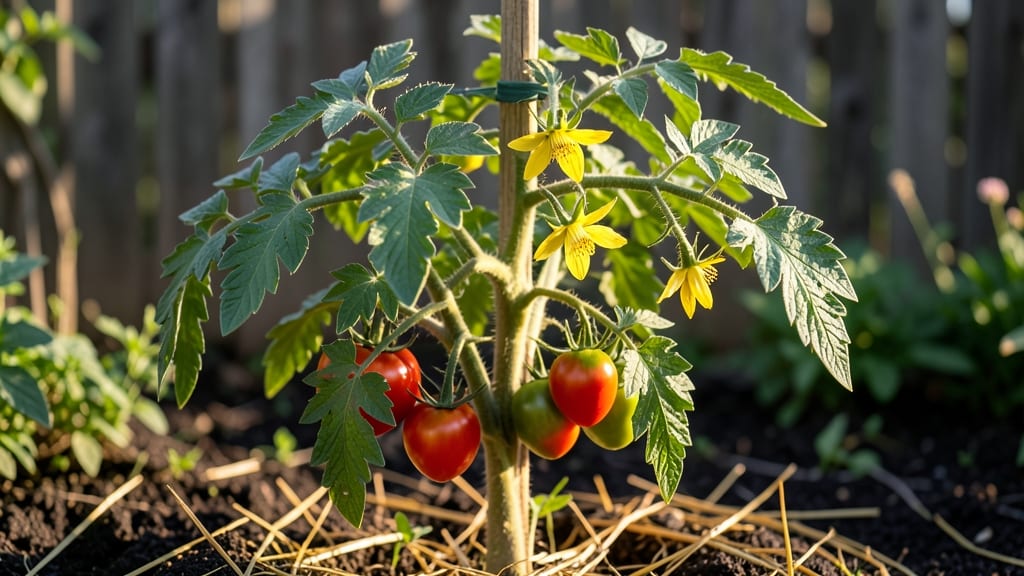
You can identify a tomato plant hiding in plain sight by spotting those deeply lobed leaves with jagged edges and a hairy stem. 🌿 I’ve spent years mistaking nightshade lookalikes for tomatoes, but once you know the key features—leaf shape, stem texture, and flower structure—identifying them becomes second nature.
The trick is comparing what you see to these visual clues before it’s too late.
Start with the leaves: tomato leaves have 5-7 pointed lobes that curve outward, while deadly nightshade leaves are smoother and more oval. The stem is another giveaway—tomatoes have a slightly fuzzy, square stem when you look closely, and the flowers grow in clusters at the leaf joints.
If your plant has shiny, heart-shaped leaves with no lobes, it’s probably not a tomato.
You’ll spot the difference instantly when you compare your plant to these traits, especially when flowers appear. Tomato blossoms are yellow with five petals, while other nightshades often have white or purple flowers. Apps like PlantNet or Google Lens can confirm your guess in seconds if you’re still unsure.
Even seedlings can be tricky, but focus on the first true leaves—they’ll have those telltale lobes. If you’re still stuck, snap a photo and compare it to online databases.
The key is acting fast: the sooner you confirm it’s a tomato, the sooner you can give it the right care to produce those juicy fruits you’re dreaming of.
Understanding Plant Confusion Causes
When trying to identify tomato plants, misidentification often stems from a mix of natural growth patterns, environmental factors, and even human error. Let’s break down the key reasons why distinguishing tomato plants can be tricky—so you can spot the clues correctly.
Tomato plants come in hundreds of varieties, each with unique leaf shapes, stem textures, and growth habits. Seedlings, in particular, can look nearly identical until they mature. For example:
- Heirloom vs. Hybrid: Heirloom tomatoes (like 'Brandywine') often have deeply lobed, jagged leaves, while hybrids (such as 'Early Girl') may have smoother, more uniform foliage.
- Determinate vs. Indeterminate: Determinate plants (bush-type) grow in compact shapes with smaller leaves, while indeterminate vines (like 'Cherry Roma') produce larger, more divided leaves as they climb.
- Disease-Resistant Traits: Some varieties are bred to resist common pests (e.g., Fusarium wilt), which can alter leaf thickness or color—making them harder to recognize at first glance.
Pro Tip: 💡 If you’re growing from seed, check the packet for variety descriptions or take photos of mature plants as a reference. Leaf shape often becomes more distinct after the 4-6 true leaf stage.
Stress from temperature swings, poor soil, or water issues can distort leaf shape and stem appearance, tricking gardeners into thinking a plant is diseased or a different variety. Common culprits:
| Stressor | Leaf/Stem Reaction | How to Tell It’s Stress (Not a New Variety) |
|---|---|---|
| Cold Snaps (<50°F/10°C) | Purple-tinged leaves, stunted growth | Symptoms appear suddenly and affect all plants in the area. |
| Overwatering | Yellowing between veins, mushy stems | Soil feels soggy; roots may smell rotten. |
| Nutrient Deficiency (e.g., nitrogen) | Small, pale leaves with dark green veins | Older leaves yellow first; new growth is stunted. |
| Herbicide Drift | Cupped, distorted leaves; stems may crack | Symptoms appear on one side of the plant (wind direction clue). |
Pro Tip: ✨ Monitor your plants’ growth patterns over time. If leaves revert to normal after stress passes, it’s likely environmental—not a new variety.
Pests and pathogens can physically alter a tomato plant’s appearance, making identification harder. For example:
- Tomato Hornworms: Chewed leaves leave jagged edges, mimicking the serrated leaves of a 'Black Krim' variety.
- Early Blight: Dark spots with concentric rings on leaves can make a healthy 'San Marzano' look like a diseased 'Beefsteak'.
- Aphids or Spider Mites: Curled, yellowed leaves may resemble the compact growth of a 'Tiny Tim' dwarf tomato.
To avoid confusion:
- Inspect the undersides of leaves for pests or eggs.
- Check for consistency—if only a few leaves are affected, it’s likely pest-related, not a variety trait.
- Use organic neem oil or insecticidal soap to rule out pests before assuming it’s a new cultivar.
Even experienced gardeners can misidentify tomato plants due to:
- Focusing on Wrong Features: Relying solely on leaf color (e.g., purple stems) without checking growth habit or fruit shape.
- Ignoring the Stem: Indeterminate tomatoes have hairy stems with a succulent, green texture, while determinate stems are often woody and less fuzzy.
- Mixing Up Wild vs. Cultivated: Volunteer tomatoes (from last year’s seeds) may resemble heirlooms but often have smaller, less uniform leaves.
Pro Tip: 🎯 Compare plants side by side with a trusted reference (like a seed catalog). Take notes on:
- Leaf lobing depth (deep vs. shallow).
- Stem hairiness and color.
- Growth pattern (bushy vs. vining).
Quick fixes for common tomato plant confusions
---
Got a leafy green mystery in your garden? Whether you’re staring at a bushy plant with odd-shaped leaves or a tall vine that looks suspiciously like tomato but isn’t, here’s how to solve the confusion fast—and keep your garden thriving.
---
Problem: "My plant has tomato-like leaves, but I’m not sure if it’s a tomato or a lookalike!" Solution: Tomato plants have compound leaves (multiple leaflets) arranged in a serrated, jagged pattern. If your plant has: - Single, smooth-edged leaves → Likely a nightshade imposter (like eggplant or pepper seedlings). - Deeply lobed leaves → Could be a weed (e.g., black nightshade or silverleaf nightshade). - Hairy stems with sticky residue → Tomato hornworm damage (not the plant itself, but a sign of pests).
💡 Pro Tip: Snap a photo and compare it to a tomato leaf chart (like [this one from the University of Minnesota](https://extension.umn.edu)). Most garden centers sell seed packets with leaf images—use them as a quick reference!
---
Problem: "The stems look tomato-like, but the growth is all wrong!" Solution: Tomato plants have hairy, square stems (due to a unique vascular structure) and grow in one of three ways: - Indeterminate (vining, grows until frost). - Determinate (bushy, stops at a set height). - Semi-determinate (hybrid of both).
If your plant has: - Round, smooth stems → Probably not a tomato (could be a weed like bittersweet nightshade). - Thorny vines with berries → Solanum dulcamara (bitter nightshade—remove it, as it’s toxic). - Stems that sprawl like cucumbers → Tomato suckers gone wild (prune aggressively to redirect energy to fruit).
✨ Prevention Tip: When planting, label your tomato varieties with stakes or tags. A simple twist-tie with the name saves headaches later!
---
Problem: "No leaves? No problem—but what if my plant is flowering or fruiting?" Solution: Tomato flowers are yellow with 5 petals and grow in leaf axils (where the stem meets the leaf). Fruits start as tiny green buds that swell into tomatoes.
If you see: - White or purple flowers → Eggplant or pepper (not a tomato). - Small, round red berries → Tomato hornworm eggs (scrub stems with soapy water). - No flowers but lots of leaves → Over-fertilized with nitrogen (switch to phosphorus-rich fertilizer like 5-10-10 to encourage blooming).
🔥 Quick Action: If flowers drop off without fruiting, your plant may be stressed from heat or drought. Water deeply at the base (not the leaves) and mulch to retain moisture.
---
Problem: "My ‘tomato’ plant is wilting, spotted, or covered in bugs." Solution: Tomato plants are prone to early blight, late blight, and aphids, but lookalikes (like potato plants) have different symptoms.
| Issue | Tomato Plant Signs | Lookalike Signs | Fix It | |-------------------------|-----------------------------------------------|----------------------------------------|------------| | Blight (Fungal) | Brown spots on leaves, yellowing | Potato plants: blackened stems | Remove infected leaves, copper fungicide, improve airflow. | | Aphids | Curled leaves, sticky residue (honeydew) | Pepper plants: stunted growth | Spray with soapy water or introduce ladybugs. | | Hornworms | Missing leaves, green caterpillars | Basil or eggplant: chewed stems | Handpick worms (they’re huge!) or use BT spray. |
💪 Prevention Tip: Rotate crops yearly—don’t plant tomatoes in the same spot two years in a row. This breaks fungal cycles and keeps pests guessing!
---
Problem: "My plant isn’t thriving—could it be the wrong conditions?" Solution: Tomatoes need: - 6-8 hours of sun daily (partial shade = leggy, weak plants). - Well-draining soil (6.0–6.8 pH; test with a soil kit from a garden store). - Consistent moisture (drought stress = blossom end rot).
If your plant is: - Leggy and pale → Not enough light (move to sunnier spot or use a grow light). - Yellow leaves → Overwatered or poor drainage (add perlite to soil). - Stunted growth → Underwatered or compacted soil (loosen roots gently and water deeply).
⏰ Time-Saver: Use self-watering containers or drip irrigation to keep moisture steady without guesswork.
---
Still unsure? Grab a magnifying glass and check for tiny hairs on stems (tomatoes have them!) or leaf veins (tomato veins are prominent and net-like). When in doubt, dig up a small section—healthy tomato roots are white and fibrous, while weeds often have thin, stringy roots. Now get back to gardening with confidence! 🌱🍅
Frequently asked questions
What are the 3 key features to identify a tomato plant?
Look for 5-7 deeply lobed leaves with jagged edges, hairy square stems, and yellow flowers with 5 petals. These are the most reliable visual clues. The leaves should have a rough texture, while stems feel slightly fuzzy when rubbed between fingers.
How can I tell if my plant is a tomato vs. deadly nightshade?
Tomato leaves have 5-7 pointed lobes that curve outward, while deadly nightshade leaves are smooth, oval, and glossy with no lobes. Also check the flowers: tomatoes have yellow blossoms, while nightshade flowers are white or purple. Nightshade berries are round and black when ripe.
Can I use a phone app to confirm if it's a tomato plant?
Yes! Apps like PlantNet, Google Lens, or PictureThis can instantly identify tomato plants by comparing your photo to their database. Just upload a clear image of the leaves, stems, and flowers. For best results, take photos on a sunny day when leaves are fully expanded.
What should I do if my plant has tomato-like leaves but no flowers?
First check if it's a seedling—tomato leaves become more distinctive after the 4-6 true leaf stage. If it's mature, examine the stem texture (tomatoes have hairy stems) and growth pattern (indeterminate = vining, determinate = bushy). If still unsure, wait for flowers to appear or consult a local nursery expert.
Why do some tomato plants look different from others?
Tomato varieties come in hundreds of types, each with unique leaf shapes and growth habits. For example, heirlooms often have deeply lobed leaves, while hybrids may have smoother foliage. Environmental factors like temperature, soil quality, and light exposure can also alter appearance temporarily.