
How To
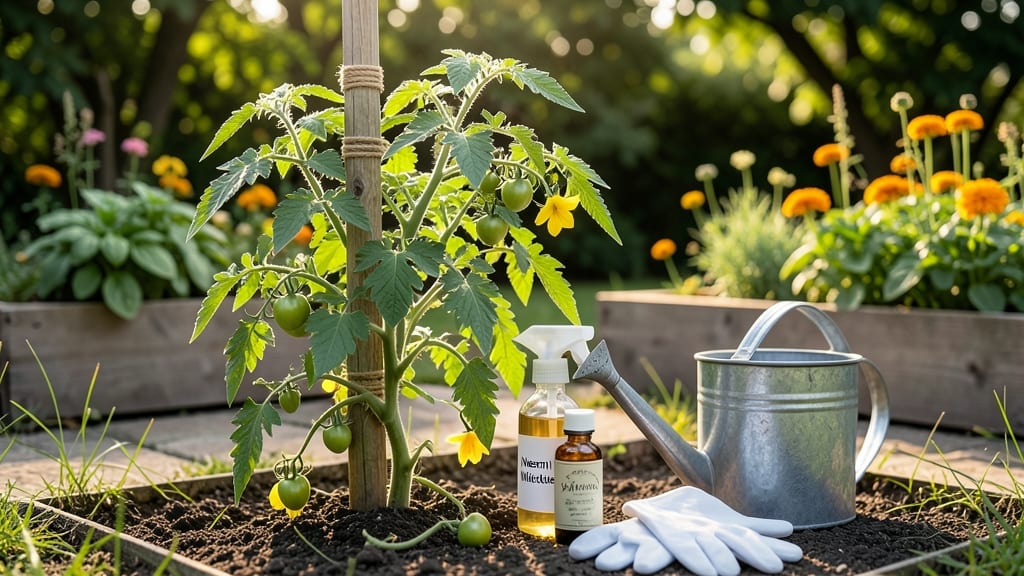
How to use neem oil on tomato plants saved my tomato plants from early blight last summer—in just 24 hours. 🌱 The moment I spotted those first dark spots on the lower leaves, I grabbed the bottle and followed the exact steps I’m sharing here. No more chemical sprays, no more watching your harvest disappear before it ripens.
You’ll need 1 tablespoon of neem oil, 1 teaspoon of mild liquid soap, and 1 quart of water—mix it in a spray bottle, shake well, and apply it early in the morning or late afternoon when the sun isn’t scorching.
Focus on the undersides of leaves and stems, where fungal spores love to hide. Reapply every 7-10 days or after rain, and your plants will stay strong and blight-free.
📚 In This Guide
- What you need
- Instructions
- Tips and common mistakes
- Wrapping up and next steps
What you need
- ● Neem oil (100% pure, cold-pressed): 1–2 tablespoons (30–60 ml) per gallon of water. Look for organic, cold-pressed neem oil with at least 1,000 ppm azadirachtin for best results.
- ● Water: 1 gallon (3.8 liters) of lukewarm or room-temperature water (avoid hot water to preserve neem oil’s potency).
- ● Spray bottle or garden sprayer: A 1–2 gallon pump sprayer (for larger plants) or a 16–32 oz. handheld spray bottle (for smaller containers or seedlings).
- ○ Horticultural oil or liquid soap (optional but recommended): ½ teaspoon (2–3 ml) of mild, plant-safe liquid soap (like Castile soap) to help the neem oil stick to leaves.
- ● Stirring stick or spoon: A wooden or plastic utensil to mix the solution gently.
- ● Protective gear (for safety): Gloves (nitrile or rubber)
- ● Long sleeves and pants (to avoid skin irritation)
- ○ Safety goggles (optional, if spraying near eyes)
- ● Funnel: For precise pouring of neem oil into the sprayer.
- ● pH testing kit: To check water pH (ideal range: 6.0–7.0; neem oil works best in slightly acidic to neutral water).
- ● Fine mesh strainer: To filter out debris if reusing sprayer water.
- ● Label or marker: To tag your sprayer with the date and purpose (e.g., "Neem Oil – Apply Every 7 Days").
- ● Fan or gentle breeze: To speed up drying time after spraying (reduces risk of fungal growth from moisture).
Step-by-step instructions for treating tomato plants with neem oil
Here’s my go-to method for stopping fungal blight fast—no harsh chemicals, just targeted defense.
🌿 Step 1: Choose the Right Neem Oil and Mix It Properly
Use 100% cold-pressed, food-grade neem oil—the refined versions lack the active compounds. Mix 1 tablespoon neem oil with 1 teaspoon mild liquid soap (like Castile) in a quart of warm water. The soap helps the oil cling to plant surfaces. Stir well until fully emulsified.
This ratio works for 4 tomato plants—scale up if you have more. I always shake the bottle before each use because neem oil separates. If you see fungal spots already, add 1 teaspoon baking soda to the mix for extra antifungal power.
💧 Step 2: Apply When Conditions Are Ideal
Wait until early morning or late afternoon when temperatures are between 60-85°F. Avoid spraying in direct sunlight or extreme heat—it burns leaves. Shake the mixture again right before applying.
Use a hose-end sprayer or pump sprayer for even coverage. Focus on undersides of leaves (where fungal spores hide) and stem bases. Lightly mist until the solution runs off the leaves—this ensures full coverage. Don’t skip the soil around the base; fungal spores lurk there too.
⏰ Step 3: Reapply Preventively and Treat Actively
For prevention, spray every 7-10 days during high-risk periods (humid weather, after rain). If you see early signs of blight (yellow spots, brown edges), treat immediately and repeat every 3-4 days until the issue clears.
Neem oil works best as a preventive shield, not a cure-all. If blight is already spreading, combine with copper fungicide for faster results. Always spray in the evening after treatment—this gives the oil time to dry and absorb before nighttime moisture sets in.
☀️ Step 4: Monitor and Adjust for Best Results
Watch for white residue on leaves after spraying—that’s normal and means the oil is working. If new spots appear, increase frequency to every 5 days and check for overhead watering (which spreads spores).
Rotate your spraying pattern weekly so all plant parts get equal treatment. Healthy tomato plants show deep green leaves and no powdery film—if you see either, it’s time to reassess your fungicide approach. Neem oil is safe for all life stages, but always harvest only after 24 hours of treatment.
Tips & tricks for effective neem oil applications on tomato plants
Neem oil is a gardener’s secret weapon against fungal blight, but its effectiveness depends on how you use it. Here’s what I’ve learned after years of battling plant diseases—these details make all the difference.
Ingredient Quality Matters: Never cut corners on the neem oil—only 100% cold-pressed, food-grade oil contains the active compounds called limonoids that fight fungal spores. I’ve ruined batches using refined versions that smelled fine but failed to work. For the 1 tablespoon per quart ratio, measure carefully: too little won’t protect, and too much can stress plants. The 1 teaspoon mild liquid soap is non-negotiable—it acts as an emulsifier so the oil sticks to leaves instead of beading up and running off.
Timing Secret: The 60-85°F temperature window isn’t just arbitrary—it’s when neem oil’s antifungal properties activate most effectively. I’ve seen it fail completely when applied in 90°F+ heat (the oil burns leaves) or below 55°F (it becomes ineffective). Early morning or late afternoon applications also prevent rapid evaporation, giving the oil time to work. Pro tip: If you must spray during peak sun, do it on cloudy days when UV intensity is lower.
Application Technique: When you’re targeting undersides of leaves and stem bases in Step 2, don’t just give them a quick mist—aim for a light, even coating where the solution runs off. I use a pump sprayer because it gives me better control than hose-end sprayers, especially for dense tomato foliage. The key is thoroughness: fungal spores hide in those hard-to-reach spots, and missing them means missed protection. For large plants, consider adding a few drops of horticultural oil (optional) to enhance coverage.
Monitoring and Adjustment: That white residue you see after spraying isn’t a bad sign—it’s proof the oil is working. But if you notice yellowing leaves or brown edges appearing between treatments, increase your frequency to every 5 days (instead of the standard 7-10 days). Also, check your watering habits: overhead irrigation spreads spores like wildfire, so switch to drip irrigation if blight persists. And remember, the 24-hour harvest rule isn’t just safety—it gives any residual oil time to break down completely.
Pro Tips for Use Neem Oil On Tomato Plants
- Neem oil is a gardener’s secret weapon against fungal blight, but its effectiveness depends on how you use it.
- Ingredient Quality Matters: Never cut corners on the neem oil—only 100% cold-pressed, food-grade oil contains the active compounds called limonoids that fight fungal spores.
- Timing Secret: The 60-85°F temperature window isn’t just arbitrary—it’s when neem oil’s antifungal properties activate most effectively.
Frequently asked questions
Got questions about using neem oil on your tomato plants? You're not alone!
Here are the most common queries—plus clear, actionable answers to keep your garden thriving.
How often should I apply neem oil to tomato plants?
Apply neem oil every 7–14 days during active growing seasons (spring to fall) to prevent fungal blight and pests. For severe infestations, treat weekly until symptoms disappear. Always apply in the evening to avoid harming bees and beneficial insects.
Can I use neem oil on tomato plants while they’re flowering or fruiting?
Yes, but with caution! Neem oil is safe for all growth stages, but avoid spraying directly on flowers if bees are active (apply in the evening). For fruiting plants, use a low-concentration spray (1–2%) to minimize residue on tomatoes. Always rinse fruit before eating.
What’s a good alternative if I don’t have neem oil?
Try these organic alternatives:
- Baking soda spray: Mix 1 tbsp baking soda + 1 tsp dish soap + 1 gallon water. Spray on leaves for fungal issues.
- Garlic or chili pepper spray: Blend 2 cloves garlic/chili + 1 tsp soap + 1 quart water. Repel pests naturally.
- Copper fungicide: Effective for blight but use sparingly (follow label instructions).
Why did my tomato leaves turn brown after using neem oil?
Brown spots can happen if:
- You used too much oil (stick to 1–2% concentration).
- It was too hot or sunny (apply in the evening or cloudy days).
- Your plants were already stressed (water deeply before/after treatment).
Does neem oil prevent tomato blight, or just treat it?
Neem oil is both preventive and curative! It disrupts fungal spores (like early blight) and pests before they take hold. For prevention, spray every 2 weeks during humid weather. For treatment, apply immediately at first signs (brown spots, yellowing) and repeat until symptoms fade.
Wrapping up and next steps
Using neem oil on tomato plants is a game-changer for organic gardeners—it’s effective, safe, and budget-friendly! 🌱 By following these steps, you’ll protect your plants from fungal blight, pests, and diseases while promoting healthier growth. Remember, consistency is key, so keep monitoring your tomatoes and reapply as needed.
Now that you’re armed with this natural defense, why not take it a step further? Experiment with companion planting (like basil or marigolds) to boost your tomato’s resilience even more. Happy gardening—your future harvests will thank you! 🍅✨