Container Gardens
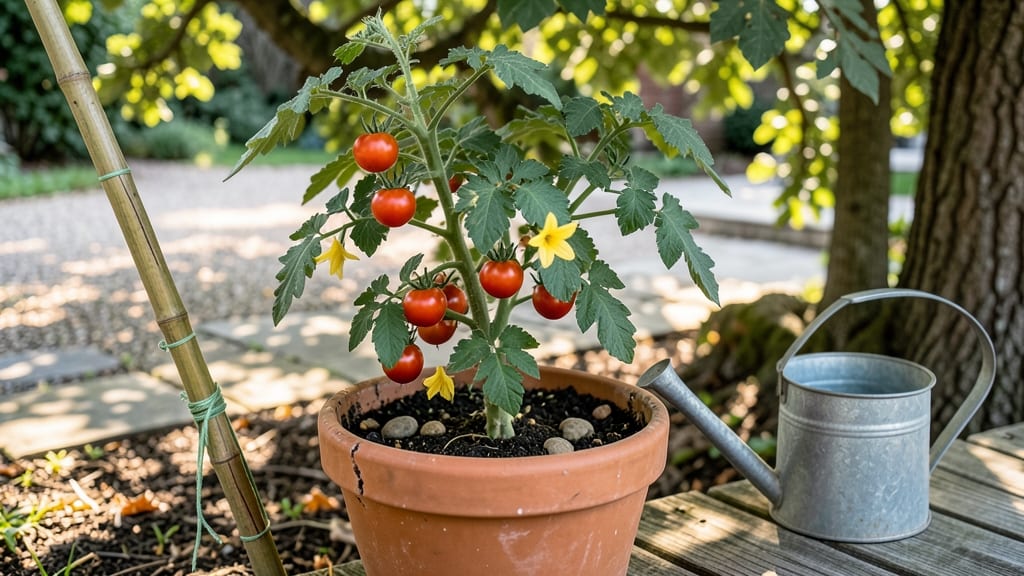
Caring for a potted tomato plant means bursting fruit and thriving vines—even when space is tight. 🌱 I’ve grown tomatoes in 5-gallon pots for years, and the key is mimicking their outdoor needs in a container. Too little light or water, and you’ll get sad, leggy plants.
Too much, and the roots rot before the tomatoes ripen. The difference between a scraggly vine and a productive powerhouse comes down to three things: sunlight, soil, and consistency.
Start with a 5-gallon container (minimum) and well-draining potting mix—regular garden soil compacts and suffocates roots. Place your pot where it gets 6-8 hours of direct sun daily, and water deeply when the top inch of soil feels dry.
Overwatering is the #1 killer of potted tomatoes, so let the soil dry slightly between waterings. A saucer under the pot catches excess water, but empty it after 10 minutes to prevent soggy roots.
By midseason, your plant will reward you with heavy clusters of fruit—if you’ve been fertilizing weekly with a balanced tomato feed. Prune suckers (those little shoots in the leaf axils) to focus energy on fruit production, and stake or cage the plant early to prevent sprawl.
The first ripe tomato tastes like victory after all that effort, and once you see one, you’ll want more.
Even in containers, tomatoes thrive with the right care—just watch for yellow leaves (overwatering) or blossom drop (too much nitrogen). Adjust as you go, and you’ll harvest pounds of sun-ripened tomatoes from a single pot. Here’s how to keep them productive all season long.
📚 In This Guide
- What you need
- Instructions
- Tips and common mistakes
- Wrapping up and next steps
What you need
- ● Container: A pot at least 5 gallons (18+ liters) with drainage holes (bigger is better for indeterminate varieties).
- ● High-quality potting mix: A well-draining, nutrient-rich blend (avoid garden soil). Look for mixes labeled for vegetables or tomatoes.
- ● Tomato plant: Choose a determinate (bush) or indeterminate (vining) variety suited for containers (e.g., ‘Tiny Tim,’ ‘Patio,’ or ‘Micro Tom’).
- ● Support system: For indeterminate varieties: A 5-6 ft tall stake or a cage (5-6 ft tall, 18-24" diameter).
- ● For determinate varieties: A smaller cage or stake (3-4 ft).
- ● Fertilizer: Balanced liquid fertilizer (10-10-10 or 20-20-20) for early growth.
- ● High-phosphorus fertilizer (5-10-10 or 10-20-20) when flowers appear (promotes fruiting).
- ● Mulch: Straw or shredded leaves (2-3 inches) to retain moisture and suppress weeds.
- ● Watering can or hose with a gentle spray nozzle.
- ● Pruning shears or scissors (sterilized with rubbing alcohol).
- ● Self-watering pot or drip irrigation kit for consistent moisture.
- ● Epsom salt (1 tbsp/month) for magnesium boost (prevents yellowing leaves).
- ● Café grounds or compost tea for extra nutrients.
- ● Reflective mulch (e.g., silver plastic) to deter pests.
- ● Grow lights (if indoors or in low-light areas).
Step-by-step instructions for thriving potted tomatoes
Here's how to keep your container-grown tomatoes lush and productive all season long.
🪴 Step 1: Choose the Right Container and Position
Select a pot at least 18-24 inches deep with drainage holes—tomatoes need room for deep roots and won't tolerate soggy feet. I use fabric grow bags because they breathe better than plastic, preventing root rot. Place your pot where it gets 6-8 hours of direct sun daily, ideally near a south-facing wall or under a patio awning.
If your space only gets partial sun, choose compact varieties like 'Tiny Tim' or 'Patio Princess'—they'll produce fruit even with 4-6 hours of sunlight. Watch for leaves curling toward the light; if you see this, rotate the pot a quarter turn weekly so the plant grows evenly instead of lopsided.
☀️ Step 2: Master Watering for Container Tomatoes
Water when the top 2 inches of soil feel dry to touch, but never let the plant sit in standing water. I use a moisture meter to check—it's foolproof. In hot weather, you may need to water daily in the morning to prevent blossom end rot. Use room-temperature water to avoid shocking the roots, and water at the base rather than overhead to prevent disease.
Here's the thing—container tomatoes dry out faster than in-ground plants. If you see wilting leaves by mid-afternoon, it's a sign you're under-watering. Mulch with 2 inches of straw or shredded leaves to retain moisture and keep roots cool. Avoid watering in the evening; wet foliage overnight invites fungal infections.
🌿 Step 3: Feed and Prune for Maximum Fruit Production
Fertilize every 2-3 weeks with a balanced, water-soluble fertilizer (10-10-10) at half-strength. I switch to a tomato-specific formula once flowers appear to boost fruit set. Never fertilize after late July—new growth won't harden off before frost and may not ripen properly. Prune suckers (the small shoots in the leaf axils) regularly to direct energy to fruit production, but leave 3-4 main stems for good airflow.
When the first flowers appear, I give the plant a light pinch of Epsom salt (1 tablespoon per gallon of water) to prevent blossom end rot. Watch for yellowing lower leaves—that's normal as the plant matures, but if it spreads upward, it's a sign of overwatering or nutrient deficiency. Remove any leaves touching the soil to prevent rot and improve air circulation.
✂️ Step 4: Support and Harvest for Continuous Production
Install a sturdy cage or stakes at planting time—tomatoes grow fast, and you don't want to disturb roots later. I use a 5-foot tall tomato tower because it keeps the plant upright and makes harvesting easier. Harvest fruit when it's fully colored but still slightly firm—this encourages new blooms to form. Green tomatoes can ripen indoors in a sunny window.
Real talk: The key to continuous harvests is consistency. Remove spent flowers and fruit clusters to redirect the plant's energy. If you see fruit cracking, it's a sign of uneven watering—stick to a regular schedule. By late summer, you'll have a steady supply of tomatoes, and the plant will keep producing until a hard frost stops it.
Tips & tricks for perfect container-grown tomatoes
Between us, these are the hard-won secrets that'll transform your container tomatoes from struggling survivors to prolific producers.
Sunlight Strategy: That 6-8 hours of direct sun isn't just a suggestion—it's the difference between a thriving vine and a sad, leafy plant with no fruit. I've seen tomatoes in south-facing windows produce just as well as those in full sun, but if your space gets less than 4-6 hours, choose dwarf varieties like 'Tiny Tim' and supplement with a grow light for 12-14 hours daily during cloudy periods. Morning sun is especially critical for preventing blossom end rot.
Root Health Hack: Fabric grow bags might cost more upfront, but they're worth it for container tomatoes. The breathable material prevents root rot that's common in plastic pots, which can trap excess moisture. If you're using plastic, drill extra drainage holes and elevate the pot on feet to improve airflow. I've also had success with ceramic pots, but they dry out faster—water more frequently in those cases.
Watering Wisdom: The top 2 inches dry test works, but here's what nobody tells you: morning watering isn't just about timing—it's about technique. Pour water slowly until it runs out the drainage holes, then let the plant soak up what it needs before adding more. This prevents soggy soil while ensuring deep root hydration. In extreme heat, I split the morning watering into two sessions—once before sunrise and once at mid-morning—to keep roots from overheating.
Fertilizer Timing: That 2-3 week feeding schedule is perfect, but the real magic happens in the transition. When you switch to tomato-specific fertilizer at flowering, mix in ½ teaspoon of bone meal (optional) to boost phosphorus for root development. And here's my secret: I stop fertilizing 2 weeks before expected first frost to let the plant harden off naturally. The last thing you want is tender new growth when cold weather hits.
Pro Tips for Care For A Potted Tomato Plant
- Between us, these are the hard-won secrets that'll transform your container tomatoes from struggling survivors to prolific producers.
- Sunlight Strategy: That 6-8 hours of direct sun isn't just a suggestion—it's the difference between a thriving vine and a sad, leafy plant with no fruit.
- Root Health Hack: Fabric grow bags might cost more upfront, but they're worth it for container tomatoes.
Frequently asked questions
Got questions about keeping your potted tomato plant happy and productive? You’re not alone! Here are answers to the most common concerns—so you can grow juicy, homegrown tomatoes with confidence.
How often should I water my potted tomato plant?
Water your potted tomato plant when the top 1-2 inches of soil feel dry. Containers dry out faster than garden beds, so aim for 1-2 times daily in hot weather (morning is best). Avoid soggy soil—use pots with drainage holes and a saucer to catch excess water. Pro tip: Stick your finger in the soil to check moisture!
When can I expect tomatoes to ripen in a container?
With proper care, potted tomatoes typically ripen 60-85 days after transplanting, depending on the variety. Dwarf or patio varieties (like ‘Tiny Tim’ or ‘Micro Tom’) often fruit faster (45-60 days), while larger types may take longer. Patience pays off! Keep plants in full sun, fertilize regularly, and watch for color changes—green turning pink/red means it’s nearly ready!
How do I protect my potted tomatoes from extreme heat or cold?
Tomatoes thrive in 65–85°F (18–29°C). For heatwaves, move pots to partial shade (especially 12–3 PM) and mulch with straw to retain moisture. In cold snaps (<50°F/10°C), use a frost blanket or bring pots indoors near a sunny window. Avoid sudden temperature swings—consistency is key for fruit set!
What should I do if my potted tomato leaves turn yellow?
Yellow leaves often signal overwatering, underwatering, or nutrient issues. Check the soil: Soggy = root rot (reduce watering); Dry = thirsty plant (water deeply). Yellowing between veins may mean magnesium deficiency—try a foliar spray of Epsom salt (1 tbsp/gal water). Pests like aphids or spider mites can also cause stress; hose off leaves to inspect!
Can I grow tomatoes in a small pot, or do I need a big container?
Tomatoes need at least 5 gallons of soil per plant (bigger is better!). Small pots (<1 gallon) stunt growth and limit fruit production. Opt for 10–15 gallon containers for dwarf varieties or 20+ gallons for larger types. Use a lightweight, well-draining potting mix (avoid garden soil) and consider a cage or trellis to save space!
Bonus Tip:
Need a quick troubleshooting guide? Bookmark this FAQ—or snap a photo of your plant’s symptoms and search “issue potted tomato” for instant solutions!
Wrapping up and next steps
Caring for a potted tomato plant is a rewarding journey that brings fresh, homegrown flavor right to your doorstep! 🌱 With the right balance of sunlight, soil, water, and support, your container-grown tomatoes will thrive and produce abundant fruit.
Start small, stay consistent, and don’t hesitate to experiment—your green thumb will grow with each harvest.
Ready to taste the fruits of your labor? Pick a ripe tomato, slice it up, and savor the sweet victory! 🍅✨ For even more growing tips, explore other container gardening guides or share your progress with fellow plant enthusiasts. Happy gardening!