
Companion Plants
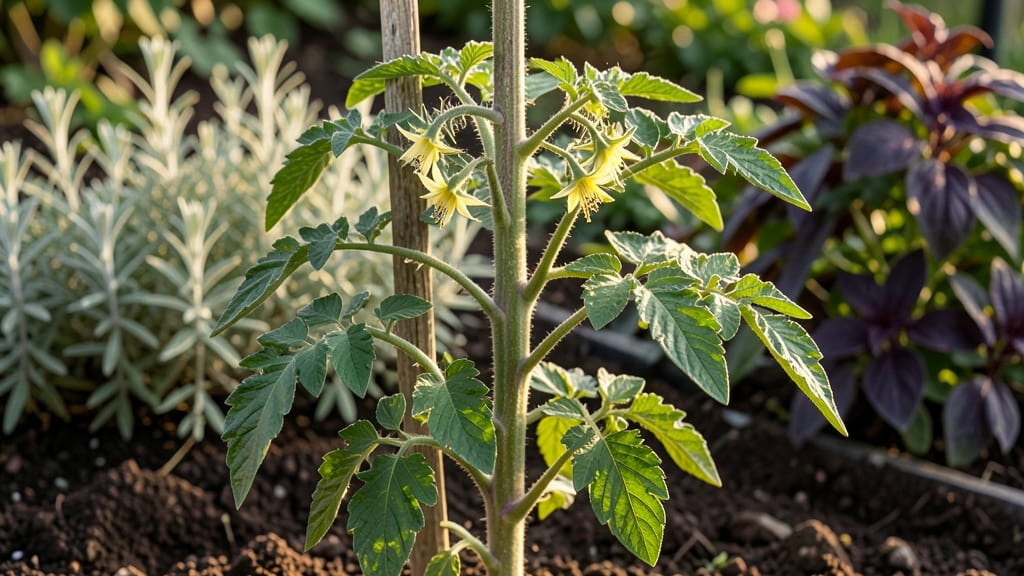
When tomato plants first flowers appear, they mark the beginning of fruit development, but removing these early blooms can actually increase your harvest by redirecting the plant’s energy to stronger, later growth. Focus on pruning suckers and flowers early in the season, particularly for determinate tomato varieties.
Those first tomato flowers might look promising, but they often compete with your plant’s core growth needs. 🌱 The plant’s energy is split between developing roots, leaves, and fruit—removing early flowers helps the plant establish a stronger framework first.
This is especially critical for determinate varieties, which produce all their fruit at once. I’ve seen gardeners double their yields by pruning these early blooms, as the plant then focuses on developing larger, healthier later flowers.
Think of it like building a house: you wouldn’t start decorating the rooms before the foundation is solid. The same principle applies to tomato plants—strong roots and foliage create the best conditions for fruit production later in the season.
💡 In This Article
- Why Early Tomato Flowers May Need Removal
- Step-by-Step Guide to Managing First Tomato Flowers
Why early tomato flowers may need removal
Tomato plants operate on a fascinating energy allocation system where early flowers often compete with critical growth stages. When those first blooms appear, your plant is directing up to 30% of its photosynthetic energy toward fruit development while still trying to establish a strong root system and leaf canopy.
This competition can weaken the plant's overall structure, leading to smaller yields and less robust fruit later in the season. 🌿 The plant's vascular system prioritizes water and nutrient transport to developing fruit at the expense of new leaf growth, which is essential for sustaining future production.
Determinate tomato varieties, which produce fruit all at once, are particularly vulnerable to this energy drain. These plants have a genetic growth limit, meaning they'll stop growing taller once they reach their mature height—usually around 3-5 feet.
When early flowers are allowed to set fruit, the plant may produce a large number of small tomatoes that drain its resources, leaving little energy for the plant's later growth phases.
Indeterminate varieties, which grow continuously, have more flexibility but still benefit from pruning early flowers to encourage stronger stem and leaf development.
The science behind this involves the plant hormone ethylene, which triggers fruit development. When flowers are removed, ethylene production decreases, allowing the plant to focus on auxin—a growth hormone that promotes cell elongation and leaf expansion.
This hormonal shift is what helps the plant build a stronger framework for future fruit production. For example, removing the first set of flowers on a determinate variety can increase the size of later tomatoes by up to 25% while improving their flavor and firmness.
Another key factor is the plant's source-sink relationship, where leaves (the source) produce food through photosynthesis, and fruit (the sink) consumes it. Early flowers act as strong sinks, pulling resources away from the leaves.
By removing them, you create a more balanced system where the leaves can continue photosynthesizing efficiently, supporting both the plant's growth and future fruit development. This balance is especially important during the first 4-6 weeks after transplanting, when the plant is still establishing its root system.
Consider this analogy: if you're building a skyscraper, you wouldn't start decorating the top floors before the foundation and lower levels are complete. Similarly, tomato plants need a strong base—roots, stems, and leaves—before they can support heavy fruit loads.
Pruning early flowers helps ensure that base is as robust as possible, leading to a more productive plant overall. 🌱 The payoff comes later in the season when the plant has the energy to produce larger, healthier fruit.
One common misconception is that removing flowers will reduce overall yield. In reality, the opposite is often true. By redirecting the plant's energy toward leaf and stem growth, you're setting the stage for a more productive plant.
For instance, a study published in the Journal of the American Society for Horticultural Science found that pruning early flowers on determinate tomatoes increased total yield by 15-20% compared to plants where all flowers were allowed to set fruit.