
Fertilization
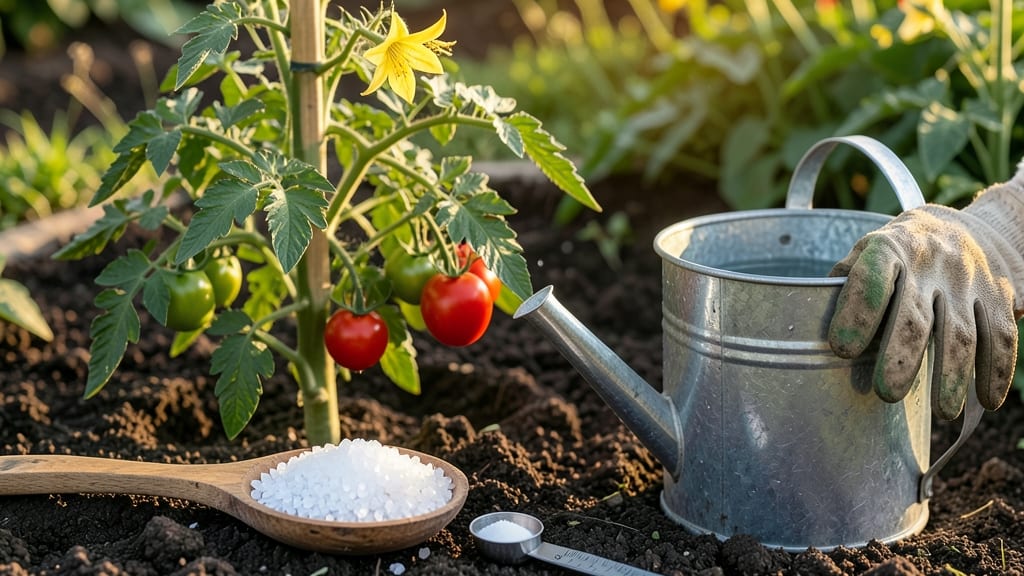
Using 1 tablespoon of Epsom salts per gallon of water for tomato plants is the perfect starting point—but timing and method matter just as much as the amount.
If your 🍅 tomato plants are struggling with weak stems, yellowing leaves, or poor fruit set, magnesium deficiency might be the culprit. The right Epsom salt dose can turn things around, but too much can burn roots or leave a bitter taste in your tomatoes.
Below, I’ll break down exactly how much to use at each growth stage, whether to apply it to the soil or leaves, and how often to repeat it without overdoing it.
Most gardeners apply Epsom salts during flowering and fruiting for the biggest boost, but there’s a right way and a wrong way to do it.
I’ll share the dosage chart that’s worked for thousands of backyard gardeners, plus the warning signs that you’ve given your tomatoes too much of a good thing.
By the end, you’ll know not just how much Epsom salts to use, but when to skip it entirely—because sometimes, the problem isn’t a lack of magnesium at all.
Epsom salt dosage chart for tomato plants by growth stage
Epsom salt—magnesium sulfate—isn't just for soaking sore muscles. For tomato plants, it acts as a magnesium booster that prevents yellowing leaves and improves fruit quality. But the key to success? Precise application based on your plant's growth stage.
Too little won't help, and too much can burn roots or leaves. Let's break down the exact dosages for each phase, from seedling to harvest.
Most gardeners focus on foliar sprays or soil drenches, but the right method depends on your tomato's current needs. Seedlings need gentle support, while flowering plants crave magnesium for blossom and fruit development.
Below, you'll find a stage-by-stage chart comparing both application methods, so you can choose what works best for your garden setup.
Before we dive into the chart, here's a quick tip: Test your soil first. If your soil already has adequate magnesium (pH 6.5-7.0), you might not need Epsom salt at all.
But if you see yellowing between leaf veins—a classic sign of magnesium deficiency—this chart will help you correct it fast.
| Growth Stage | Foliar Spray (per gallon of water) | Soil Drench (per plant) | Frequency | Best Time to Apply |
|---|---|---|---|---|
| Seedlings (1-4 weeks) | 1 teaspoon | ½ teaspoon dissolved in 1 quart water | Every 2 weeks | Early morning (avoid direct sun) |
| Vegetative Growth (4-8 weeks) | 1 tablespoon | 1 teaspoon dissolved in 1 gallon water | Every 3 weeks | Soil: After watering; Foliar: Early morning |
| Flowering Stage | 2 tablespoons | 2 teaspoons dissolved in 1 gallon water | Every 2 weeks | Foliar: Early morning; Soil: Evening |
| Fruiting Stage | 1 tablespoon | 1 teaspoon dissolved in 1 gallon water | Every 3 weeks | Soil: After watering; Foliar: Avoid if rain expected |
| Soil Amendment (Pre-Planting) | N/A | 1 tablespoon per square foot | Once, before planting | Work into top 6 inches of soil |
For container-grown tomatoes, halve the soil drench amounts since pots have limited space. If you're growing heirloom varieties like Brandywine or Cherokee Purple, they often respond well to the higher flowering-stage doses because they produce larger fruit with higher magnesium demands.
Pro tip: Mix Epsom salt with liquid seaweed fertilizer for a nutrient boost that supports both magnesium and overall plant health.
When applying foliar sprays, always use a fine mist sprayer to avoid clogging leaf pores. Spray until leaves are lightly damp but not dripping—think of it like giving your plants a
When and how to apply Epsom salts for best results
Epsom salts—magnesium sulfate—can transform your tomato plants by preventing blossom-end rot and boosting chlorophyll production. But timing and method matter. Apply too much or at the wrong stage, and you’ll stress your plants instead of helping them thrive.
The key is understanding when to use it and how to apply it effectively.
For seedlings, a light application of 1 tablespoon per gallon of water as a foliar spray can strengthen young stems. Once your tomatoes start flowering, switch to a soil drench of 2 tablespoons per foot of plant height to support fruit development.
Each growth stage demands a different approach to avoid overloading your plants with magnesium.
⚠️ Warning: Overuse Can Harm Your Tomatoes
Excess magnesium from Epsom salts can disrupt calcium uptake, worsening blossom-end rot or causing leaf yellowing. Never exceed 3 applications per season or use more than 1 tablespoon per gallon for foliar sprays. Soil drenches should never exceed 2 tablespoons per foot of plant height. Always water thoroughly after applying to prevent salt buildup.
Foliar sprays work best during early morning or late afternoon to prevent leaf burn from sunlight. Mix 1 tablespoon of Epsom salts in 1 gallon of water and spray until leaves are evenly moist.
This method is ideal for preventing magnesium deficiency in young plants or those with yellowing leaves between veins.
For soil drenches, focus on the root zone during flowering and fruiting. Use 2 tablespoons per foot of plant height—so a 3-foot tomato gets 6 tablespoons total.
Apply to moist soil and water deeply afterward. This method supports fruit development but avoid using it more than once every 2 weeks during peak growth.
Heirloom varieties like Brandywine or Cherokee Purple benefit most from Epsom salts due to their high nutrient demands. For cherry tomatoes, halve the dosage to 1 tablespoon per gallon since their smaller size means less magnesium is needed.
Always monitor your plants for signs of overuse, like crispy leaf edges or stunted growth.
If your tomato plants show signs of magnesium deficiency—yellowing leaves with green veins—apply a foliar spray immediately. For preventative care, mix 1 tablespoon per gallon into your watering can every 4-6 weeks during the growing season. Stop applications 6 weeks before harvest to avoid residue in your fruit.