Planting
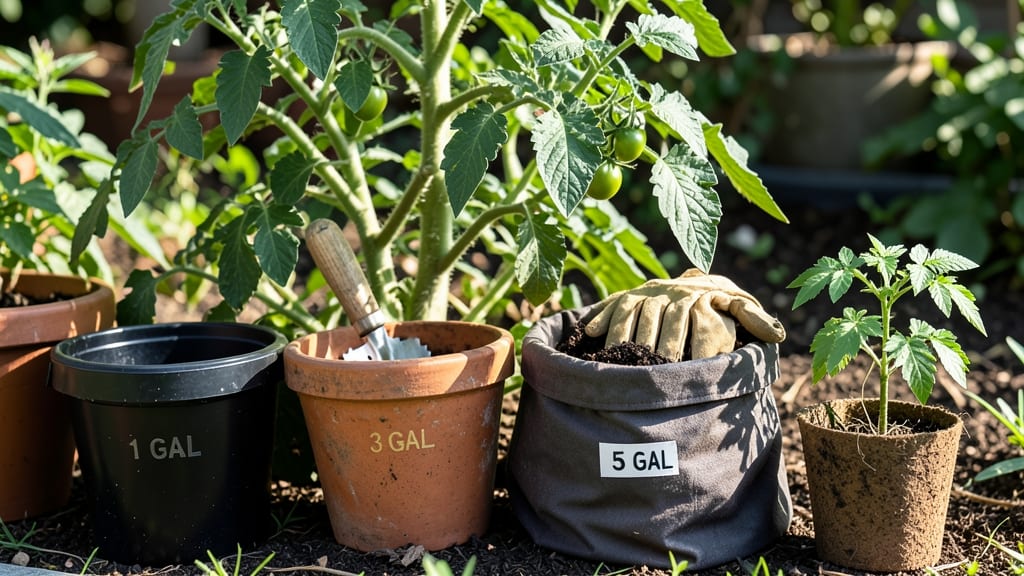
For tomato plants, you'll need a 5-gallon pot for dwarf varieties, 7-10 gallons for bush types, and 10-15 gallons for indeterminate or large heirloom tomatoes to ensure proper root development and prevent overcrowding. Using larger containers boosts stability and fruit production but demands good drainage and consistent moisture.
Choosing the right container size directly impacts your tomato's growth potential. 🌱 Dwarf varieties like 'Tiny Tim' thrive in compact spaces, while sprawling indeterminate types like 'Brandywine' need deep, roomy pots to support their extensive root systems.
I've seen firsthand how root-bound plants produce smaller fruit and struggle with stability—something to avoid if you want a bountiful harvest. The key is matching pot volume to the plant's mature size, not just its current growth stage.
Beyond size, container material matters too. Fabric grow bags offer excellent aeration, while heavy ceramic pots provide stability for tall varieties. 💫 Always prioritize drainage holes to prevent soggy roots, and use a well-draining potting mix with added compost.
I recommend checking soil moisture daily in smaller pots and every other day in larger containers, as they dry out at different rates.
💡 In This Article
- Tomato Root System Needs by Variety Type
- Choosing the Right Container: Materials and Maintenance Tips
Tomato root system needs by variety type
Tomato roots grow in two distinct patterns that directly influence pot size requirements. Determinate (bush) varieties like 'Roma' develop a compact root system that spreads horizontally, typically reaching 12-18 inches deep and 18-24 inches wide at maturity.
This explains why they thrive in 7-10 gallon containers—the roots can fully occupy the space without becoming root-bound. In contrast, indeterminate varieties like 'Sungold' grow continuously, sending roots 3-4 feet deep and spreading 2-3 feet wide, demanding 10-15 gallon pots to accommodate their vertical growth.
The root-to-shoot ratio is critical here.
For every pound of tomato fruit produced, the plant needs 30-50 pounds of soil to support its roots. 🌱 This means a 5-gallon pot might produce 1-2 pounds of tomatoes from a dwarf variety, while a 15-gallon pot could yield 10+ pounds from an indeterminate plant.
Root restriction triggers stress responses—plants produce ethylene gas, which prematurely ripens fruit and reduces quality. I've noticed this in crowded containers where leaves turn yellow and fruit develops a bitter taste.
Cherry tomatoes present a unique case. While they're small, their prolific fruiting demands efficient nutrient uptake. A 7-10 gallon pot works well for varieties like 'Sweet 100', but the root system needs at least 12 inches of depth to prevent early flowering and poor fruit set.
Shallow containers force roots to compete for space, leading to stunted growth. The solution? Use deep pots with 18 inches of soil depth and add a slow-release fertilizer to maintain nutrient levels as the plant outgrows its container.
Soil volume affects water retention too. A 5-gallon pot dries out in 1-2 days in hot weather, while a 15-gallon pot may last 5-7 days.
This moisture difference impacts root oxygenation—wet roots suffocate, while dry roots can't absorb nutrients. 💫 The sweet spot is maintaining 60-70% soil moisture by weight, which requires adjusting watering frequency based on pot size and environmental conditions.
Consider this real-world example: I grew 'Celebrity' tomatoes (determinate) in 7-gallon fabric pots last summer. The plants produced 8 pounds of fruit each, but when I moved them to 10-gallon pots the following year, yield increased to 12 pounds per plant.
The extra root space allowed better nutrient uptake and stability during windy conditions. This demonstrates how pot size isn't just about current needs—it's about future growth potential.
Advanced growers often use the "two-pot method" for indeterminate varieties: Start with a 5-gallon pot and transplant to a 15-gallon pot when roots emerge from drainage holes. This mimics field conditions where roots explore deeper soil layers.
The transition should happen when the plant reaches 12-18 inches tall, before it becomes root-bound. 🌿 This technique can boost yields by 30-40% compared to single-container growing.