
Tools
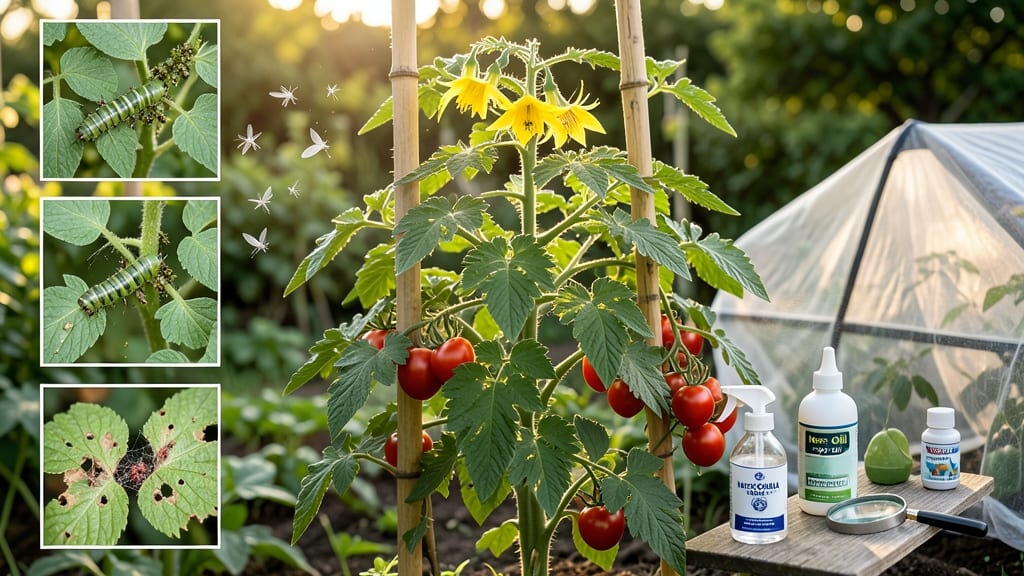
Garden tomato pests can turn your lush plants into a buffet for hungry bugs—unless you act fast. 🌱 I’ve battled hornworms that strip leaves overnight and aphids that turn foliage sticky, but these natural barriers have saved my harvests every season without harsh chemicals.
The key is prevention through diversity: plant basil near tomatoes to repel whiteflies, intersperse marigolds to deter nematodes, and use reflective mulch to confuse flying pests. Even a simple neem oil spray applied weekly keeps spider mites at bay while being safe for bees.
You’ll notice fewer chewed leaves, healthier plants, and tomatoes that stay pest-free longer. The best part? These methods work whether you’re growing in raised beds, containers, or traditional rows. No more losing your entire crop to a single infestation—just healthier plants and a garden that thrives naturally.
Root Causes of Tomato Pest Attacks
Tomatoes are a magnet for pests—not because they’re weak, but because they’re nutrient-rich, tender, and abundant. Understanding why these critters invade your garden is the first step to outsmarting them. Below, we break down the science behind their behavior and how your garden’s conditions may be inviting them in.
Pests like hornworms, fruit flies, and aphids don’t just wander into your garden—they’re drawn by the scent and sight of ripe, soft, or injured tomatoes. Here’s why:
- Volatile organic compounds (VOCs): Overripe tomatoes release ethylene gas and other chemical signals that pests detect from miles away. Think of it like a dinner bell for insects.
- Easy access: Cracked or bruised fruit offers pests an unobstructed entry point to lay eggs or feast. A single hole can turn a tomato into a breeding ground.
- Sugar and moisture: Ripe tomatoes are packed with simple sugars and high water content, making them a high-calorie snack for insects and even small mammals like raccoons.
Actionable insight: Harvest tomatoes as soon as they’re ripe (even if slightly underripe) and remove fallen or damaged fruit immediately. Pests will bypass a garden that doesn’t offer easy meals.
Thick, unmanaged tomato plants create the perfect microclimate for pests to thrive. Here’s how:
- Humidity traps: Dense leaves hold moisture longer, creating damp conditions that fungi (like early blight) and soft-bodied pests (e.g., whiteflies) love. High humidity also slows down beneficial predators like ladybugs.
- Shade and shelter: Overgrown plants provide cover from birds, lizards, and other natural enemies of pests. Hornworms, for example, blend seamlessly into leafy stems.
- Root stress: Crowded plants compete for nutrients and water, weakening their defenses. Stressed plants emit stress signals (like jasmonic acid) that attract pests looking for easy prey.
Actionable insight: Prune plants to allow airflow (aim for 12–18 inches between stems) and stake or cage them to reduce hiding spots. Pro tip:💡 Mulch with straw or grass clippings (not plastic) to retain moisture without creating pest-friendly humidity.
Tomatoes are susceptible to pests when their chemical defenses are compromised. Here’s how imbalances open the door:
| Cause | Pest Response | Why It Happens |
|---|---|---|
| Nitrogen excess (e.g., over-fertilizing) | Aphids, whiteflies, and spider mites explode in numbers | Too much nitrogen = soft, fast-growing leaves that pests find irresistible. It also dilutes the plant’s natural defensive compounds like alkaloids. |
| Phosphorus deficiency (e.g., poor root health) | Root-knot nematodes and cutworms target weakened roots | Phosphorus helps plants develop strong root systems and stress-resistant enzymes. Without it, roots become an all-you-can-eat buffet. |
| Potassium deficiency (e.g., dry soil, poor drainage) | Blossom-end rot attracts fruit flies and maggots | Potassium regulates cell turgor pressure (keeping fruit firm) and boosts disease resistance. Deficient plants wilt and crack, inviting pests. |
Actionable insight: Test your soil and balance nutrients with compost or organic fertilizers. Avoid synthetic nitrogen spikes—opt for slow-release options like worm castings or bone meal.
Pests don’t attack randomly—they follow seasonal cues and weather patterns. Here’s how timing and climate play a role:
- Warm nights + high humidity: Ideal for hornworms and beetles, which thrive in temperatures above 75°F. Their eggs hatch faster, and their larvae grow voraciously.
- Drought stress: Dry soil triggers tomato plants to produce more sugars in leaves (a survival mechanism), making them sweeter—and more appealing—to pests like stink bugs.
- Early planting: Seedlings planted too soon (before last frost) are vulnerable to cutworms and flea beetles, which target tender young shoots.
- Late-season fruit: Tomatoes ripening in fall attract fruit flies and birds because cooler temps slow their natural defenses.
Actionable insight: Use row covers in early spring to protect seedlings, and mulch heavily to retain moisture. Time harvests to avoid peak pest seasons—pick early if flies are swarming!
Key takeaway: Pests exploit weaknesses—whether it’s nutritional, structural, or environmental. By addressing these root causes, you’re not just treating symptoms; you’re removing the invitation.
Quick Fixes for Common Tomato Troubles
When pests crash your tomato party, don’t panic—just act fast with these targeted fixes. Below, we match the most common troublemakers to simple, effective solutions, plus prevention tips to keep your plants thriving. Think of it as a pest-fighting toolkit: spray, trap, or tweak your garden’s defenses in minutes.
Fix: Handpick or use BT (Bacillus thuringiensis)—a natural bacteria that kills caterpillars without harming bees or humans.How to do it:
- 🔥 Morning patrol: Check leaves daily (they’re fast!). Drop hornworms into soapy water.
- 🍳 BT spray: Mix 1 tsp BT powder per quart of water, spray on leaves (reapply after rain).
- 👨🍳 Attract predators: Plant dill or fennel nearby to lure parasitic wasps—nature’s pest control.
Prevent:
- 💡 Row covers: Use lightweight fabric over seedlings to block eggs.
- 🌡️ Plant timing: Avoid late summer plantings (peak hornworm season).
How to do it:
- 🔥 Pressure wash: Spray plants with a strong stream of water (aphids can’t swim!).
- 🥘 Soap spray: Mix 1 tbsp mild dish soap + 1 quart water, spray directly.
- 🔪 Neem oil: Spray diluted neem oil (1 tsp/quart water) to disrupt their life cycle.
- 🎯 Ladybug hotel: Buy ladybugs online or release them at dusk (they’re nocturnal hunters).
Prevent:
- ✨ Diverse plants: Aphids hate marigolds and basil—plant them nearby.
- 🌿 Healthy soil: Strong plants resist pests better (add compost!).
How to do it:
- 🍺 Beer traps: Bury a shallow dish filled with beer near plants. Slugs crawl in and drown (gross but effective!).
- 🔪 Copper tape: Wrap copper ribbon around pots—it gives them a mild electric shock (they hate it!).
- 🌙 Salt barriers: Sprinkle diatomaceous earth (food-grade) around plants (reapply after rain).
Prevent:
- 💡 Mulch alternatives: Use pine needles or gravel instead of organic mulch (slugs love damp leaves).
- 🌡️ Water wisely: Water in the morning so soil dries by night (slugs need moisture).
How to do it:
- 🎯 Sticky traps: Hang yellow cards coated with sticky glue under leaves (they’re attracted to yellow).
- 🥘 Kaolin clay: Spray Surround WP (a mineral clay) to coat leaves—it disrupts their feeding.
- 🔥 Neem oil: Spray undersides of leaves (where they hide) every 5–7 days.
Prevent:
- 🌿 Reflective mulch: Use aluminum foil or silver plastic mulch to confuse their flight patterns.
- 💡 Avoid overwatering: Whiteflies love damp, crowded plants.
How to do it:
- 📊 Epsom salt soak: Mix 1 tbsp Epsom salt (magnesium sulfate) per gallon of water, soak roots weekly.
- 🥗 Crushed eggshells: Sprinkle around plants for a slow-release calcium boost.
- ⏰ Water schedule: Keep soil consistently moist (not soggy) to prevent calcium uptake issues.
Prevent:
- 🌡️ Mulch well: Retain moisture without waterlogging.
- ✨ Test soil: Add lime if your soil is acidic (pH 6.0–6.8 is ideal).
Pro Tip: Rotate your fixes! Pests build resistance, so switch methods every 1–2 weeks (e.g., soap spray → neem oil → ladybugs). And always check the undersides of leaves—that’s where the sneaky ones hide. 🕵️♂️
Frequently asked questions
What are the most destructive pests for garden tomatoes?
Hornworms, aphids, and whiteflies are the top troublemakers. Hornworms devour leaves overnight, while aphids cluster on stems and spread viruses. Whiteflies thrive on undersides of leaves, causing sticky residue. Spider mites and slugs also wreak havoc—especially in humid conditions.
Can I use neem oil on ripe tomatoes?
Yes, but with caution! Dilute neem oil properly (1 tsp per quart of water) and apply it only to leaves, avoiding direct contact with ripe fruit. Harvest any treated tomatoes within 24 hours to prevent bitter flavors. Always test a small area first.
How do I know if my tomato plants have pests I can't see?
Look for these clues: Sticky residue on leaves (aphids/whiteflies), tiny holes in foliage (leaf miners), or yellowing edges (spider mites). Shake plants over white paper—tiny insects or webbing may appear. Check undersides of leaves and stems first.
Are there any companion plants that actually work against pests?
Plant basil near tomatoes to repel whiteflies and thrips, or add marigolds to deter nematodes and aphids. Nasturtiums attract aphids away from your tomatoes, while dill or fennel attract parasitic wasps that hunt hornworms naturally.
Will my tomato plants recover if I remove all the pests?
It depends on the damage. If pests attacked early (seedlings), recovery may be slow. However, healthy plants often bounce back within 2-3 weeks if you remove all pests, improve airflow, and provide proper nutrients. Prune damaged leaves to redirect energy to new growth.