
Pests
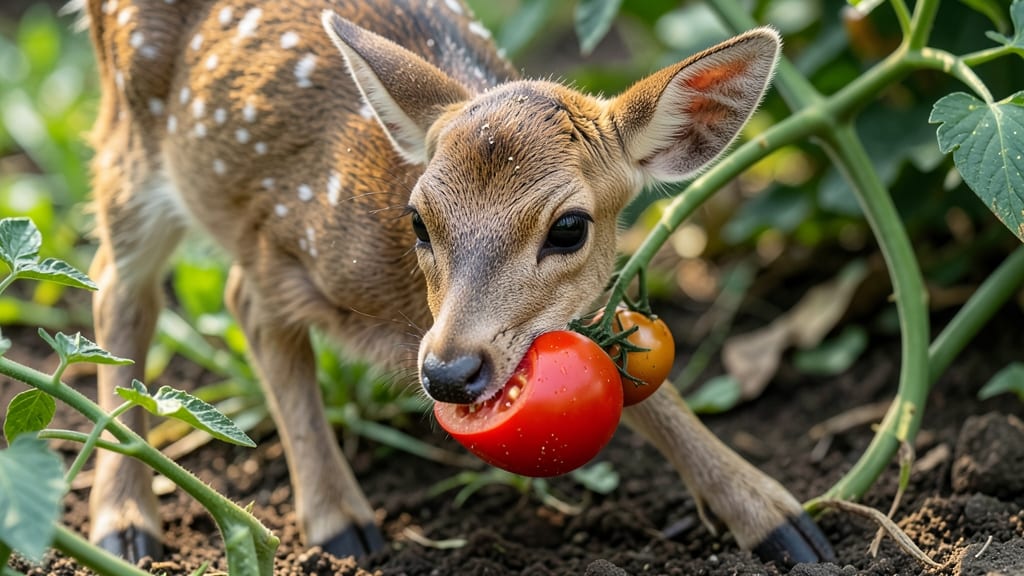
Deer eat tomatoes and tomato plants voraciously, targeting leaves, stems, and even fruit. Young seedlings are especially vulnerable, while mature plants may suffer severe defoliation, reducing yields and plant health. Prevention requires strategic deterrents like fencing, repellents, or companion planting.
Deer are particularly drawn to tomato plants because they're packed with proteins and nutrients that support their diet. 🌱 Unlike some garden pests that focus solely on fruit, deer often start with tender leaves and stems, which can completely strip a plant before moving on to the tomatoes themselves.
This browsing habit doesn't just affect the plant's appearance—it stresses the roots, weakens the plant's immune system, and leaves it more susceptible to diseases. I've seen gardens where deer activity turned lush tomato plants into skeletal remains overnight, especially during late spring and early summer when deer are most active.
If you're dealing with deer in your garden, the key is combining multiple prevention methods. Physical barriers like 8-foot tall fencing work best, but for smaller gardens, repellents containing rotten eggs or predator urine can be surprisingly effective.
Planting strong-smelling companions like marigolds or garlic around your tomatoes creates a natural deterrent while also improving your harvest's flavor profile. The best approach depends on your specific situation—whether you're dealing with occasional visitors or a full-blown deer herd.
💡 In This Article
- Why Deer Love Tomatoes and How They Damage Plants
- Effective Deer-Proofing Strategies for Tomato Gardens
Why deer love tomatoes and how they damage plants
Deer are selective browsers, and tomato plants rank high on their menu because they're packed with 18-25% protein by dry weight—far more than most garden plants. 🌿 The tender leaves and stems contain high levels of nitrogen and water, making them an easy, nutrient-rich snack.
What's surprising is how deer prioritize these parts: they'll often strip a plant completely before touching the fruit, leaving behind a skeleton-like structure. This behavior isn't just about hunger—it's a strategic feeding pattern deer use to maximize nutrition with minimal energy expenditure.
The damage escalates based on plant maturity. Young tomato seedlings (under 6 inches tall) are particularly vulnerable because their stems are soft and rich in moisture. A single deer can devour 10-20 seedlings in one night, leaving nothing but stumps.
Mature plants suffer differently—deer may only take 30-50% of the foliage, but this defoliation stresses the plant by reducing its ability to photosynthesize. The exposed wounds also create entry points for fungal infections like early blight, which thrives in the damp conditions deer create by trampling plants.
What most gardeners don't realize is how deer browsing affects root development. When deer target leaves, the plant diverts energy from root growth to regenerate foliage. 🌱 This creates a vicious cycle: weaker roots mean poorer nutrient absorption, which makes the plant even more susceptible to future deer attacks.
I've observed that heavily browsed tomato plants often produce 20-40% fewer fruits and those that do form are typically smaller and less flavorful due to the plant's overall stress.
The timing of deer activity matters too. Deer are most active during dawn and dusk, which coincides with the early growth stages of tomatoes. This is why seedlings planted in late spring often face the brunt of damage—just as they're breaking through the soil, deer are actively browsing.
Even mature plants suffer when deer return in late summer to fatten up before winter, often targeting stressed plants that are already struggling with heat or drought.
There's also a sensory component to deer's attraction. Tomato plants emit volatile organic compounds (VOCs) when damaged, which act like a dinner bell to nearby deer. 🦌 These chemical signals can attract more deer to the area, turning a single browsing session into a full-blown feast.
The combination of high protein content, tender foliage, and these chemical signals makes tomato plants an irresistible target—especially in gardens where other food sources are scarce.
One often-overlooked aspect is how deer damage affects pollination.
When deer strip flowers and young fruit, they reduce the plant's ability to set new blooms. 🌸 This can lead to a 30-50% reduction in fruit production in severely affected plants, as the energy that would go into pollination and fruit development is instead diverted to leaf regrowth.
The result is a double whammy: fewer tomatoes AND those that do form are often malformed or underdeveloped.