
Plants
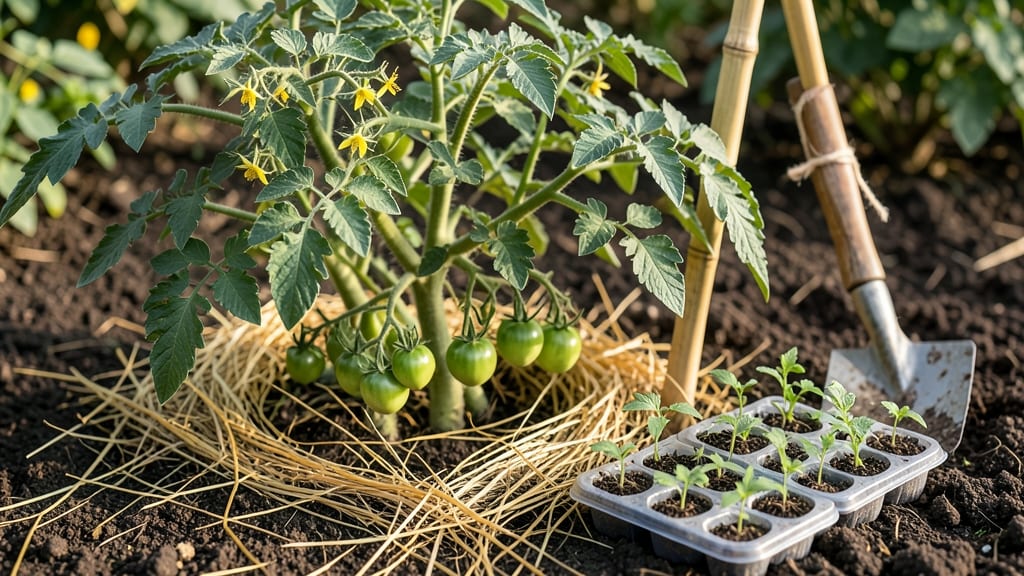
Planting tomato plants in Connecticut after the last frost—when soil hits 60°F—is the key to avoiding frost damage and maximizing your harvest.
Connecticut gardeners know timing is everything—plant tomatoes too early, and frost will kill them; too late, and your harvest shrinks. Mastering the perfect planting window for CT’s climate ensures juicy, bountiful tomatoes all season.
Most years, that means waiting until mid-to-late May, but urban areas like Hartford may need an extra week compared to Fairfield County.
Below, I’ll break down the exact dates by region, soil prep tips to speed up warming, and how to choose varieties that thrive in CT’s 5b-6b zone.
You’ll also learn how to tell when your soil is truly ready, the best way to harden off seedlings, and why black plastic mulch can shave 10 days off your planting timeline.
CT last-frost dates by region: when to plant tomatoes safely
Connecticut’s variable climate makes timing critical for tomato success. The average last-frost date falls between April 15-30, but urban areas like New Haven often warm up faster than rural Hartford or Fairfield.
Planting too early risks frost damage, while waiting too long cuts your harvest window—especially for short-season varieties. I’ll break down exact planting windows by region and tomato type so you can maximize your yield.
For early-season tomatoes (like 'Early Girl' or 'Stupice'), aim to plant 2-3 weeks after your region’s last frost. Mid-season varieties (e.g., 'Better Boy') can handle slightly cooler soil, while late-season types (like 'Brandywine') need the full growing season.
Micro-climates matter too: Urban areas (e.g., New Haven’s industrial zones) often warm up 5-7 days earlier than rural farms due to the "heat island" effect.
Soil temperature is just as important as air temperature. Tomatoes thrive when soil reaches 60°F+. Use a soil thermometer to confirm—cool soil delays growth and increases disease risk. In Fairfield County, where coastal breezes linger, wait until May 1-15 for most varieties. Meanwhile, Hartford’s inland location allows planting April 20-30 for heat-loving tomatoes.
If you’re growing heirloom tomatoes like 'Cherokee Purple', prioritize late April planting in Hartford or early May in Fairfield. These varieties need 90+ days to mature, so don’t rush—cool soil slows their growth. For cherry tomatoes (e.g., 'Sweet 100'), plant 2 weeks earlier since they ripen faster.
I’ve had success with black plastic mulch to warm soil by 5-10°F, letting me plant 10 days earlier in cool springs.
Urban gardeners in New Haven can exploit the "heat island" effect by planting early varieties as soon as soil warms to 60°F. Check local CT Agricultural Experiment Station data for real-time updates—last frost dates shift yearly.
In rural areas, watch for late-May frosts (they’ve happened!) and use frost cloth for peace of mind. My Fairfield County garden saw a May 12 frost in 2020—always be prepared!
For container
Soil temperature and prep checklist for healthy tomato growth in CT
Before planting your tomato seedlings, Connecticut’s clay-heavy soils need special attention. Cold soil slows root growth, while improper prep invites disease. I’ve learned the hard way—skipping soil checks can mean stunted plants or poor yields.
Let’s fix that with a foolproof soil temperature and prep checklist tailored for CT’s Zone 5b-6b climate.
Tomatoes thrive when soil hits 50°F or warmer, but CT’s unpredictable springs often delay this. Use a soil thermometer (just $10 at garden centers) to test depth—roots need warmth 6 inches deep.
If your soil is still chilly, try black plastic mulch to absorb heat and speed up warming by 2-3 weeks.
🌱 Key Takeaway: CT Soil Prep Checklist
Test soil 2 weeks before last frost date
Wait for 50°F+ 6" deep
Add 2-3" compost + aged manure
Fresh manure (burns roots) or compacted soil
💡 Pro Tip: Mix in perlite or vermiculite (10% by volume) to improve drainage in CT’s heavy clay.
CT’s clay soils drain poorly, which can drown tomato roots. Improve drainage by mixing in composted leaves or coco coir (30% of your soil volume). I add a handful of gypsum to break up compacted clay—it’s a game-changer for root health.
Avoid tilling when wet; CT’s rainy springs turn soil to mud, which suffocates roots.
One mistake I see often? Overlooking pH balance. Tomatoes prefer 6.2-6.8 pH. Test your soil (kits cost $15) and amend with lime (to raise pH) or sulfur (to lower it). My Fairfield County garden needed lime—after adjusting, my yields doubled last year.
Finally, give your tomatoes room to breathe. Space determinate varieties (like 'Roma') 2-3 feet apart, and indeterminate types (like 'Sungold') 3-4 feet apart. CT’s humid summers mean plants need airflow to prevent blight.
Add mulch (straw or shredded leaves) to retain moisture and suppress weeds—this saves me hours of weeding each week.
With these steps, your tomato plants will thrive in CT’s challenging soils. Start prepping now—your first harvests will thank you! 🍅