
Companion Plants
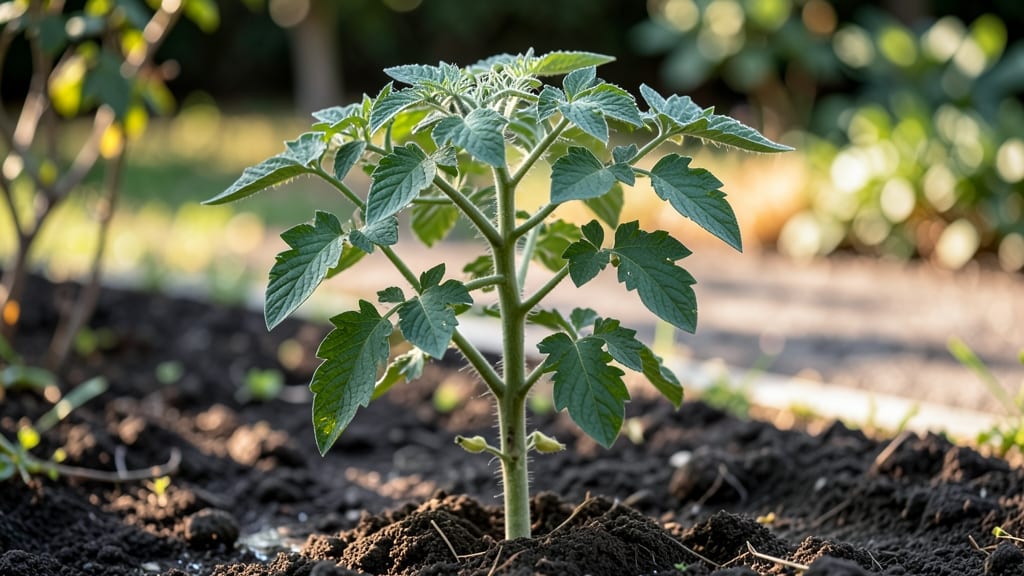
Young tomato plants start with serrated leaves that look like tiny fern fronds—nothing like the glossy foliage of weeds. 🌱 I’ve spent years comparing them to dandelions and purslane, and the key difference is those jagged edges and the way the stems grow upright (not sprawling).
The first true leaves appear after the initial seed leaves drop, and healthy seedlings have a sturdy stem with no yellowing. The V-shaped leaflets (not rounded like basil) are your best clue. Hold a seedling up to light—you’ll see the veins branching out like a spiderweb.
Weak stems or purple-tinged leaves mean they need more light, while thick, dark-green growth signals strong, transplant-ready plants. This is where most gardeners trip up: mistaking them for other greens. Once you spot these traits, harden them off for 7–10 days before planting.
Start with 2–3 hours of sun daily, then gradually increase exposure. The payoff? Stocky plants that outperform store-bought seedlings by weeks. Compare your finds to photos if you’re unsure—tomato leaves are unmistakable once you know what to look for.
Weeds and volunteer tomatoes (like those from fallen fruit) often have smooth or lobed leaves, while tomato seedlings grow in a compact, bushy shape. If you’re still unsure, check the stem: tomato stems are hairy and square (not round like peppers).
Early care is simple—just keep soil moist but not soggy, and avoid overcrowding.
Understanding Young Tomato Growth
Young tomato plants can look wildly different depending on their age, variety, and growing conditions. If you're expecting lush green leaves and sturdy stems but seeing something else—like leggy sprouts, oddly shaped foliage, or slow growth—there’s usually a clear reason behind it.
Let’s break down the why behind these variations, so you can troubleshoot and nurture your plants like a pro.
Tomatoes are sun-worshippers—they crave at least 6 to 8 hours of direct sunlight daily. When young plants don’t get enough light, they stretch and grow tall (a phenomenon called etiolation) in an attempt to reach the sun. Here’s what happens in their leaves and stems:
- Leggy, weak stems: They become thin, spindly, and prone to snapping under their own weight.
- Pale, yellowish leaves: Chlorophyll production drops, leading to chlorosis (yellowing between veins).
- Slow, sparse foliage: Leaves grow larger but fewer in number, and they may appear thin and papery.
Why it happens: Light triggers photosynthesis, which fuels growth. Without enough sunlight, plants prioritize stem elongation over leaf development. This wastes energy and makes them vulnerable to pests and diseases.
Actionable fix: ✅ Move plants to a sunnier spot immediately. ✅ Use grow lights (12–16 hours/day) if indoors or in shady areas. ✅ Prune leggy stems to encourage bushier growth (but avoid cutting more than ⅓ of the plant at once).
Tomatoes are sensitive to moisture extremes, and both overdoing it and neglecting water can drastically alter their appearance.
Overwatering:
- Yellow, mushy leaves: Excess water suffocates roots, cutting off oxygen and causing root rot.
- Wilting despite wet soil: Roots can’t absorb water efficiently, leading to nutrient starvation.
- Stunted growth: Energy is diverted to survival instead of leaf/stem development.
Underwatering:
- Dry, crispy leaf edges: Cells lose turgor pressure, causing browning and curling.
- Small, tough leaves: The plant conserves water by producing fewer, thicker leaves.
- Stems may appear woody or brittle: Lack of water weakens cell structure.
Why it happens: Water regulates cell turgor (firmness) and nutrient transport. Too much or too little disrupts these processes, forcing the plant to adapt in unhealthy ways.
Actionable fix: 💧 Check soil moisture 1–2 inches deep before watering (stick your finger in—it should feel damp, not soggy or dry). 💧 Water deeply but infrequently (1–1.5 inches per week, depending on climate). 💧 Improve drainage with perlite or raised beds if your soil holds too much water.
Tomatoes thrive in warmth (70–85°F during the day, 55–65°F at night). Extreme heat or cold throws their growth off balance.
Cold Stress (Below 50°F):
- Purple or reddish stems/leaves: Anthocyanin pigments develop as a protective response to cold.
- Slow, stunted growth: Enzymes that drive growth slow down or shut off.
- Leaf curling or puckering: Cells struggle to maintain structure in chilly conditions.
Heat Stress (Above 90°F):
- Yellowing leaves with brown edges: Heat accelerates transpiration, drying out leaf tissues.
- Small, cupped leaves: The plant tries to reduce surface area to conserve water.
- Blossom drop: Even if leaves look okay, high temps can prevent fruit set.
Why it happens: Temperature affects enzyme activity in plants. Cold slows metabolism, while heat denatures proteins (like those in chlorophyll), disrupting normal growth patterns.
Actionable fix: 🌡️ Use shade cloth (30–50% coverage) during extreme heat. 🌡️ Mulch heavily to regulate soil temperature (straw or black plastic works well). 🌡️ Avoid planting too early—wait until soil is consistently above 60°F.
Tomatoes are heavy feeders, and deficiencies show up fast in young plants. Here’s how common nutrient issues alter their appearance:
| Nutrient | Deficiency Signs | Why It Happens |
|---|---|---|
| Nitrogen (N) | Pale yellow leaves (older leaves first), stunted growth | N is crucial for chlorophyll and leaf expansion. Lack of it halts protein synthesis. |
| Phosphorus (P) | Dark green/purple stems and leaves, weak roots | P helps energy transfer in cells. Deficiency stalls growth and root development. |
| Potassium (K) | Yellowing leaf edges (like "scorched" tips), weak stems | K regulates water and nutrient movement. Without it, cells can’t maintain turgor. |
| Magnesium (Mg) | Interveinal chlorosis (yellow between veins, starting on older leaves) | Mg is central to chlorophyll. Deficiency disrupts photosynthesis. |
Why it happens: Soil composition, pH, or poor fertilization can lock out nutrients. For example:
- High soil pH (>7.0) reduces iron and manganese availability, causing yellowing.
- Over-fertilizing with nitrogen can burn roots, leading to stunted growth.
Actionable fix: 📊 Test your soil (kits are cheap and available at garden centers). 📊 Amend with compost for balanced nutrients. 📊 Use a tomato-specific fertilizer (high in P and K early on, shift to N later).
Even young tomato plants can fall victim to sap-sucking insects or fungal/bacterial infections, altering their appearance before you notice the real problem.
Common Culprits:
- Aphids/Whiteflies: Leaves curl, yellow, and stick together (due to honeydew secretion).
- Spider Mites: Bronzing or stippling on leaves (tiny yellow dots from feeding).
- Fungal Diseases (Early Blight, Powdery Mildew): Dark spots, white powdery growth, or leaf drop.
- Bacterial Spot: Water-soaked lesions that turn brown/yellow and spread rapidly.
Why it happens: Pests drain nutrients and damage cell structures, while diseases clog stomata (pores) or disrupt cellular function. The plant’s immune response (like curling leaves) is often a last-ditch effort to limit damage.
Actionable fix: 🛡️ Inspect leaves daily (especially undersides) for early signs. 🛡️ Spray with neem oil or insecticidal soap for pests. 🛡️ Remove infected leaves and rotate crops to prevent soil-borne diseases.
Not all tomato leaves look the same—some varieties are just built differently! If your young plant has:
- Deeply lobed leaves (like ‘Brandywine’),
- Hairy stems (common in heirlooms),
- Narrow, serrated leaves (like ‘Cherry Tomatoes’),
…it’s likely genetic, not a problem. Hybrid vs. heirloom also plays a role:
- Hybrids often grow faster and bushier with darker green leaves.
- Heirlooms may take longer to mature and have more variation in leaf shape.
Why it happens: Tomato varieties are bred for different traits—some prioritize disease resistance, others fruit size or flavor. Leaf structure is often a trade-off for these traits.
Actionable fix: 📖 Research your variety before planting to know what “normal” looks like. 📖 Compare to seed packet images—if your plant matches, it’s just tomato genetics!
How to Fix Common Tomato Plant Issues
Got your young tomato plants looking a little off? Don’t worry—most problems have simple fixes! Below, we’ll match common issues with practical solutions, so you can get your plants thriving in no time. 🌱💚
Cause: Too much shade, poor air circulation, or overcrowded seedlings. Fix:
- Thin seedlings 🔪: Use clean scissors or your fingers to snip or gently pull out weaker seedlings, leaving only the strongest ones (about 12–18 inches apart).
- Boost light 🌞: Move seedlings to a sunny spot (6+ hours of direct sunlight) or use a grow light 12–16 inches above them.
- Hardening off 🌡️: Before transplanting, gradually expose seedlings to outdoor conditions over 7–10 days to toughen them up.
Prevention:
- Start with well-spaced seeds or use seedling trays with individual cells.
- Rotate trays occasionally for even light exposure.
Cause: Overwatering, underwatering, or nutrient deficiencies. Fix:
- Check soil moisture 💧: Stick your finger 1–2 inches into the soil. If it’s soggy, reduce watering; if dry, water deeply but avoid puddles.
- Adjust watering habits 📅: Water early in the morning and ensure pots have drainage holes.
- Fertilize properly 🌿: Use a balanced fertilizer (like 10-10-10) every 2–3 weeks, but dilute it to half-strength for young plants.
Prevention:
- Use well-draining soil mix (add perlite or vermiculite).
- Mulch around seedlings to retain moisture and regulate temperature.
Cause: Weak plants attract pests, or outdoor plants get infested. Fix:
- Spray with soapy water 🧼: Mix 1 tsp mild dish soap with 1 quart water and spray directly on pests (test on a few leaves first).
- Introduce beneficial insects 🐞: Ladybugs or lacewings eat aphids naturally.
- Neem oil treatment 🌿: Spray a diluted neem oil solution (1 tsp per quart of water) every 5–7 days for severe infestations.
Prevention:
- Inspect new plants before bringing them indoors.
- Encourage healthy growth with proper sunlight and water to make plants less appealing to pests.
Cause: Sudden temperature spikes or intense afternoon sun. Fix:
- Provide shade cloth ☀️: Use 30–50% shade cloth during peak sun hours (11 AM–3 PM).
- Water deeply 💦: Keep soil consistently moist but not waterlogged.
- Transplant carefully 🌱: If moving plants outside, acclimate them gradually over a week.
Prevention:
- Choose heat-tolerant tomato varieties (like ‘Solar Fire’ or ‘Heatmaster’).
- Use reflective mulch (like aluminum foil) to reduce soil heat.
Cause: Poor soil nutrients, root-bound seedlings, or transplant shock. Fix:
- Repot if needed 🏺: If roots are circling the pot, transplant to a larger container with fresh potting mix.
- Fertilize with compost tea 🌱: Add worm castings or compost to the soil for a nutrient boost.
- Check for root rot 🚨: If stems feel mushy, trim affected roots and repot in fresh, dry soil.
Prevention:
- Use nutrient-rich soil with compost or aged manure.
- Avoid over-fertilizing, which can burn young roots.
Pro Tip: 💡 Always wear gloves when handling plants to avoid spreading diseases or pests! Keep your workspace clean, and sterilize tools between uses.
Frequently asked questions about young tomato plants
How can I tell if my tomato seedling is healthy or struggling?
Healthy young tomato plants have dark green, serrated leaves that grow in a V-shape (not rounded like basil). The stems should be sturdy and upright, not leggy or purple-tinged. Weak plants may have yellowing leaves, slow growth, or stems that flop over. Check the soil moisture too—it should stay damp but not soggy.
What's the difference between tomato seedlings and weeds?
Tomato seedlings have deeply jagged, fern-like leaves with visible veins, while weeds often have smoother or lobed edges. Look for the square stems (not round) and hairy texture—tomato stems are unmistakable. Weeds also tend to sprawl, whereas tomato seedlings grow upright until they're transplanted.
How long should I keep tomato seedlings indoors before transplanting?
Most seedlings need 4–6 weeks indoors before they're ready for outdoor planting, but they should have 2–3 sets of true leaves (not just the initial seed leaves). Harden them off for 7–10 days by gradually increasing outdoor exposure—start with 2–3 hours of sun daily, then add more time each day.
Why do some tomato seedlings have purple stems or leaves?
Purple stems or leaves usually mean your seedlings need more light or cooler temperatures. This is the plant's way of producing protective pigments called anthocyanins. Move them to a sunnier spot (6+ hours of light) or use a grow light. If the weather is too cold (<50°F), consider using a heat mat.
Can I transplant tomato seedlings that are too tall or leggy?
Yes, but you'll need to bury the stem deeper when transplanting—up to ⅔ of the plant's height. This encourages new root growth from the buried stem sections. After transplanting, provide support (like a small stake) and keep the soil consistently moist to help the plant recover.