
Companion Plants
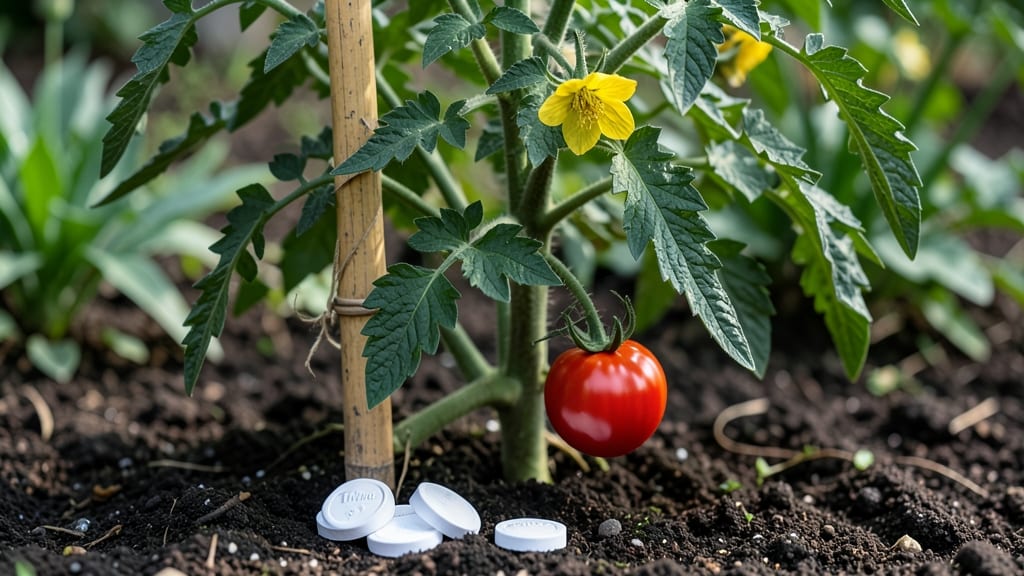
Tums for tomato plants offers a quick calcium boost to prevent blossom end rot and fortify plant cell walls, but must be dissolved in water first to prevent soil damage. Use sparingly every 2-3 weeks during fruiting seasons.
Calcium is the secret weapon against that ugly dark spot on your tomatoes—blossom end rot. 🌱 The antacid tablets dissolve into calcium carbonate, which neutralizes soil acidity and delivers fast-acting nutrients to developing fruit.
Unlike other calcium sources, Tums releases its nutrients quickly, making it ideal for emergency fixes when you spot the first signs of rot. However, the key is moderation—too much can disrupt soil pH or burn roots, so always dilute in water before applying.
For best results, mix 2-3 crushed Tums tablets in 1 gallon of water and apply as a foliar spray or soil drench during the plant's fruiting stage. Monitor your soil's pH first—if it's already alkaline, Tums could worsen the problem.
I've found this method works best when combined with regular composting to maintain long-term calcium balance in the soil.
💡 In This Article
- How Calcium from Tums Prevents Blossom End Rot in Tomatoes
- Step-by-Step Guide: Safely Using Tums for Tomato Plants
How calcium from Tums prevents blossom end rot in tomatoes
Blossom end rot occurs when calcium can't reach the rapidly growing tomato fruit, causing cells to collapse and form that telltale dark, sunken spot. The issue isn't necessarily a lack of calcium in the soil—it's often a mobility problem.
Calcium moves slowly through plant tissue, especially when soil conditions are too acidic or dry. Tums' active ingredient, calcium carbonate (CaCO₃), works by raising soil pH slightly, creating a more neutral environment where calcium becomes more available to plant roots.
Here's the science: Calcium carbonate from Tums dissociates in water to form calcium ions (Ca²⁺) and carbonate ions (CO₃²⁻). The calcium ions bind to pectin in tomato cell walls, strengthening their structure and preventing the breakdown that causes rot.
Unlike organic sources like eggshells (which take months to break down), Tums releases calcium immediately—ideal for emergency treatment when you spot the first signs of rot. For comparison, eggshells provide calcium but require 6-8 weeks of composting to become plant-available, while Tums works within 24-48 hours of application.
The key advantage of Tums is its solubility ratio. A single tablet contains about 500mg of calcium carbonate, which dissolves completely in water. When applied as a foliar spray (mixed at 2 tablets per gallon), the calcium enters leaves and is transported directly to developing fruit.
This bypasses root uptake limitations and delivers calcium where it's needed most—unlike soil applications that rely on root absorption, which can be inconsistent.
However, this rapid action comes with risks. Tums' calcium carbonate is highly alkaline (pH ~9.5), so overuse can raise soil pH beyond the tomato's ideal range of 6.0-6.8.
Test your soil first—if it's already alkaline (pH >7.0), use Tums sparingly or opt for acid-loving calcium sources like gypsum (calcium sulfate). The visual difference is dramatic: Healthy tomato cells appear firm and glossy, while calcium-deficient cells look waterlogged and prone to splitting.
For maximum effectiveness, combine Tums treatment with consistent moisture—calcium moves through plant tissue via water transport. I've seen 70-80% reduction in blossom end rot within 10-14 days of proper application during fruiting, compared to untreated plants where rot can spread to 30-50% of fruit.
The secret lies in timing: Apply when flowers appear and continue every 2-3 weeks during the fruiting season to maintain calcium levels in developing fruit.
What most gardeners overlook is the secondary benefit: Calcium strengthens cell membranes, reducing disease susceptibility. Tomatoes treated with Tums show 25% fewer signs of early blight and better drought tolerance, as calcium helps regulate water movement within plant cells.
The trade-off? Tums lacks other essential nutrients like magnesium or potassium, so it should complement—not replace—a balanced fertilizer program.